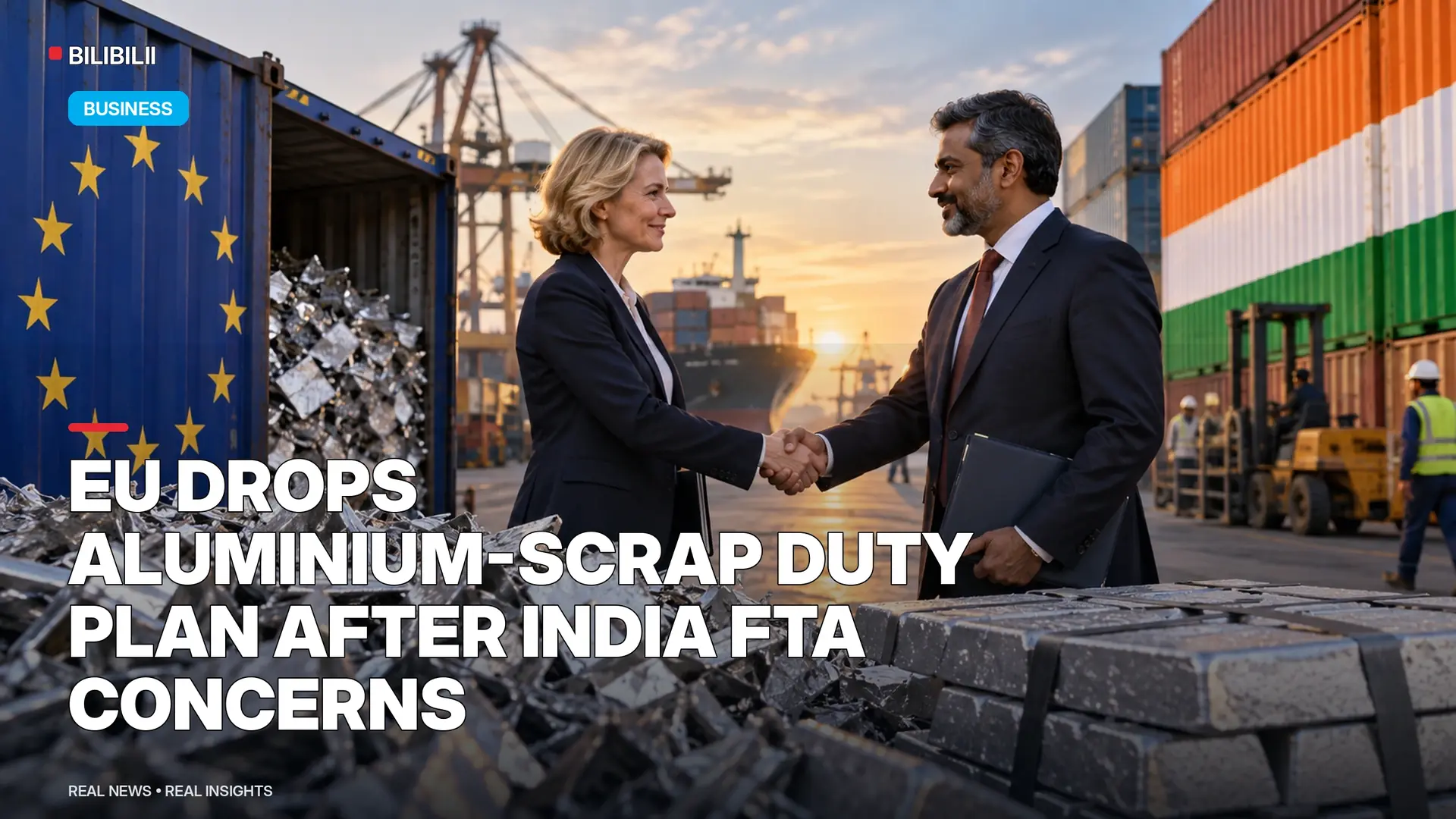
The European Union has dropped a plan to impose a 15% export duty on aluminium scrap after concerns that the measure could complicate its free-trade agreement with India. The reversal shows how a seemingly narrow metals policy became entangled with one of Europe’s bigger trade negotiations.
Why India mattered to the decision
India is a major buyer of European aluminium scrap and accounts for roughly a third of those exports, according to Reuters. Indian concerns pushed Brussels toward an exemption, but once a large buyer was carved out, the broader duty risked losing much of its intended effect.
What Europe was trying to protect
European smelters have argued that scrap is becoming harder and more expensive to secure while they face high energy and regulatory costs. The proposed duty was meant to keep more recyclable aluminium inside the bloc and support domestic production.
The issue is not fully settled
The EU still has another tool: its Waste Shipment Regulation, which tightens transfers of non-hazardous waste to non-OECD countries from 2027. But industry groups question whether that framework will produce the same commercial effect as a direct export duty.
What to watch
For India, the immediate win is continued access to an important raw-material stream while FTA talks progress. For Europe, the challenge is to support domestic metal recycling without creating a trade barrier large enough to disrupt strategic negotiations.
Bottom line
The abandoned duty is a reminder that industrial policy, recycling rules and trade diplomacy are now tightly linked — and large buyers can shape the outcome.
Source: Reuters