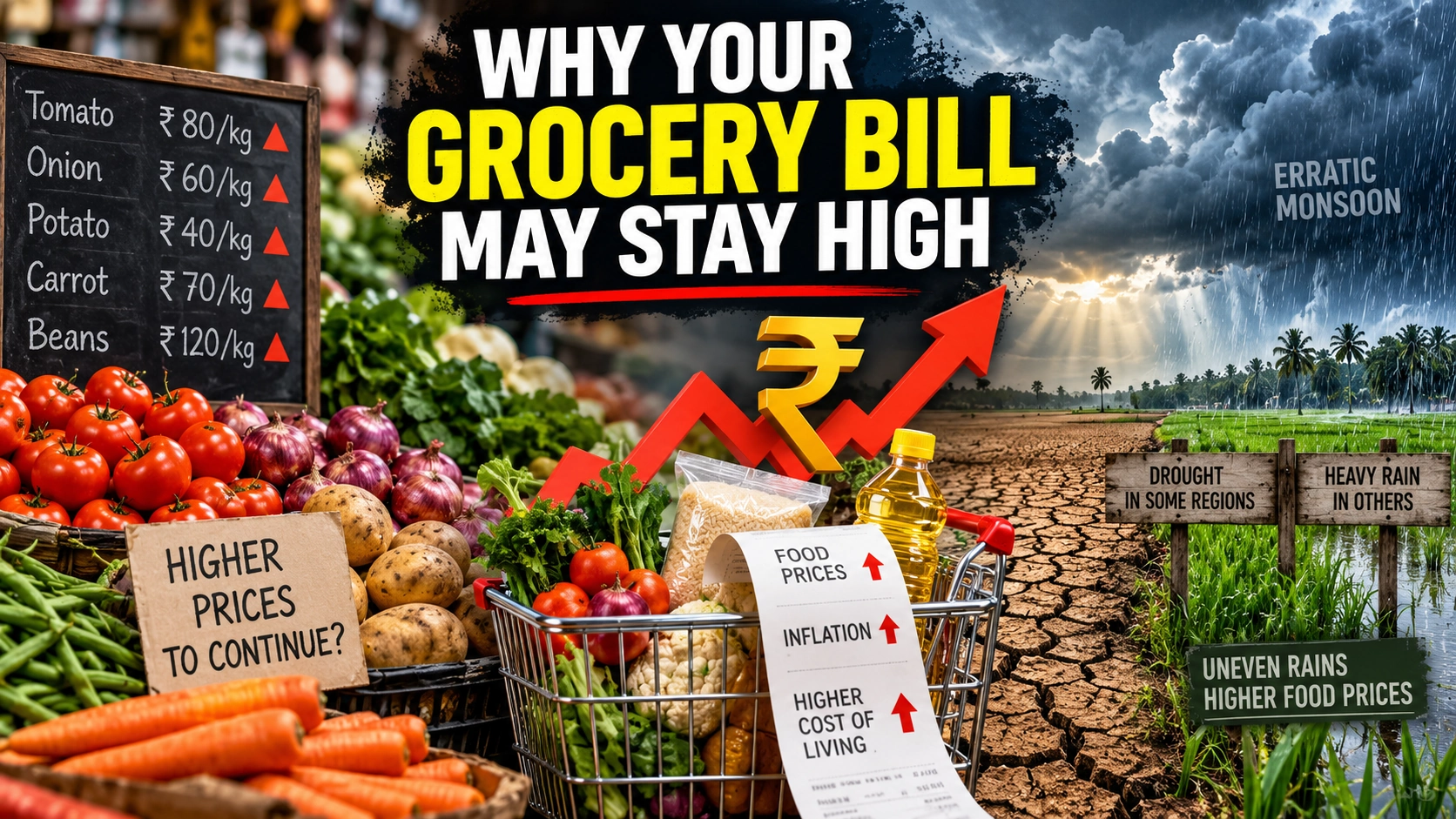
Many people hear “normal monsoon” and assume food inflation should cool. But that is not how agricultural stress works. Rainfall that is badly distributed across time and regions can still keep grocery bills painfully high.
Why uneven rain matters more than averages
What farmers need is not just enough rain in total, but the right rain at the right time. Too little water in one region and too much in another can damage crops, disrupt sowing and complicate harvest quality.
How that reaches your wallet
Once farm output becomes less predictable, market arrivals can tighten and volatility increases. That does not affect only one item. Vegetables, pulses, edible oils and other staples can all feel pressure depending on where weather stress hits hardest.
Why prices can stay high for longer
Food inflation does not always reverse quickly. Supply chains, storage, transport costs and replacement cycles all matter. Even after weather improves, prices may take time to cool if inventories have already been affected.
The policy challenge
For policymakers, the task is not only to manage inflation data but also to reduce the everyday pain households feel. That makes food prices politically sensitive even when broader inflation trends seem manageable.
Bottom line
Your grocery bill may stay high because weather disruptions are increasingly about distribution, not just totals — and that makes food inflation harder to shake off.
Source context: The Indian Express