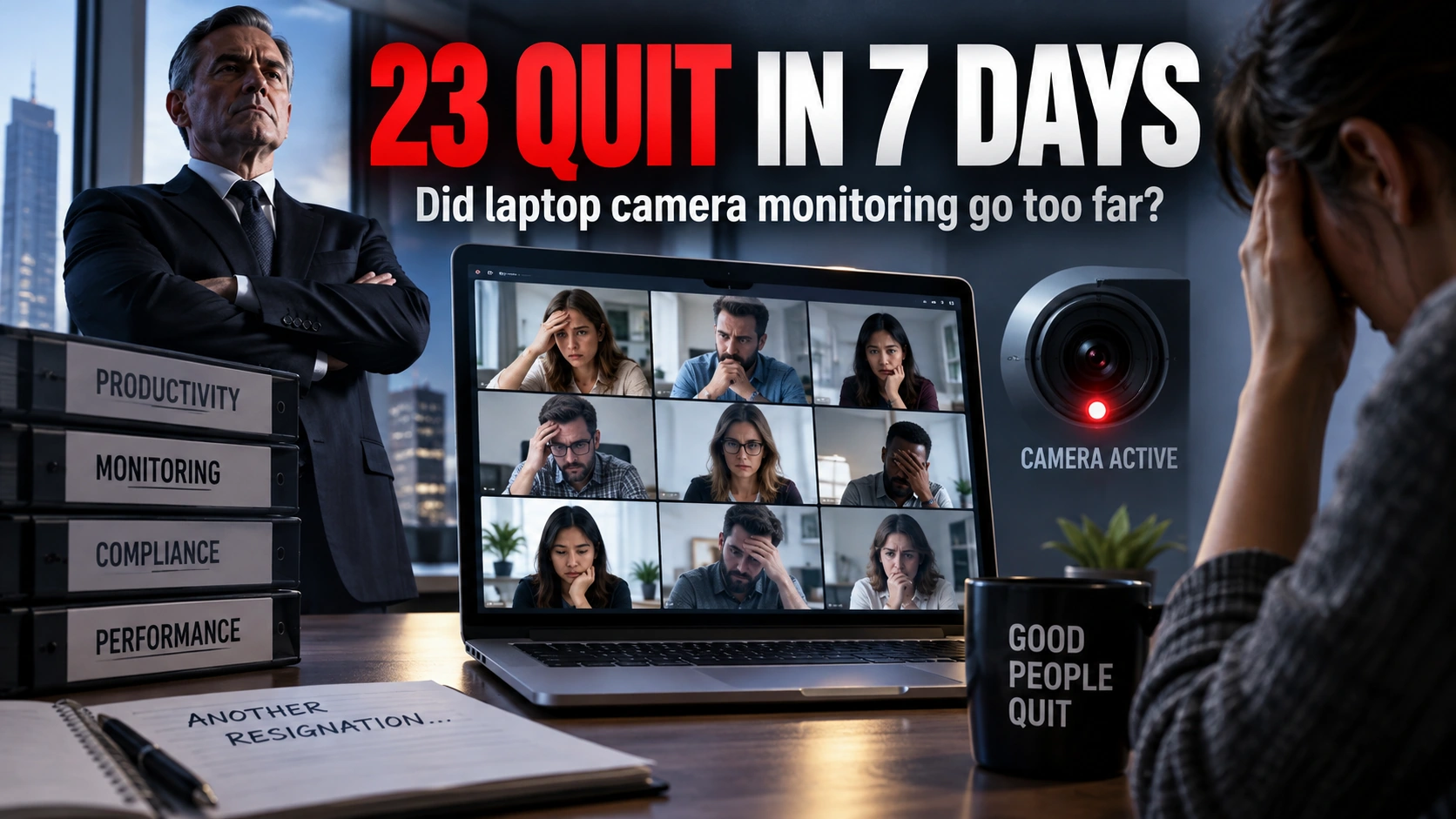
A workplace rule meant to improve supervision has turned into a global talking point after reports said 23 employees quit in just seven days over laptop-camera monitoring.
What sparked the backlash
The controversy centres on a demand that remote staff keep laptop cameras on for monitoring. Critics argue that such rules can quickly cross the line from performance management into constant surveillance. What may look efficient on paper can feel deeply invasive in practice, especially for people working from homes rather than controlled office environments.
Why the resignations grabbed attention
The number itself made the story explode online. When more than twenty employees are said to have walked away in a single week, the issue stops looking like a minor HR disagreement and starts resembling a cultural failure. It suggests that the policy may have damaged trust faster than management expected.
The deeper question behind the outrage
Employers increasingly use software, activity trackers and webcam checks to measure productivity. Workers, meanwhile, are asking a different question: does productivity really improve when employees feel watched all day? The answer is not obvious. Surveillance can produce compliance, but it can also increase anxiety, resentment and disengagement.
Why this matters beyond one company
The remote-work era has changed expectations on both sides. Companies want accountability, but workers want dignity, privacy and outcomes-based evaluation. That tension is not going away. Stories like this matter because they reveal how fragile the balance can become when control takes priority over trust.
Bottom line
If the goal was discipline, the result appears to have been a public warning for employers everywhere: people may accept structure, but they do not easily accept feeling watched in their own homes.
Source: The Indian Express