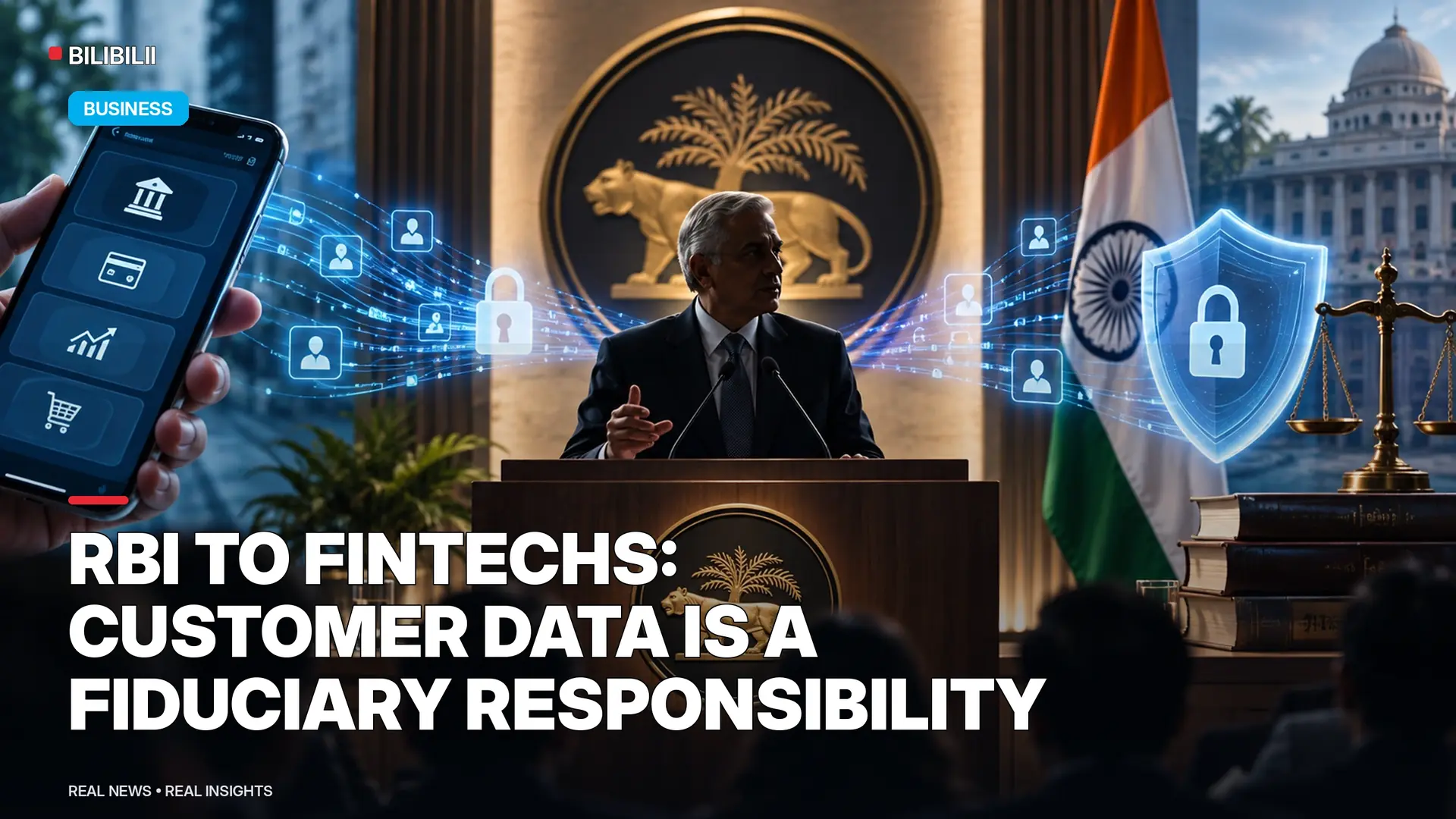
Reserve Bank of India Governor Sanjay Malhotra has delivered a direct warning to the fintech sector: customer data may be more valuable than capital, but that does not make it something companies are free to exploit. He said firms should treat data as a fiduciary responsibility — information held in trust for the people who generated it.
Why the wording matters
Calling data a fiduciary responsibility sets a higher bar than ordinary compliance language. It implies that consent, purpose limitation and customer interest should shape how data is collected and used, not just whether a company can technically access it.
Growth without regulatory clarity is a risk
Malhotra also cautioned fintechs against chasing scale while treating regulation as something to work around later. In financial services, a fast-growing platform can become systemically important before its governance and controls have caught up.
India already has a model for consent-based sharing
The RBI governor pointed to the account-aggregator framework as an example of structured, permission-based financial-data exchange. The larger principle is that data portability and innovation can coexist with explicit customer control.
What happens next
Expect regulators to keep focusing on how fintech firms use non-financial as well as financial data, especially when that information feeds automated credit, fraud or pricing decisions. Trust could increasingly become a regulatory asset in its own right.
Bottom line
The message is simple: in finance, more data creates more responsibility. The companies that scale fastest may also face the highest expectations.
Source: The Indian Express