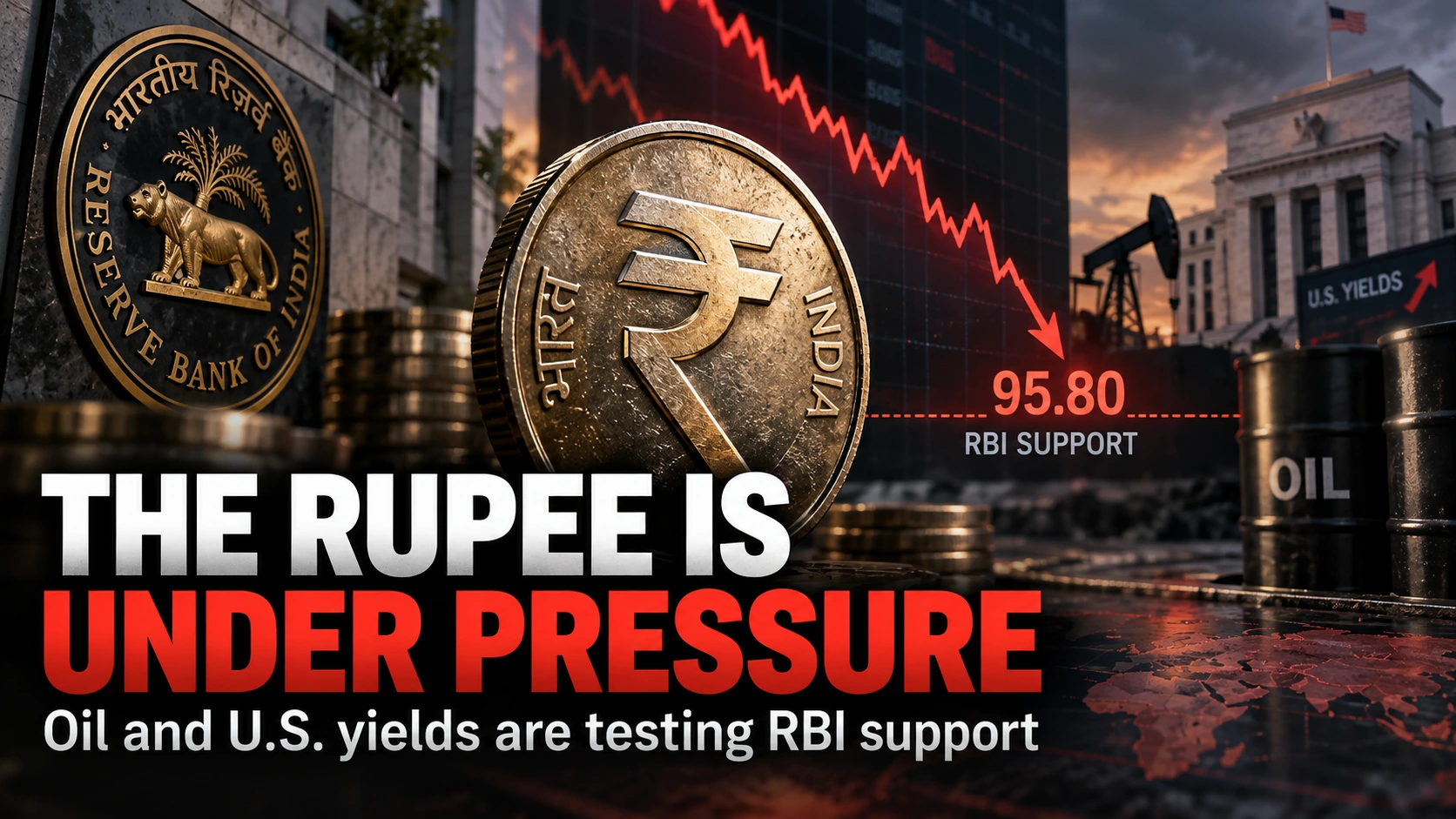
The Indian rupee is once again under pressure, with the 95.80 level emerging as a key line that traders believe the Reserve Bank of India may be forced to defend.
Why 95.80 matters
In currency markets, certain levels become psychological and tactical markers. Reuters reports that 95.80 is seen as a zone where the RBI has intervened before. That means markets are watching not just the rupee itself, but also whether the central bank chooses to step in if pressure intensifies.
What is driving the pressure
Two external forces are doing much of the damage: rising oil prices and higher U.S. Treasury yields. Costlier crude increases India’s import burden, while elevated U.S. yields strengthen the dollar and pull global capital toward dollar assets. Together, those forces make life harder for many emerging-market currencies, including the rupee.
Why the situation feels more tense this time
The oil story has become sharper because of supply concerns linked to Middle East tensions and infrastructure disruptions. At the same time, global markets have turned more cautious about inflation and the path of U.S. rates. That combination creates a difficult backdrop for the rupee, even before domestic factors are considered.
What traders will watch next
The immediate question is whether the RBI signals another clear defence of the currency or allows more flexibility. If 95.80 gives way decisively, sentiment could weaken further and the market may begin eyeing even softer levels. If support holds, traders may read it as a fresh message that the central bank still wants to manage volatility aggressively.
Bottom line
The rupee’s latest test is not just about one number on a screen. It reflects a wider battle between external shocks and central-bank credibility in a volatile global market.
Source: Reuters