The semiconductor boom is usually discussed in terms of chips, fabs and AI demand. But South Korea’s latest dispute highlights a more basic constraint: electricity.
What KEPCO proposed
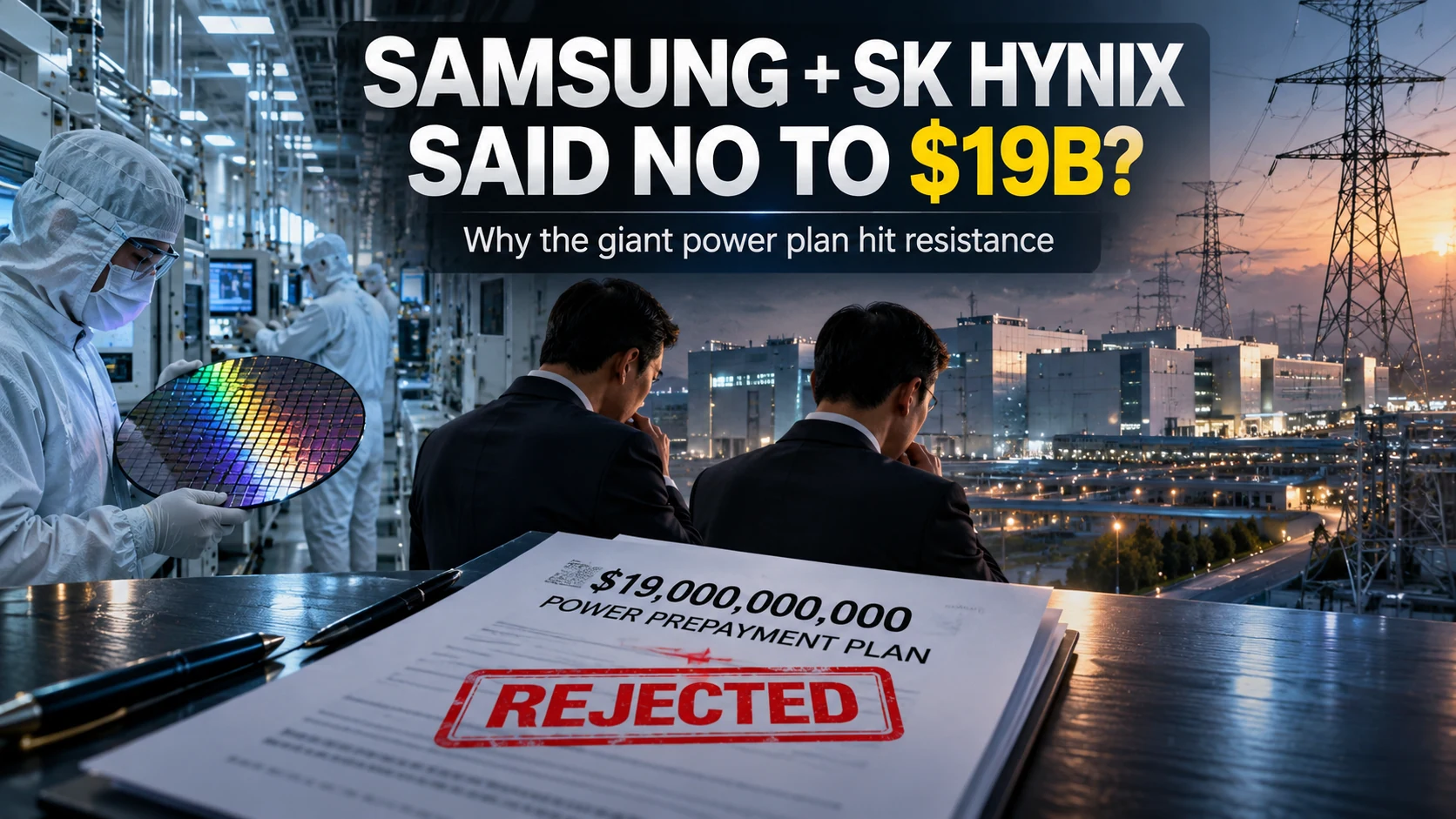
Korea Electric Power Corp proposed that Samsung Electronics and SK Hynix make an enormous upfront payment — around 25 trillion won, roughly $18.7 billion — to help secure power infrastructure for future semiconductor mega-clusters.
Why the chipmakers rejected it
The companies pushed back on assuming such a large financial burden in advance. Their response suggests concern about how the cost of national-scale grid expansion should be divided between private manufacturers and the power system.
Why electricity is becoming a chip-industry bottleneck
Modern semiconductor fabs are extraordinarily power-intensive. AI accelerators and advanced memory also require ever more computing infrastructure, which pushes demand up across the entire ecosystem.
Why this matters beyond Korea
Countries competing for chip investment increasingly have to offer more than subsidies and land. They need reliable electricity, water, transmission capacity and long-term energy planning.
The bigger question
If governments want strategically important chip clusters, who should pay for the grid capacity they require? The Samsung-SK Hynix rejection shows that answer is far from settled.
Bottom line
The next chip race may be decided not only by who can make the best semiconductor — but by who can power the factories at a price companies are willing to accept.
Source: Reuters