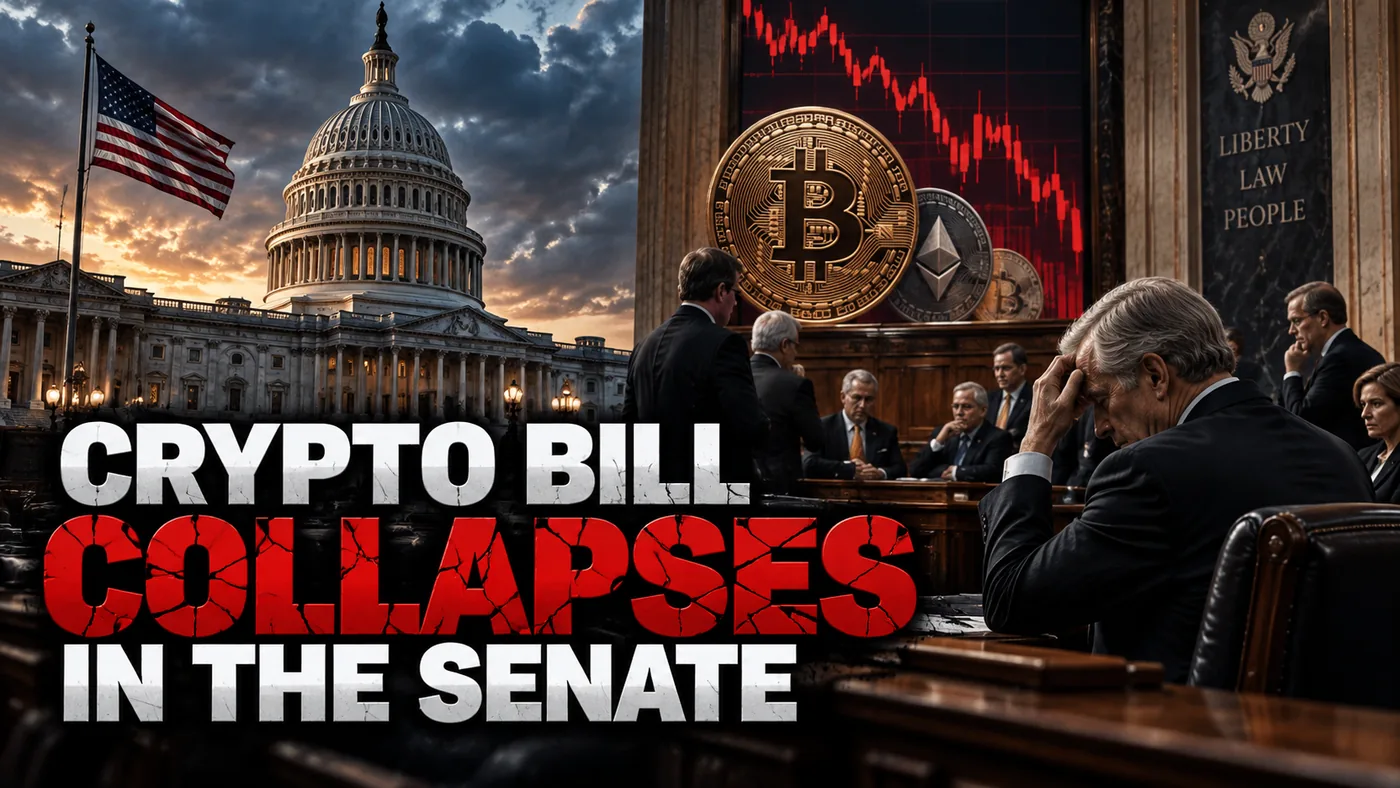
The U.S. Senate’s failure to advance a landmark cryptocurrency bill has instantly become one of the biggest setbacks the industry has faced this year. For months, digital-asset firms had argued that the sector needed a clearer rulebook. Instead, the vote delivered a sharp reminder that regulation remains deeply political — and that uncertainty still hangs over everything from exchanges and stablecoins to investor confidence.
Why this vote mattered so much
The proposed legislation was seen as a rare attempt to build a more comprehensive framework for crypto oversight in Washington. Supporters believed it could finally clarify the roles of regulators, bring more predictability to the market, and reduce the legal ambiguity that has dogged the industry for years.
Because crypto companies, lobby groups and investors had placed so much importance on the bill, its failure was interpreted as more than a routine legislative defeat. It signalled that even after years of debate, the U.S. political system still does not have broad consensus on how digital assets should be governed.
Why markets reacted so quickly
Any time policy clarity is delayed, markets tend to punish uncertainty. That is exactly what happened after the Senate vote. The setback hit sentiment because investors were expecting progress toward a more stable long-term operating environment for crypto exchanges, token issuers and trading platforms.
Without a new law, much of the responsibility still falls back on existing agencies such as the SEC and the CFTC. That creates a familiar concern: rules may keep changing through enforcement actions, administrative decisions or court interpretations instead of through one durable law passed by Congress.
What happens next
The failed vote does not necessarily end the debate. The issue may return in another legislative form, especially if industry pressure remains high and lawmakers feel political incentive to revisit it. But for now, momentum has clearly slowed.
In practical terms, crypto companies are likely to keep preparing for a patchwork environment. Some will continue pushing for direct engagement with regulators, while others may focus on compliance, lobbying and legal strategy. Investors, meanwhile, will keep watching whether the next move comes from Congress or from agencies already active in the space.
Why this story has wider significance
This is not just a crypto story. It is also a story about how hard it has become for fast-moving technologies to get clear public-policy treatment. The industry now faces a familiar problem: enormous growth potential, huge political attention, and no fully settled regulatory destination.
That is why the Senate defeat matters. It leaves the crypto world with the one thing it wanted to escape most — uncertainty.