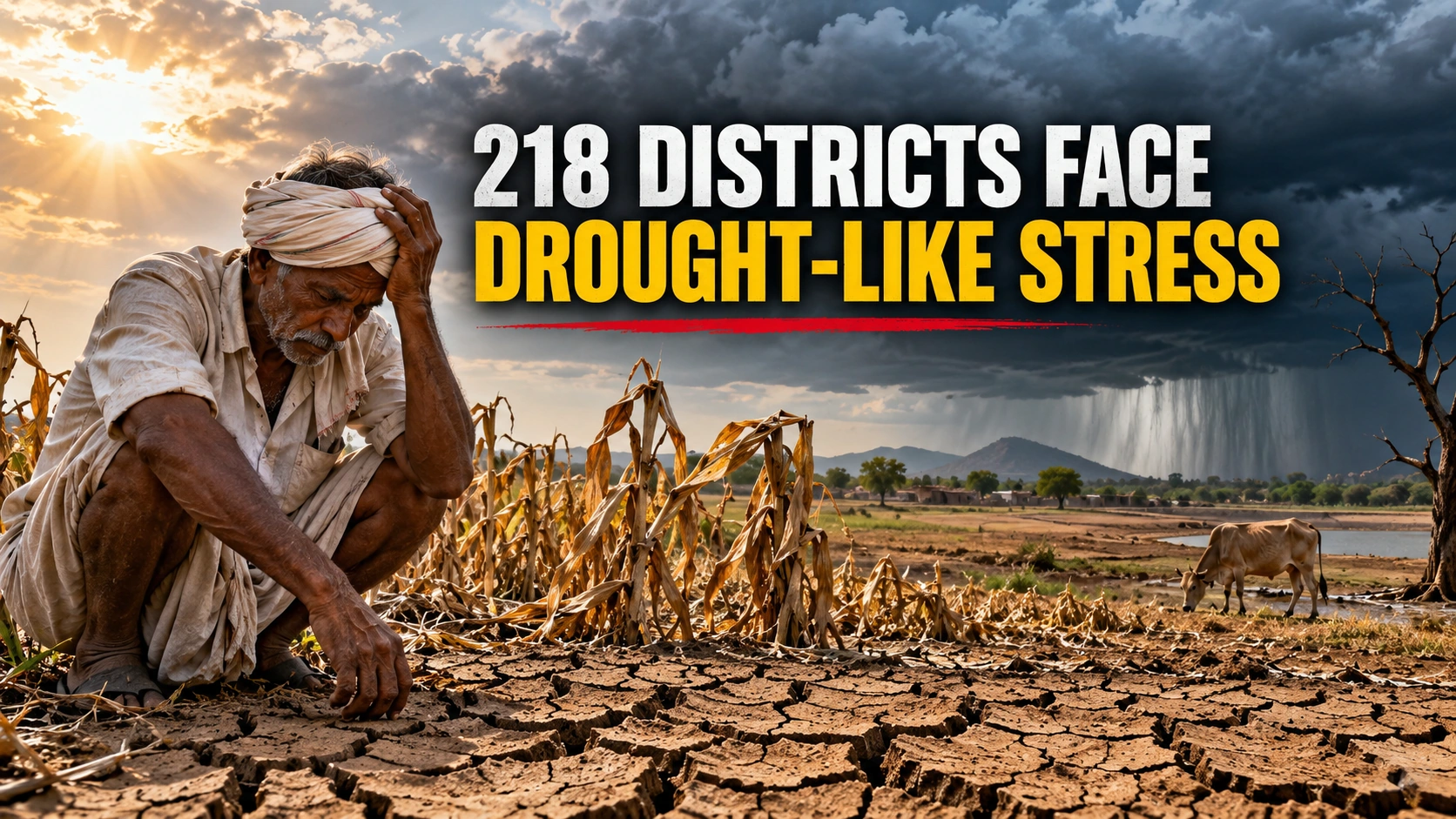
Rainfall across India has become sharply uneven, with 218 districts showing drought-like conditions during the latest four-week period cited from India Meteorological Department data. The picture is not simply a weak monsoon: it is a pattern of stronger geographic extremes, with severe deficits in some areas and intense rain in others.
Why averages can hide the problem
A national rainfall total can look manageable even when distribution is poor. Agriculture and reservoirs depend on rain arriving in the right regions and at useful intervals, so a few extreme downpours cannot fully compensate for long dry spells elsewhere.
El Niño adds pressure but does not explain every local outcome
The current El Niño year is associated with disrupted monsoon behaviour, but local rainfall also depends on regional systems, topography and the timing of weather events. District-level data are therefore more useful for farmers than one all-India percentage.
The risk is both drought and flood management
More volatile rainfall forces authorities to prepare for opposite problems at the same time: water scarcity, crop stress and groundwater pressure in deficit areas, while heavy-rain zones face flooding, erosion and infrastructure damage.
What to watch
The next few weeks will matter for late-season rainfall, reservoir levels and crop conditions. Agricultural impact will vary widely, so state and district assessments will be more informative than a single national label.
Bottom line
The emerging climate challenge is not only “less rain”. It is less predictable rain — a harder problem for farming, cities and water planning alike.
Source: The Times of India