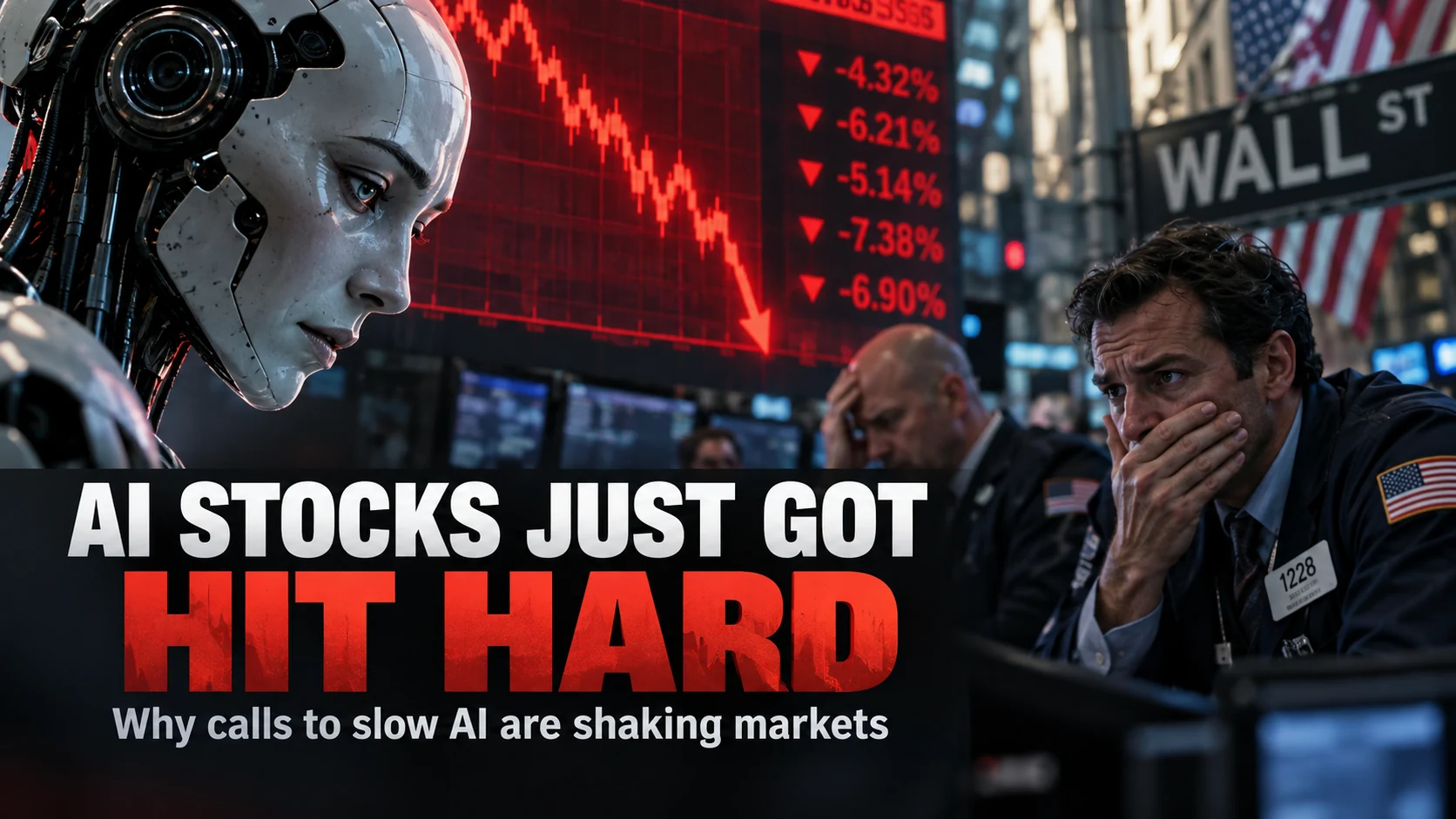
AI safety stopped being only a policy debate on Monday. It became a market-moving event.
What happened
Shares linked to artificial intelligence and semiconductors fell across Asia after leading AI executives backed calls to slow the pace of development. SoftBank, Kioxia, SK Hynix and other major names were hit as investors reassessed assumptions about endless, uninterrupted AI expansion.
Why safety talk matters to valuations
AI-related stocks have been priced on extraordinary growth expectations: bigger models, more chips, more data centres and faster deployment. If the industry intentionally slows development, even temporarily, revenue expectations can change.
Why this is different from normal tech volatility
The pressure did not come from weak demand or bad earnings. It came from the leaders of the industry itself saying that progress may need guardrails. That makes the risk harder to model because it is partly technological, partly regulatory and partly political.
Who was hit
SoftBank suffered a double-digit fall, while memory-chip and equipment names also slid. The reaction shows how tightly global markets have become linked to the AI investment cycle.
What investors will watch
The next question is whether safety coordination remains voluntary or turns into formal regulation, export controls, testing requirements or slower product releases. Each outcome would affect different parts of the AI supply chain.
Bottom line
AI risk has crossed a new line: it is no longer only about what future systems might do. It is already changing what investors are willing to pay for the companies building them.
Source: Reuters