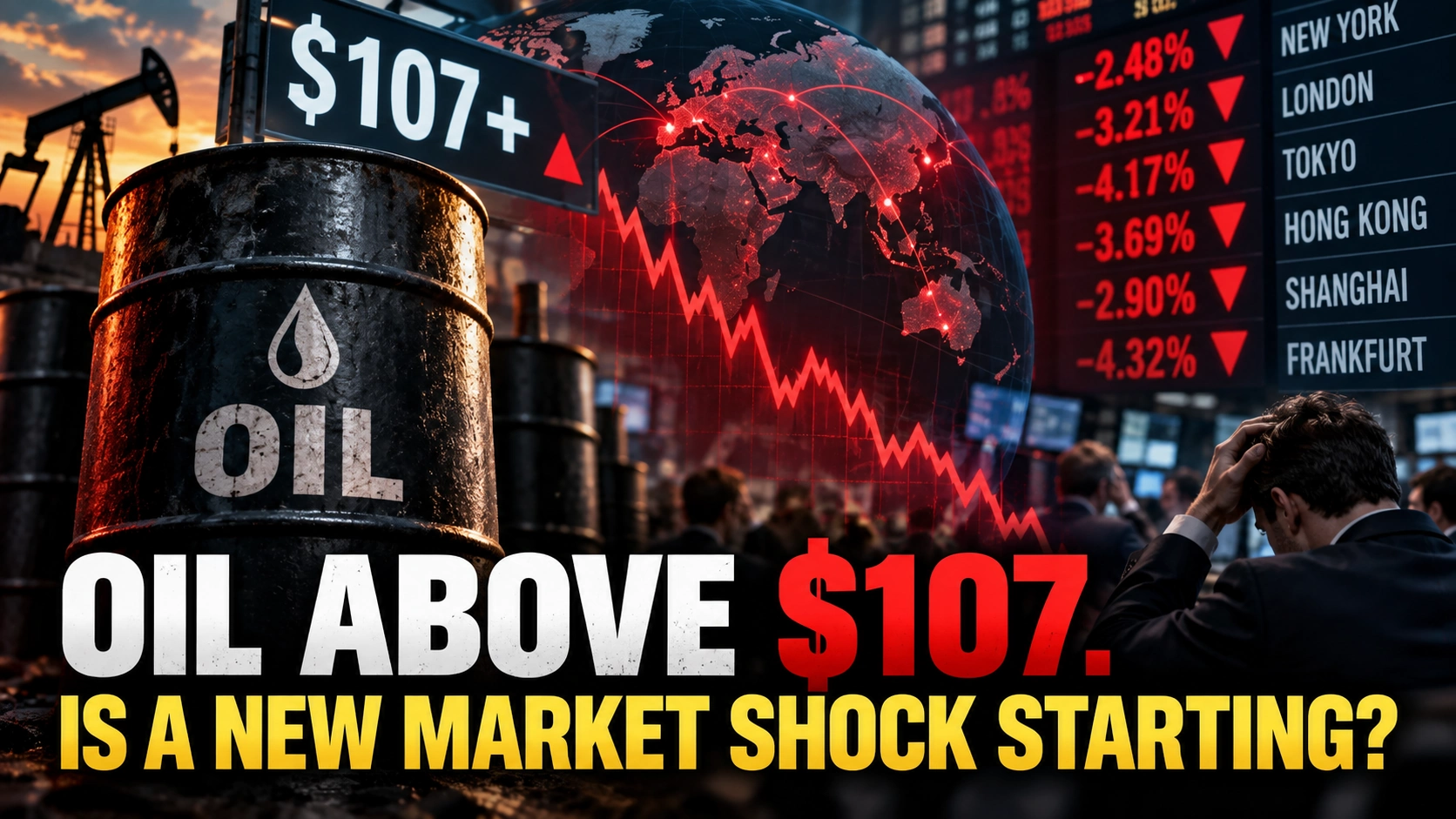
Oil pushing above $107 while stock markets weaken is exactly the kind of combination that rattles investors. It raises fears of an old but potent problem: rising energy costs feeding inflation just as growth confidence starts to wobble.
Why oil matters so much
Energy prices flow through almost everything. Transport, manufacturing, shipping, food and household budgets all feel the impact. That is why a sharp oil move can quickly become a macroeconomic concern rather than just a commodities headline.
Why equities react badly
Higher oil can mean tighter margins for companies and tougher inflation choices for central banks. If markets begin to price in slower growth plus more policy pressure, risk assets usually struggle.
Is this a full-blown crisis?
Not necessarily. One sharp move does not automatically become a sustained shock. But it does create the conditions for broader stress if geopolitical risk stays elevated and inflation expectations rise again.
What investors are watching next
The key variables are whether oil stays high, whether central banks respond more aggressively and whether risk sentiment spills from equities into bonds, credit and currencies.
Bottom line
It is too early to call it a new crisis. But oil above $107 is serious enough to make global markets ask whether a fresh shock is beginning.
Source context: Reuters