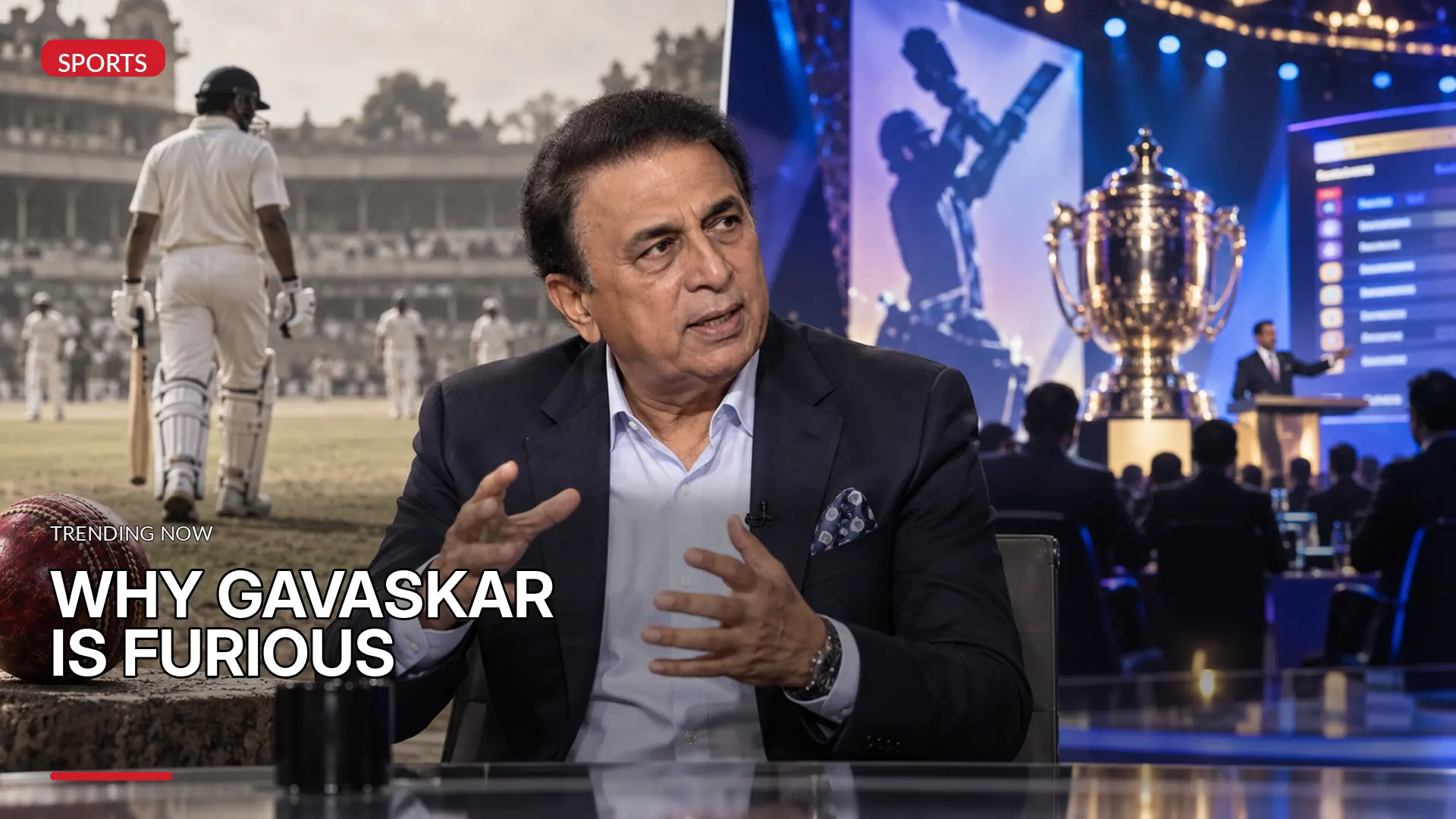
Sunil Gavaskar has criticised the BCCI’s 2026-27 domestic calendar for splitting the Ranji Trophy into two windows for a third straight year. He argues that the structure sidelines first-class cricket while creating space for white-ball competitions and the IPL auction cycle.
Why the split bothers traditionalists
The first Ranji leg runs in October-November, with the competition resuming from January into March 2027. A long break can interrupt team rhythm, change playing conditions and make it harder for players to build sustained red-ball form.
The IPL auction sits in the background
Domestic T20 and one-day tournaments take place during the gap, giving franchises a fresh look at players before auction decisions. Gavaskar’s criticism is that the premier first-class competition should not appear subordinate to the commercial priorities of the IPL ecosystem.
There are scheduling arguments on the other side
Indian domestic cricket has to navigate weather, international windows and a crowded calendar, including difficult winter conditions in northern venues. The challenge is not whether scheduling constraints exist, but which competition absorbs the compromises.
What comes next
The debate will continue if Test selection increasingly depends on short bursts of Ranji form separated by long gaps. A future calendar redesign would need to decide whether continuity in first-class cricket is a non-negotiable priority.
Bottom line
Gavaskar’s complaint is ultimately about hierarchy: if the Ranji Trophy develops Test cricketers, should it be the calendar’s fixed point rather than the flexible one?
Source: The Indian Express