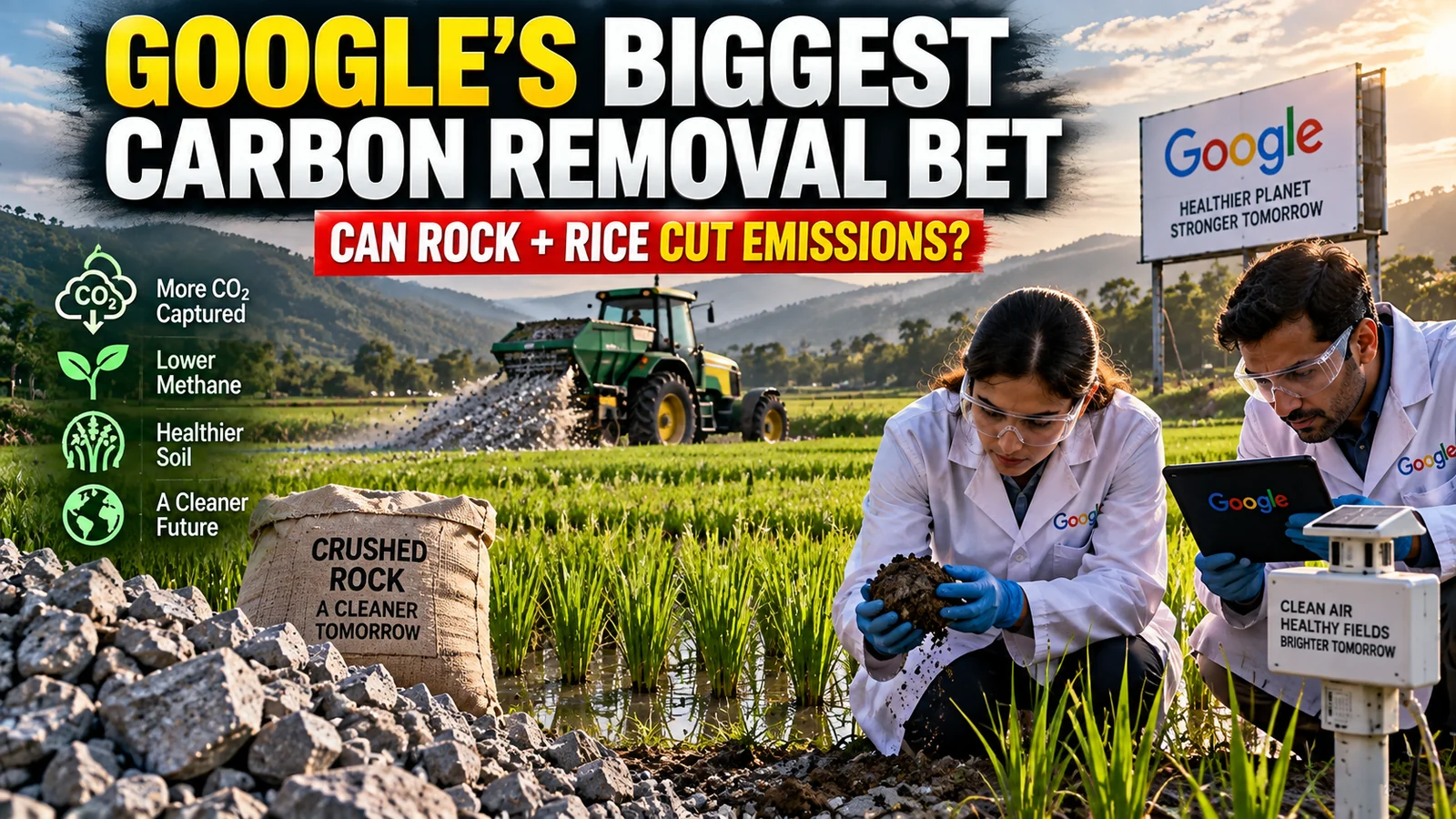
Google is backing a large enhanced rock-weathering project in Brazilian rice fields. The plan targets carbon removal and methane reduction at the same time.

Google has agreed to its largest carbon-removal deal so far, backing a project that combines crushed rock with rice farming in Brazil. The approach is unusual because it aims to tackle two different climate problems at once: long-lived carbon dioxide and shorter-lived methane emissions from rice cultivation.
The project is being developed with Terradot in Rio Grande do Sul. Reuters reported that it will cover more than 200,000 hectares, making it the world’s largest enhanced rock-weathering project of its kind. The basic idea is to spread finely crushed rock on agricultural land, where natural chemical reactions can capture carbon dioxide over time.
Rice fields add a second opportunity. Flooded paddies can produce methane, a potent greenhouse gas. The project aims to test whether the same land-management system can reduce methane while also removing carbon, creating a combined climate benefit rather than treating the two gases separately.
Google has strong reasons to invest in carbon removal. The rapid expansion of AI and data centres is increasing electricity demand and making corporate climate targets harder to meet. Buying carbon-removal credits is one way technology companies are trying to compensate for emissions they cannot eliminate immediately.
The economics remain a major challenge. Carbon removal needs to become cheaper and easier to verify before it can scale widely. Reuters reported that Google and Terradot hope the model can eventually be replicated in other major rice-growing regions, including India and Vietnam, if the project proves effective.
The significance of the deal is therefore bigger than the initial volume of credits. Google is betting that one agricultural model can remove carbon, cut methane and become commercially repeatable. If that works, it could create a new climate market at the intersection of farming, geology and corporate emissions targets.
Why this matters
This development matters because it changes the choices available to users, businesses or policymakers in a fast-moving area. The key next step is to watch execution, adoption and any official follow-up.
Related coverage
- Himalayas Climate Tipping Point Glaciers Water Risk
- Nepal Glacier Warning Shock
- 218 Indian Districts Drought Like Monsoon Extremes
Source: Reuters