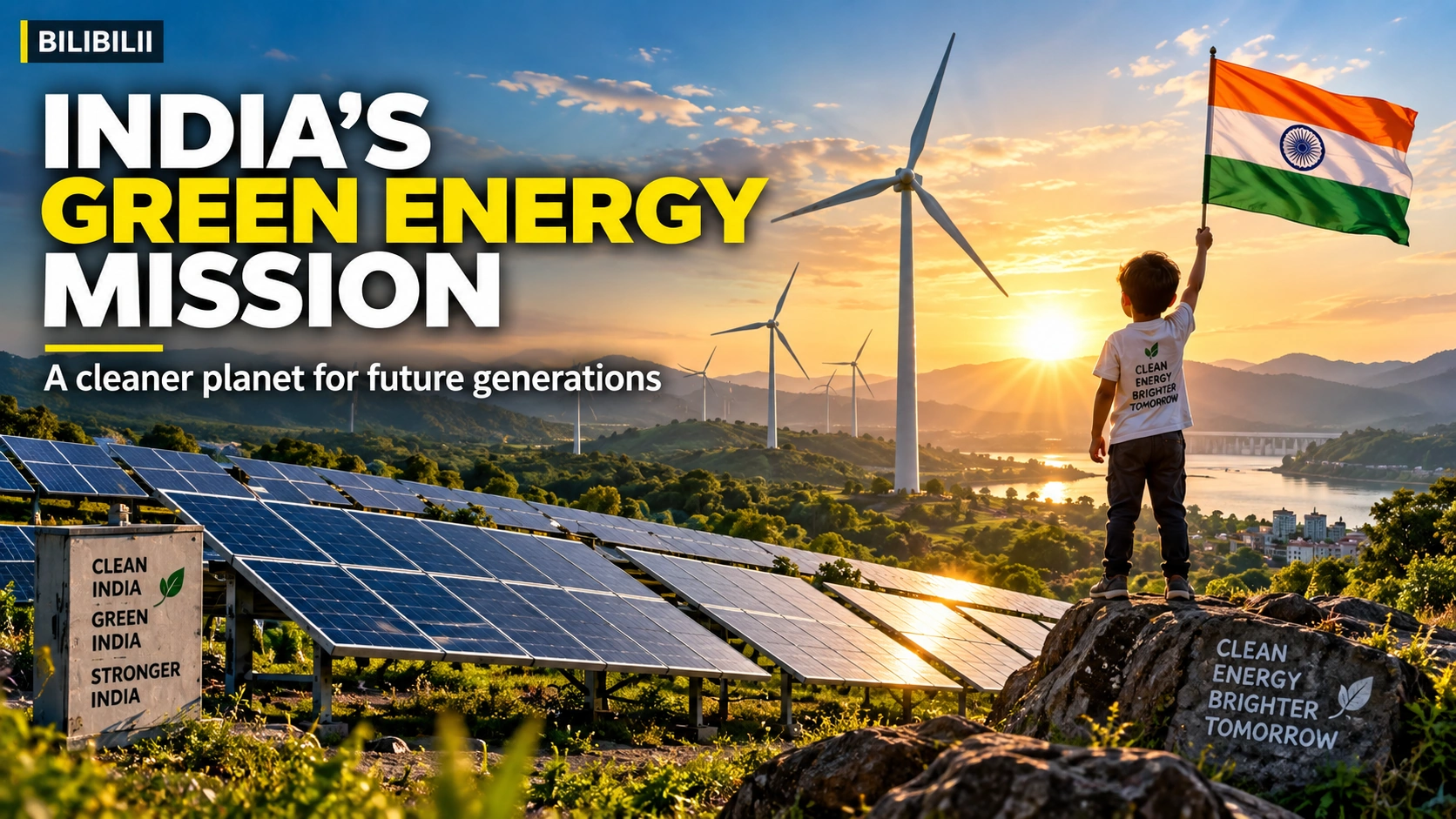
India’s green-energy mission is not just an environmental theme—it is a development strategy. Solar, wind, storage and related clean-energy systems now sit at the centre of discussions around future growth, energy security and climate responsibility.
Why the shift matters
India’s energy needs are large and rising. A cleaner power mix can help the country reduce long-term vulnerability, create new industries and manage environmental stress more effectively. That is why green energy is now being discussed in economic as well as ecological terms.
The biggest pillars of the mission
- Solar power expansion across utility and distributed use cases.
- Wind-energy deployment and hybrid renewable systems.
- Storage, grid modernization and transmission readiness.
- Emerging sectors such as green hydrogen and clean manufacturing.
Why this is important for ordinary households
Even when large energy policy feels distant, its effects are not. Cleaner power systems can affect electricity reliability, industrial competitiveness, local air quality and the kinds of jobs the economy creates. Over time, they may also influence how transport, housing and manufacturing evolve.
The real challenge
Ambition alone is not enough. The mission depends on financing, land use balance, supply chains, storage solutions, transmission infrastructure and execution speed. The green-energy story becomes meaningful only when capacity, affordability and reliability move together.
Bottom line
India’s green-energy mission matters because it is ultimately about the future shape of development: how the country powers growth while trying to build a cleaner, more resilient tomorrow.
Source: Ministry of New and Renewable Energy