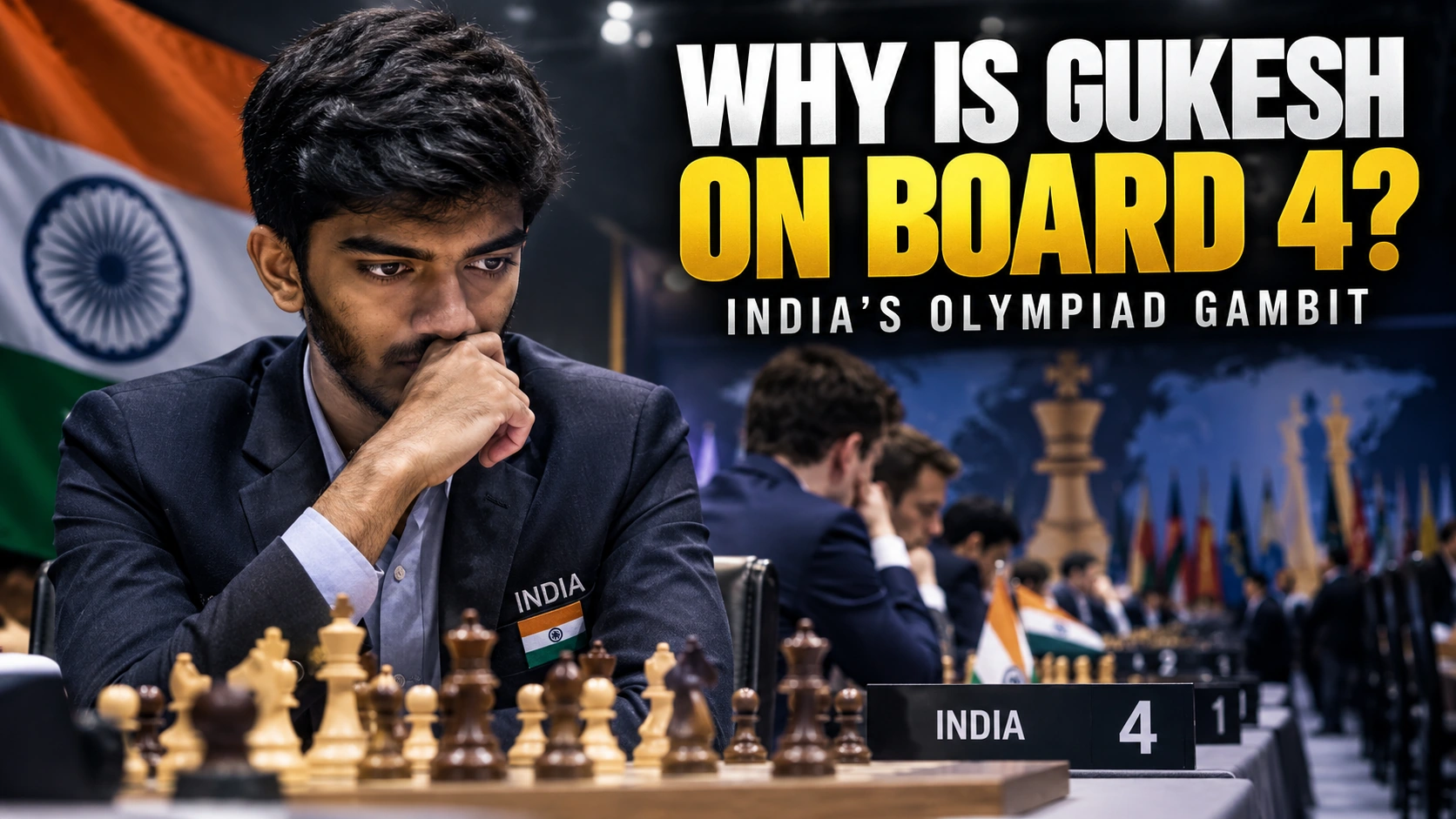
World champion D. Gukesh will not sit on India’s top board at the Chess Olympiad. Instead, team management has placed him on board four — a decision that immediately sparked debate because Gukesh has already delivered major Olympiad success on the highest board.
The Indian Express reported that India’s open-team order places R. Praggnanandhaa on board one, Arjun Erigaisi on board two, Nihal Sarin on board three and Gukesh on board four. The arrangement is unusual enough to look surprising, but in a team event it may be a deliberate strategic weapon.
Olympiad matches are decided by the combined result across multiple boards, not by the prestige of who sits first. By placing an elite player deeper in the order, a team can try to create a rating or strength advantage against opponents whose lower boards may be less formidable.
The decision also changes potential match-ups. Gukesh’s placement means he would not be paired against some rival teams’ top-board stars in the normal board order. That can alter the strategic landscape of a tie and may allow India to seek wins on boards where the gap is larger.
The move is especially interesting because India arrive as defending champions in both the open and women’s sections. With so many top grandmasters available, the challenge is not simply selecting the strongest players but arranging them in the order most likely to produce team points.
Whether the board-four gambit proves brilliant will depend on results. But it already shows how India’s extraordinary chess depth has changed the conversation: even the reigning world champion can become a tactical piece in a larger team plan.