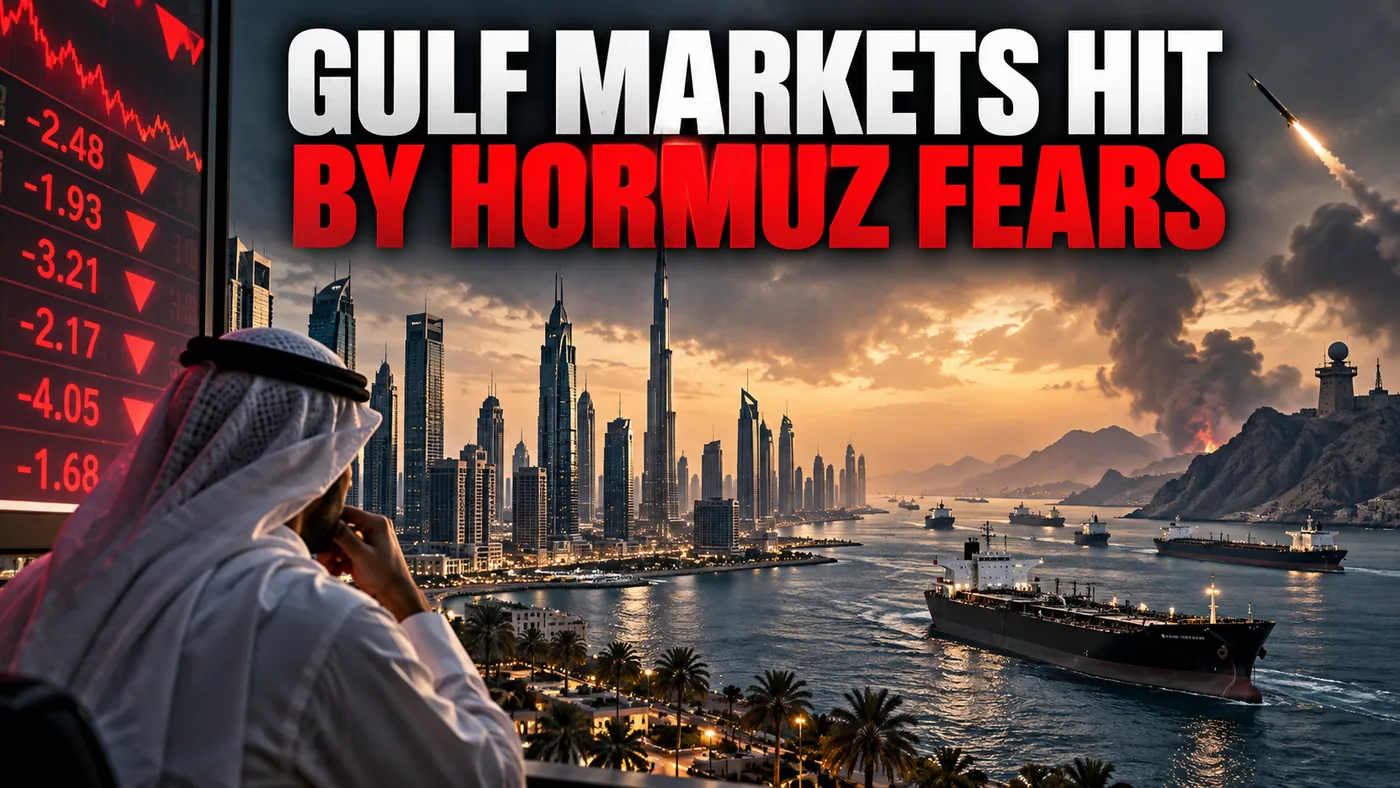
The Strait of Hormuz remains one of the world’s most sensitive energy chokepoints, and renewed fears around the route are once again shaking market confidence in the Gulf. Investors are reacting not only to headlines about regional attacks, but also to the broader risk that shipping disruption could spill into oil prices, trade flows and local market sentiment.
Why Hormuz matters so much
Hormuz is not just another shipping lane. It is a strategic passage for a major share of global energy transport, and even modest disruption can trigger outsized market anxiety. When conflict risk rises in and around the Gulf, investors quickly begin pricing in worst-case scenarios around supply interruption and security escalation.
That explains why attacks linked to regional tensions often hit financial markets immediately. Traders understand that infrastructure damage, higher insurance costs, and slower vessel movement can all reshape the oil story in a matter of hours.
Why markets are turning cautious now
Fresh reports of attacks and diplomatic strain have revived a sense of fragility in the region. Gulf bourses have responded by moving lower as investors weigh the possibility of wider instability. The concern is not just about a single day’s market move — it is about whether the region is entering a more prolonged phase of tension.
The market reaction also reflects a broader truth: geopolitics can change the tone of trading faster than company earnings or macro data. In the Gulf, where energy and regional security are tightly connected, the sensitivity is even stronger.
What it means for oil and beyond
Whenever Hormuz comes back into focus, oil immediately becomes part of the conversation. Supply fears can support prices, but the wider economic impact is more complicated. Higher energy costs can revive inflation worries, unsettle global equities and pressure policymakers elsewhere.
For Gulf economies, prolonged uncertainty can also affect business confidence, travel decisions and broader risk perception, especially if shipping patterns continue to slow or reroute.
What investors will watch next
Markets will now closely follow shipping activity, diplomatic signals and any further attacks on infrastructure. If tensions cool, the sell-off could ease. But if disruptions deepen, Hormuz may once again become the central pressure point for global energy and regional finance.
That is why this story is bigger than one bad trading day. It is a reminder that in the Gulf, markets can still be moved as much by geography and geopolitics as by balance sheets and quarterly numbers.