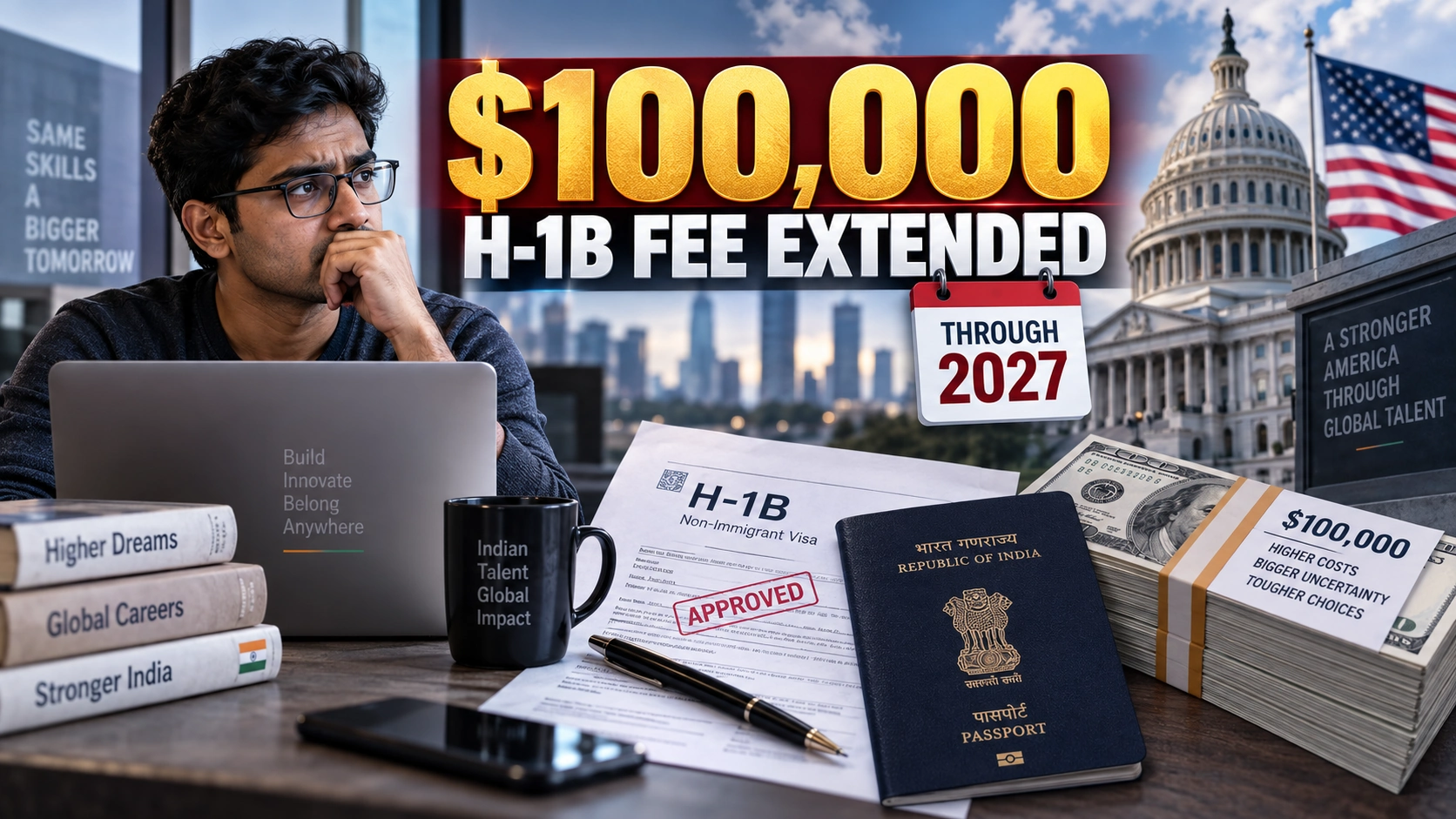
A major US immigration restriction affecting skilled foreign workers has been extended, keeping a $100,000 payment requirement in place for certain new H-1B applicants through September 21, 2027.
The extension is especially important for Indian professionals because Indians have historically received the largest share of approved H-1B petitions. The programme is widely used by technology, engineering, consulting and other skilled-worker employers in the United States.
The rule does not apply uniformly to every H-1B holder. The restriction is focused on certain new H-1B workers applying from outside the United States. People already in the country who are renewing or changing to H-1B status may fall under different treatment depending on their circumstances.
The policy was first introduced in 2025 as part of the Trump administration’s broader effort to reshape the H-1B system. The administration has argued that higher costs can discourage companies from using the programme to hire relatively lower-paid foreign labour and push employers toward workers with higher skills and compensation.
Critics, including immigration advocates and parts of the technology sector, have argued that such a large fee can make it harder for companies to recruit specialised talent, especially for jobs where employers say the domestic supply is limited.
The financial impact can be significant. A $100,000 charge is far above the normal government filing fees traditionally associated with an H-1B petition, meaning companies may become more selective about which foreign candidates they sponsor from overseas.
For Indian workers, the effect could be felt in several ways. Large multinational companies may still be able to absorb the cost for strategically important hires, while smaller employers may reduce overseas recruitment. Some businesses may also choose to expand teams in India rather than relocate employees to the United States.
The extension comes as the H-1B system continues to face legal and political scrutiny in the US. Court challenges over the administration’s authority and the design of the restriction are still relevant, so the policy environment could continue to evolve.
Workers should also distinguish between the headline number and their own visa situation. The existence of a $100,000 requirement does not mean every current H-1B employee must personally pay that amount. Applicability depends on the type of petition, where the worker is located and the specific immigration route being used.
For India’s technology workforce, however, the broader message is clear: US companies sponsoring new employees from abroad now face a much higher financial barrier for another year.
That could influence hiring decisions, international transfers and the balance between US-based and India-based technology teams well beyond the visa system itself.