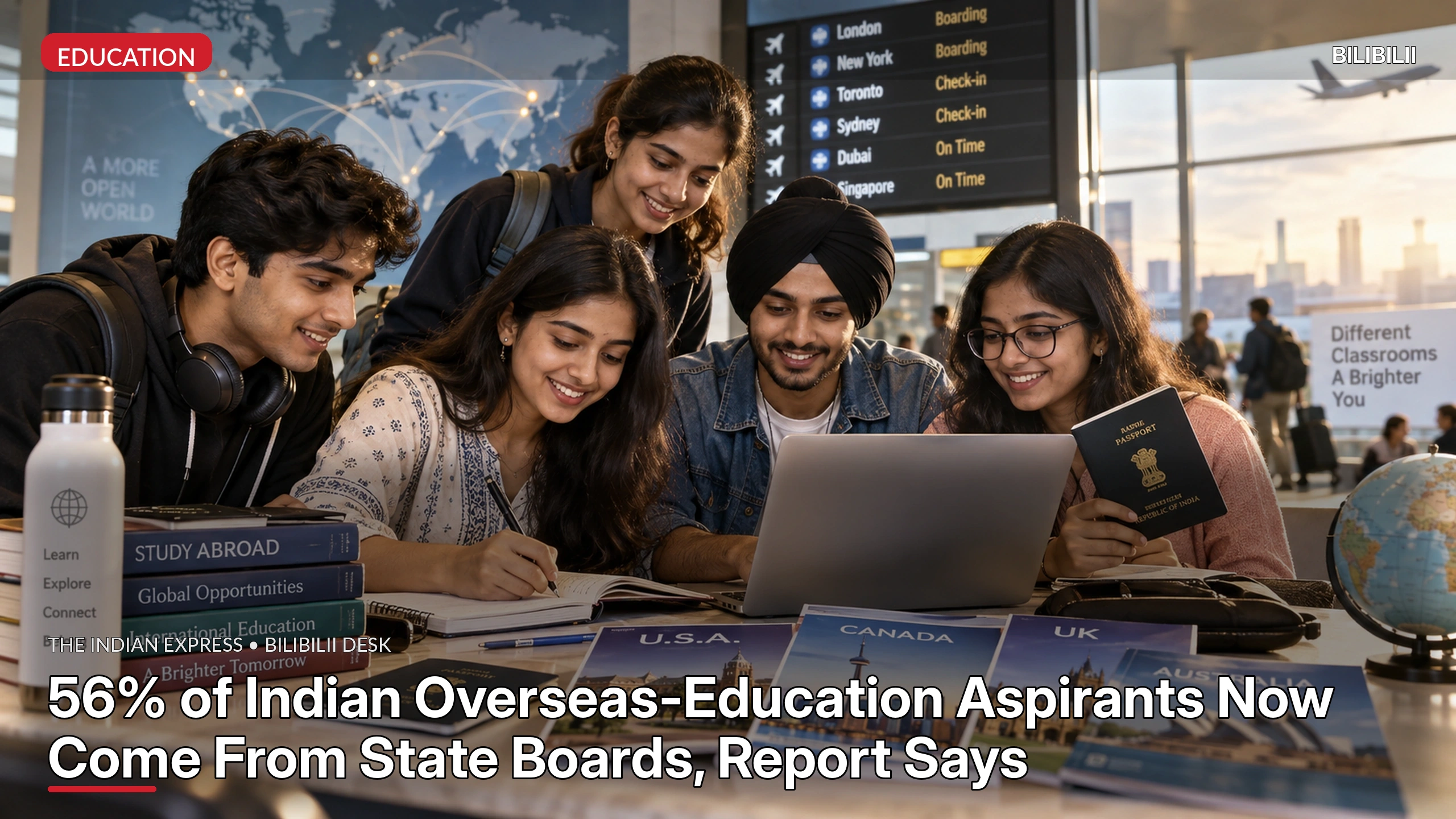
State-board students now make up the largest share of Indians exploring overseas education, according to the Transnational Education Report 2026 cited by The Indian Express. The report puts their share at 56%, compared with 40% for CBSE students.
Why the shift is notable
International education in India was once strongly associated with metropolitan families and nationally standardised school systems. A larger state-board share suggests that aspiration, counselling access and financing options are spreading into a wider student base.
Tier-II and tier-III cities are part of the story
The report is based on 53,800 aspirants counselled between January 2025 and June 2026, with nearly 60% coming from tier-II and tier-III cities. About two-thirds were freshers, reinforcing the idea that overseas study is being considered earlier.
Motivation is becoming more practical
For many first-generation applicants, the attraction is less about brand prestige and more about employability, migration pathways and economic mobility. That changes how universities and counsellors need to explain cost, return on investment and work opportunities.
What happens next
Rising costs and tighter immigration rules in traditional destinations could redirect demand toward Europe and other markets. Students should compare total cost, post-study work rules and degree recognition rather than choosing only by country popularity.
Bottom line
The applicant pool is widening. Overseas education is increasingly a regional and middle-class aspiration, not only a metropolitan one.
Source: The Indian Express