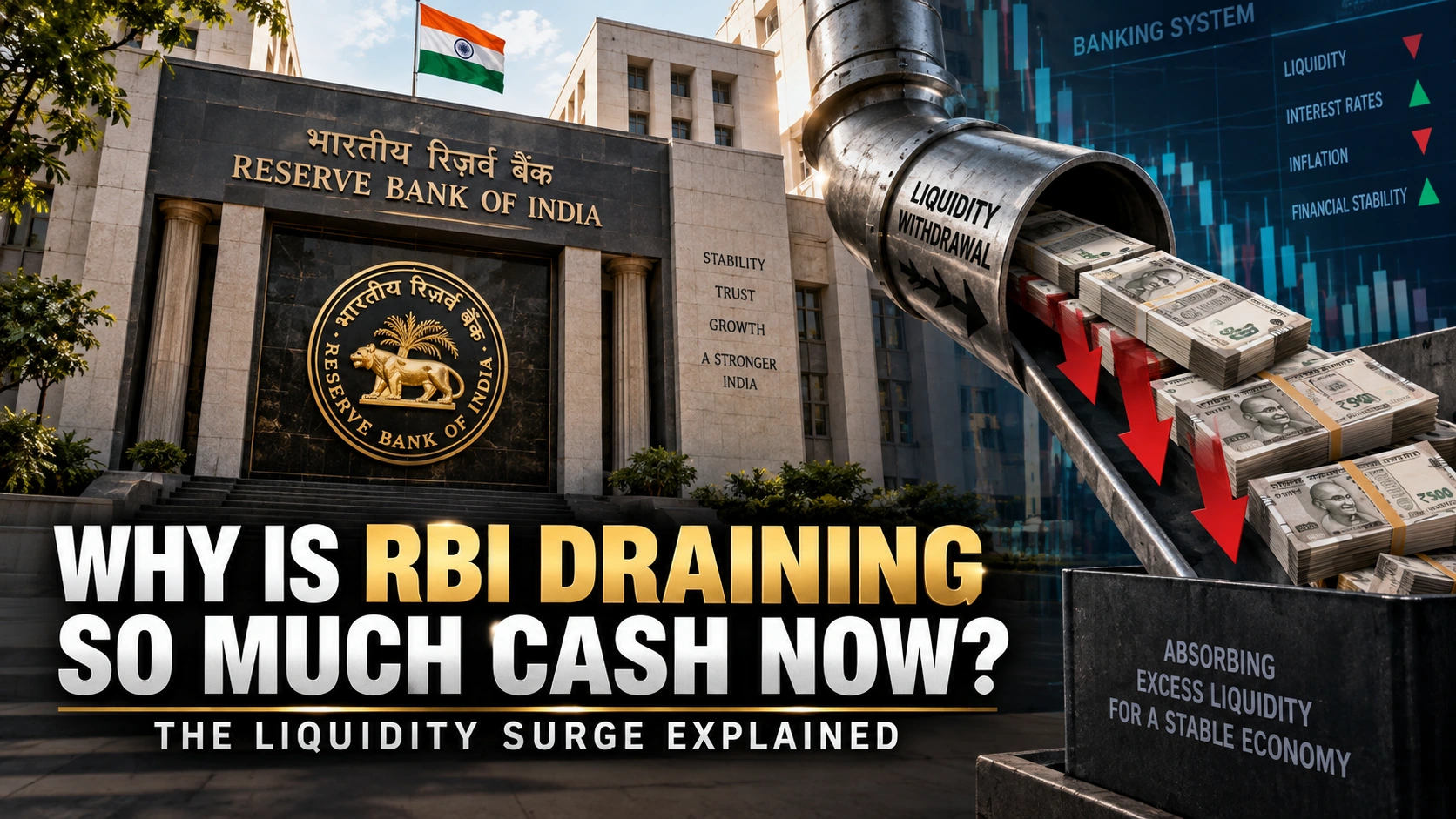
The Reserve Bank of India is dealing with a liquidity deluge, and that is why talk of draining cash from the banking system has suddenly become a big market theme.
Where the extra cash came from
India’s banking system surplus has ballooned after a wave of foreign-currency deposits and liquidity inflows. When too much cash builds up in the system, short-term rates can fall too low and the RBI loses some control over financial conditions.
Why the RBI cares
Central banks do not just worry about a shortage of money; they also worry about too much of it. Excess liquidity can distort money-market rates, complicate inflation management and eventually feed asset-price imbalances.
What tools the RBI has
The RBI can drain liquidity through longer-duration reverse repos, bond sales, forex swap operations or even reserve-ratio measures if needed. Governor Sanjay Malhotra has indicated that nothing is off the table if system liquidity remains too high.
What this means for markets
Bond traders are watching closely because more aggressive liquidity withdrawal can push yields higher. Borrowing costs across the financial system are influenced not just by the policy rate but also by how much day-to-day liquidity is floating around.
Bottom line
The RBI is not draining cash because the economy is weak. It is doing it because too much surplus liquidity can create its own problems, and the central bank wants monetary conditions to stay under control.
Source context: Reuters