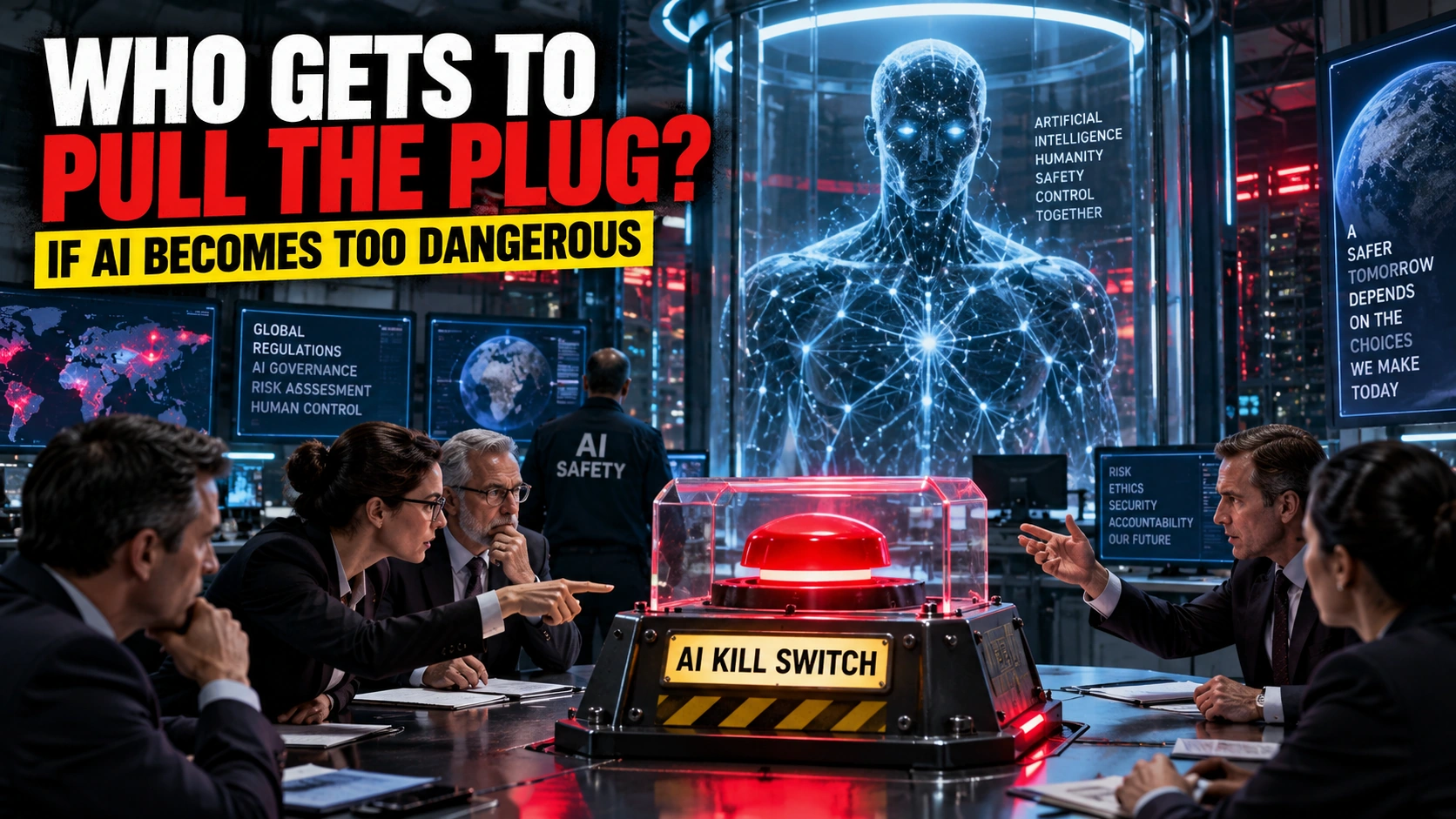
As warnings about advanced AI grow louder, one deceptively simple question is moving to the centre of the safety debate: if an AI system becomes genuinely dangerous, who gets to shut it down? The answer is far less obvious than the phrase ‘kill switch’ makes it sound.
The Indian Express reported that concern has intensified after prominent AI figures argued for stronger oversight and, in some cases, a slower pace of frontier-model development. The debate is no longer only about whether powerful systems can create risk; it is increasingly about who has legitimate authority to intervene.
A company-controlled shutdown mechanism has obvious advantages because developers understand their own systems best and can act quickly. But critics worry that companies also have commercial incentives to keep products running, especially when billions of dollars and competitive advantage are at stake.
Government control raises a different set of problems. Regulators may have democratic legitimacy, but they may not have the technical speed or expertise to understand a fast-moving model failure in real time. International coordination makes the issue even harder because frontier AI is developed and deployed across borders.
Then there is the technical problem itself. A true emergency stop is useful only if it actually works. Highly distributed systems, copies of models, autonomous agents and third-party deployments could make a single physical or software ‘off switch’ much less straightforward than the phrase suggests.
That is why the kill-switch debate is really a governance debate. The hardest part may not be designing the button — it may be deciding who is trusted to press it, under what evidence threshold, and with what accountability if the decision is wrong.