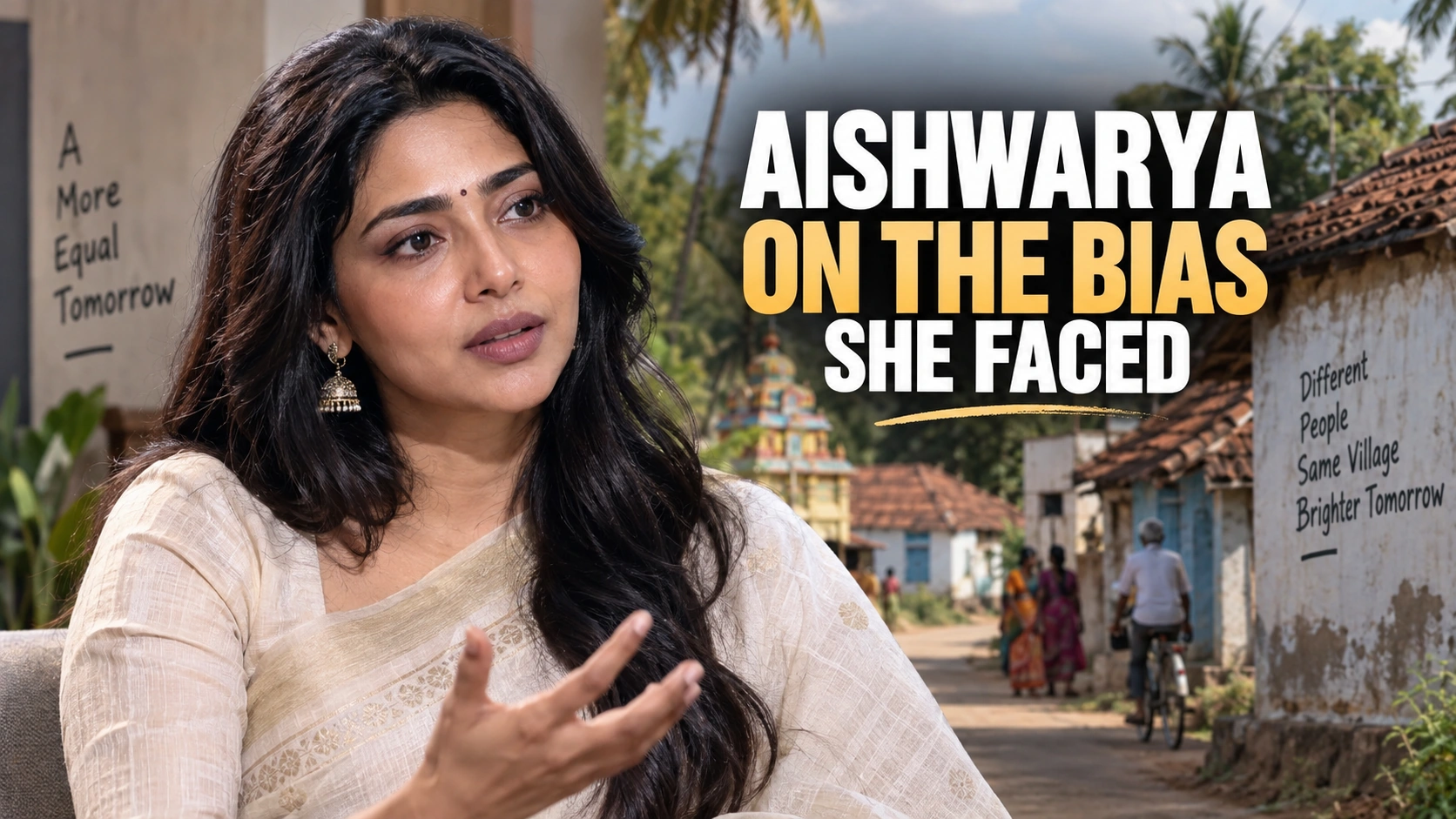
Actor Aishwarya Lekshmi has spoken about encountering caste-conscious attitudes while shooting in rural Tamil Nadu, including being asked about her gotra. She said she did not know it and described the reaction around her as a reminder of how strongly caste can still shape ordinary social interactions.
Why the story drew attention
Celebrity interviews often focus on films or personal life, so a direct discussion of caste can move a subject that is frequently implicit into a more visible public conversation. Lekshmi’s account centres not on a formal institution but on everyday social behaviour.
Caste can operate through routine questions
Questions about surname, lineage, community or gotra can appear socially normal while also functioning as ways of locating someone inside a caste hierarchy. The meaning depends on context, but the practice can reinforce boundaries even without explicit discrimination.
Public testimony has limits and value
One actor’s experience cannot describe all of rural Tamil Nadu, and it should not be used to stereotype a region. Its value is narrower: it shows how a person can encounter caste expectations in a specific setting and choose to challenge them publicly.
What to watch
The most useful discussion is likely to focus on behaviour rather than celebrity controversy — how workplaces, schools and communities respond when caste identity is assumed, requested or used to exclude.
Bottom line
Lekshmi’s story resonates because the tension begins with an ordinary question. That is often how entrenched social systems remain visible in daily life.
Source: The Indian Express