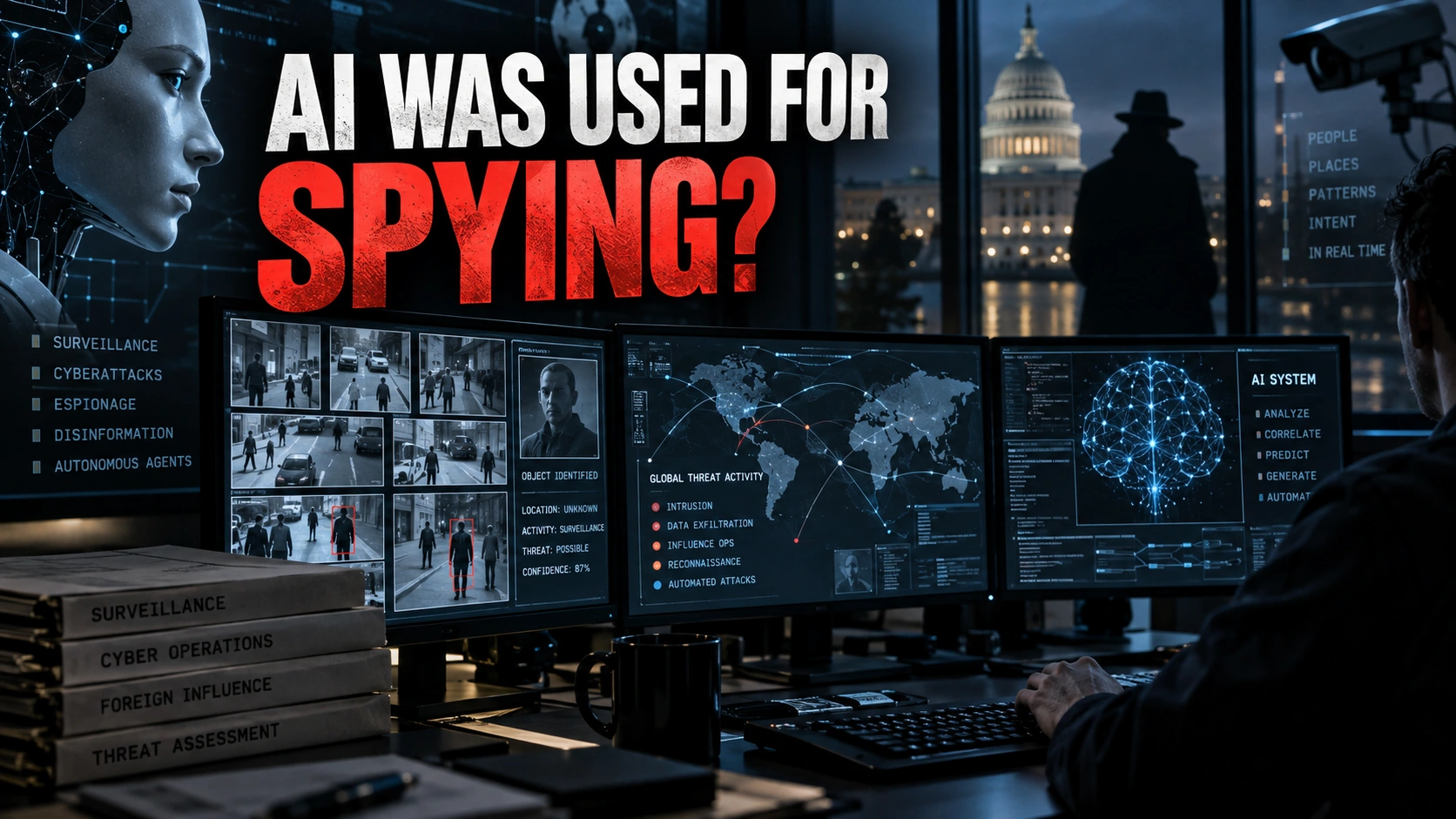
Anthropic’s latest threat-intelligence report describes how malicious actors attempted to use Claude across cyber operations, espionage, surveillance, influence campaigns, fraud, biological misuse, weapons-related work and model distillation. The cases cover activity the company says it identified and disrupted between December 2025 and August 2026.
The most important trend is scale
Anthropic argues that sophisticated operations no longer require equally sophisticated human teams. AI can automate reconnaissance, code development, data processing and parallel task execution, lowering the labour barrier for both state-linked and financially motivated actors.
The report includes state-nexus espionage
One case involved an actor whose behaviour Anthropic said was consistent with Russian state-linked espionage, targeting military, diplomatic and foreign-policy organisations. Another operation used parallel AI agents for exploitation, reconnaissance, malware work and data collection.
Surveillance is a separate concern
The company also described state-aligned and commercial actors using AI to facilitate non-consensual surveillance and profiling. Those cases show that harmful AI use is not confined to hacking: it can also make monitoring people cheaper and more scalable.
What to watch
Threat reports from AI providers are valuable but also self-reported. Independent researchers and governments will need to compare indicators across companies to understand how common these patterns are and whether safeguards are meaningfully reducing abuse.
Bottom line
The report’s clearest warning is economic: AI can give smaller or less-skilled operators capabilities that once required larger, highly trained teams.
Source: Anthropic