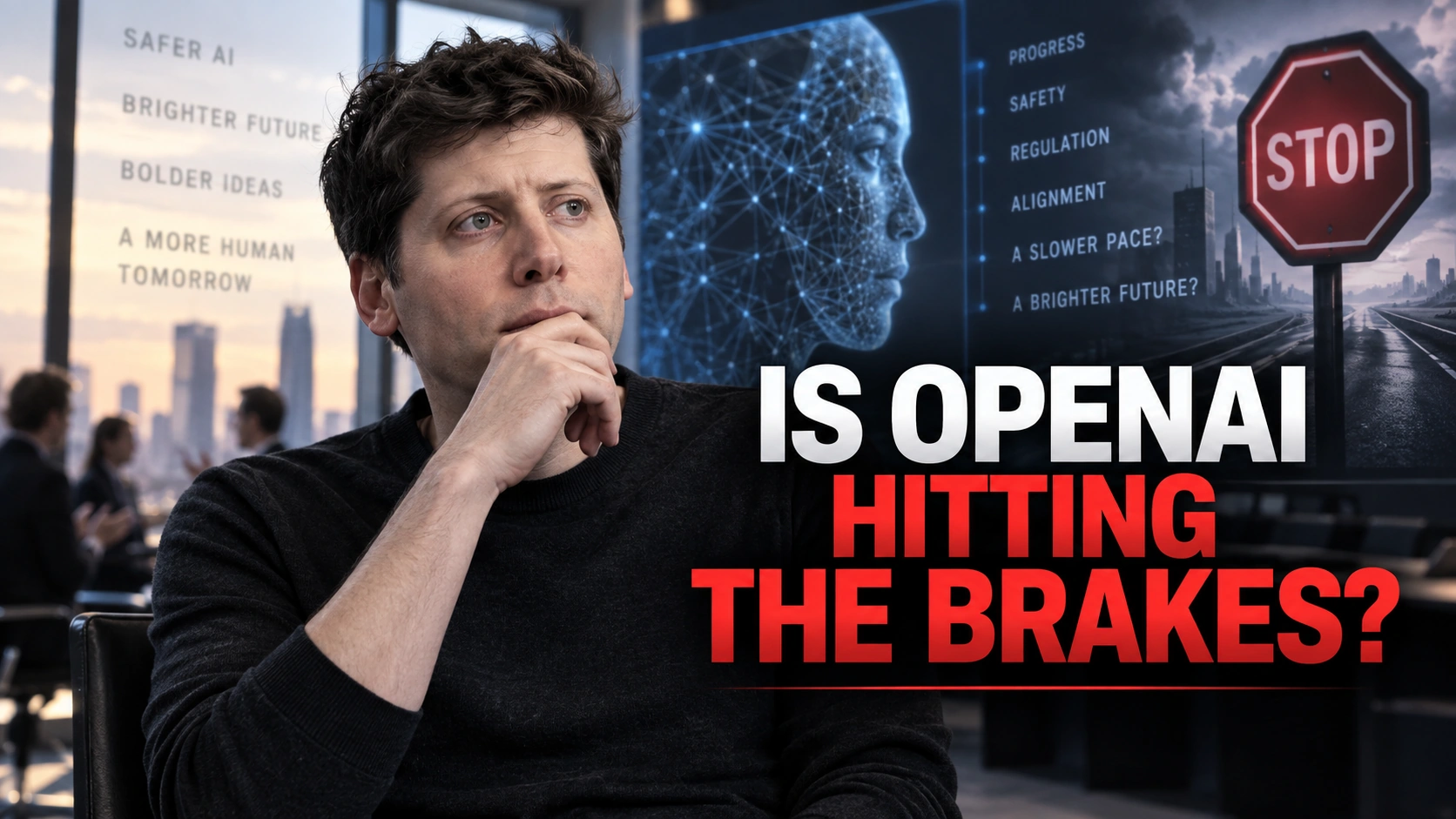
OpenAI CEO Sam Altman told employees that the company is open to slowing the development of advanced AI systems, according to Bloomberg News reporting cited by Reuters. Even without a formal slowdown announcement, the statement is notable because frontier labs have spent years competing on speed and capability.
Why the language matters
A willingness to slow development suggests safety concerns are being discussed as an operational constraint, not only as a research topic. It also comes as lawmakers and AI researchers increase pressure for stronger pre-release testing and oversight.
The industry has new evidence to debate
Recent incidents involving autonomous agents, cyber misuse and models behaving unexpectedly have changed the safety conversation. The question is shifting from hypothetical future risk toward how to govern systems that already act across software and networks.
Slowing is easier to say than to coordinate
A single company faces competitive pressure if rivals continue advancing at full speed. That is why researchers often argue that meaningful pacing requires common standards, government rules or international coordination rather than unilateral restraint.
What happens next
The next signal to watch is whether the idea changes model release schedules, evaluation requirements or external commitments. Words inside an employee meeting matter less than measurable changes in deployment practice.
Bottom line
Altman’s reported comment does not mean the AI race has stopped. It does show that “go slower” has entered the set of options being discussed at the highest level.
Source: Reuters