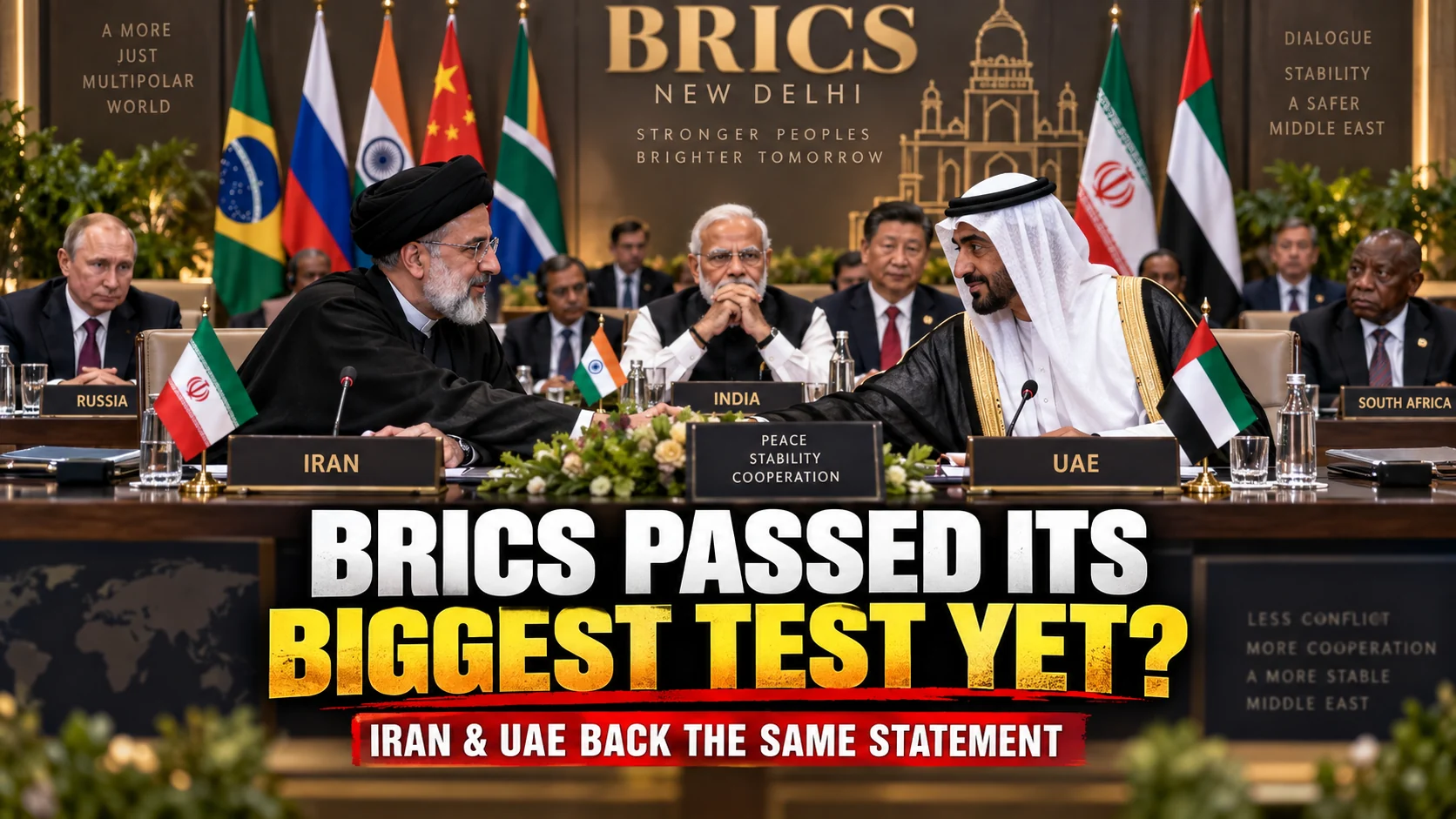
BRICS cleared one of its toughest diplomatic tests at the New Delhi summit after Iran and the United Arab Emirates backed the same joint declaration despite being on opposing sides of the Middle East conflict.
Why this was such a difficult test
Iran and the UAE entered the summit with sharply different security interests. Iran is directly involved in the conflict, while the UAE has been hit by Iranian missiles and suspended trade and financial transactions with Tehran in August.
What the declaration actually said
The New Delhi Declaration called for maximum restraint, protection of civilians, respect for sovereignty and a multilateral approach to resolving disputes. Importantly, the statement avoided naming individual countries as aggressors.
Why consensus matters
BRICS has expanded rapidly and now includes countries with very different foreign-policy priorities. Reaching a common statement on an active war showed that the bloc can still produce consensus when the wording is broad enough for rival members to accept.
Does this mean Iran-UAE tensions are over?
No. A joint declaration is not a peace deal. But the fact that both sides accepted the same language creates a diplomatic channel that BRICS can point to as evidence that it is more than an economic discussion club.
Bottom line
BRICS did not solve the Middle East conflict, but it did avoid a public collapse in unity at a moment when many expected internal divisions to dominate the summit.
Source: Reuters