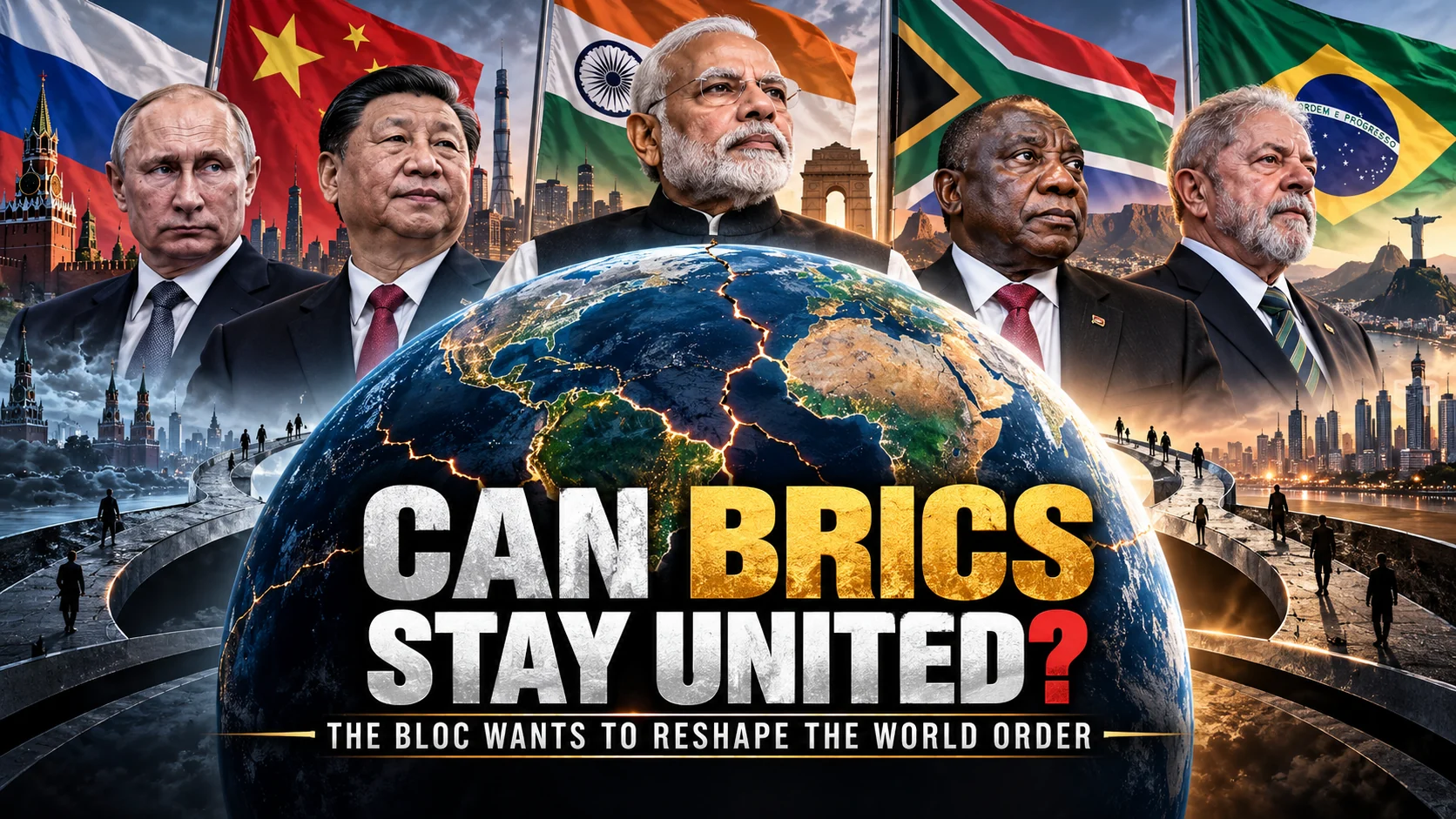
BRICS is bigger than ever, more ambitious than ever — and arguably harder to hold together than ever.
How powerful is BRICS now?
The bloc represents more than 40% of the world’s population and nearly a quarter of global GDP. It now includes Brazil, Russia, India, China, South Africa, Egypt, Ethiopia, Iran, the UAE and Indonesia, with further expansion still under discussion.
What BRICS wants
Its members broadly support a more multipolar world, greater influence for emerging economies and less dependence on Western-dominated institutions. The bloc has also developed the New Development Bank, which has financed tens of billions of dollars in projects.
The problem with getting bigger
Expansion brings more economic weight but also more disagreement. Members have different relationships with the U.S., different security alliances and different positions on wars, sanctions and trade.
Why New Delhi mattered
The summit’s joint declaration was important precisely because consensus had become harder. The bloc had previously struggled to agree on language around major conflicts.
Bottom line
BRICS has enough scale to demand attention, but its real influence will depend on whether it can turn broad frustration with the existing world order into coordinated action among countries that often disagree with one another.
Source: Reuters