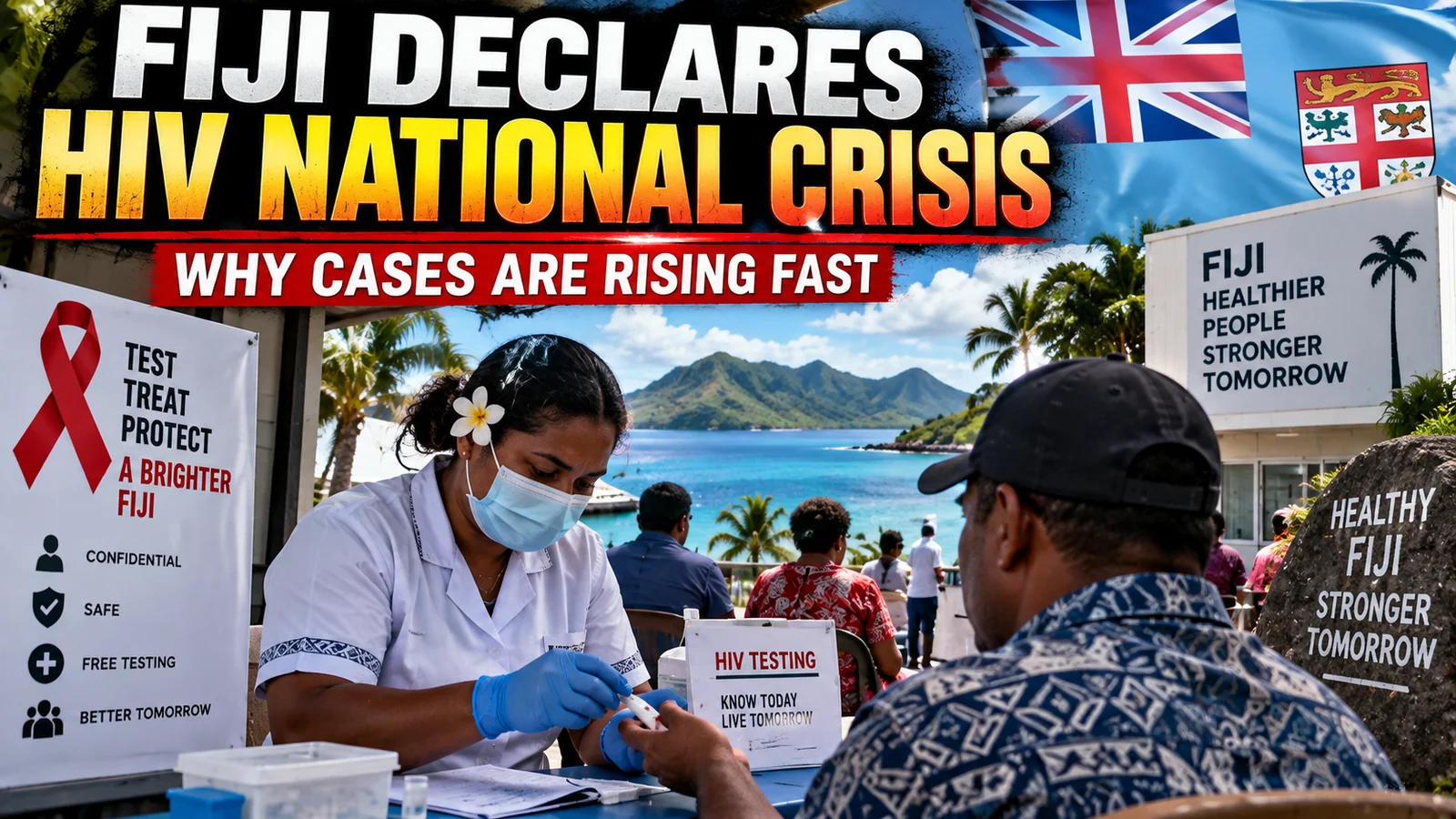
Fiji has declared HIV a national crisis after diagnoses surged. Here are the latest case numbers, treatment gaps, transmission patterns and response measures.

Fiji has declared HIV a national crisis after a sharp rise in diagnoses exposed serious gaps in testing, treatment and prevention. The declaration reflects concern that the country’s epidemic is growing faster than its health system can comfortably contain.
Reuters reported that Fiji recorded 2,016 new HIV cases in 2025, a 27% increase from the previous year. UNAIDS estimates that around 9,100 people in Fiji are living with HIV, but only 39% know their status and just 22% are receiving antiretroviral treatment.
Those gaps matter because early diagnosis and consistent treatment are central to controlling HIV. Antiretroviral therapy can allow people with HIV to live long, healthy lives and can reduce viral load to levels where sexual transmission is effectively prevented when suppression is maintained.
The pattern of transmission is also driving urgency. Reuters reported that more than half of cases were linked to sexual contact and 42% to injecting drug use. The country also recorded HIV-positive births, highlighting the need for stronger testing and treatment during pregnancy.
Fiji’s response includes expanding free and confidential testing, increasing access to pre-exposure prophylaxis, strengthening harm-reduction services and forming a Cabinet subcommittee to remove barriers in the national response. Authorities have also stressed that discrimination against people living with HIV is illegal.
The crisis declaration is therefore both a warning and a mobilisation tool. Fiji has effective medical options available, but they only work when people can access testing, prevention and treatment without stigma or delay. The next challenge is turning the declaration into faster coverage and sustained public-health action.
Why this matters
This development matters because it changes the choices available to users, businesses or policymakers in a fast-moving area. The key next step is to watch execution, adoption and any official follow-up.
Related coverage
- Medical Interns Stipend Gap Protests
- Bipasha Basu Protein Powder Worms Complaint
- Kerala Elder Care Bill Seniors Policy
Source: Reuters