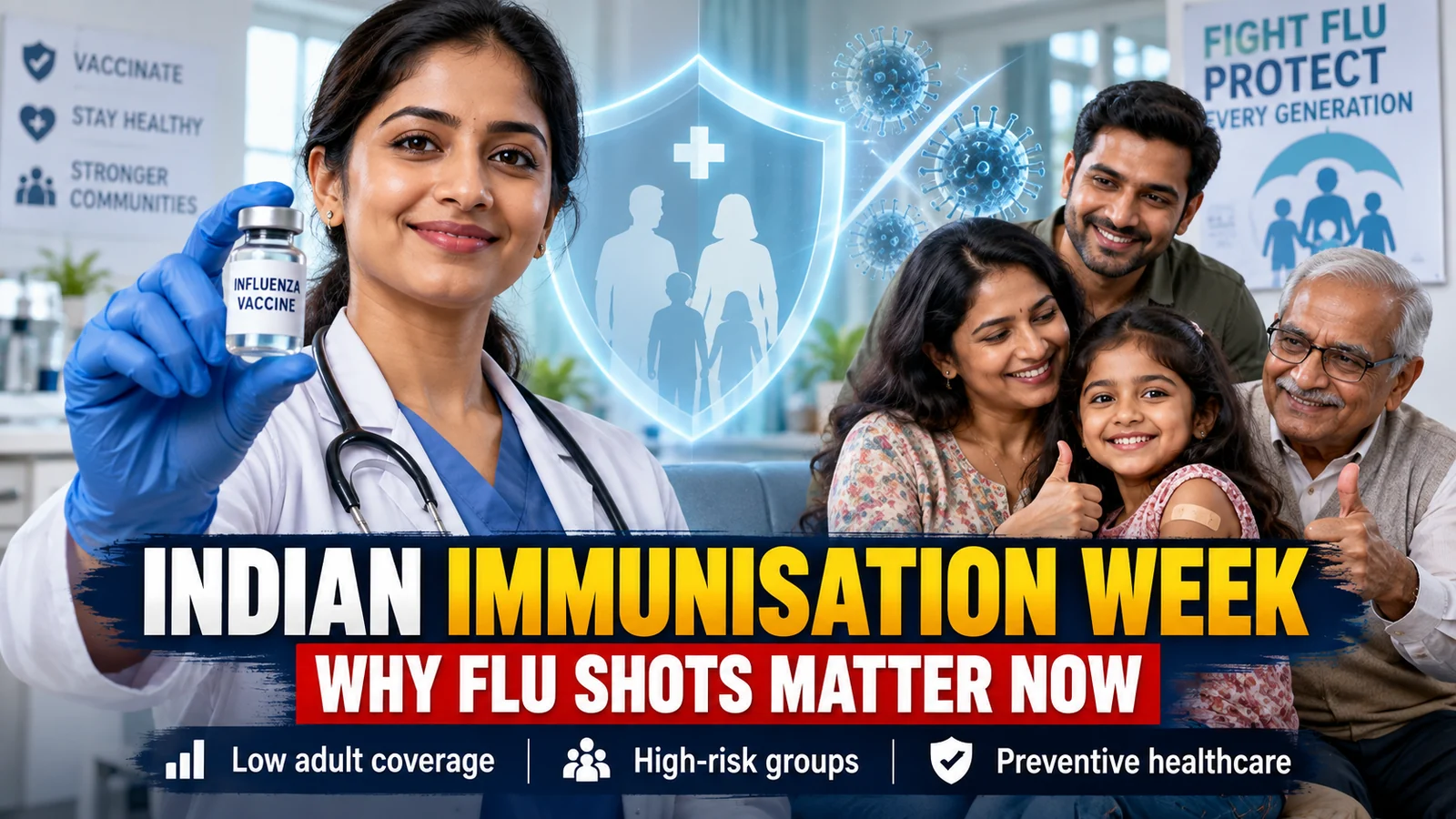
Indian Immunisation Week is putting a familiar illness back into the preventive-health conversation: influenza.
The Indian Medical Association, working with Abbott, organised the September 21–27 awareness initiative to encourage greater understanding of annual flu vaccination and to address common misconceptions that can lead people to postpone or skip recommended immunisation.
The campaign is particularly focused on groups more likely to experience serious complications from influenza. These include young children, older adults, pregnant women, healthcare workers and people living with chronic medical conditions. The message is not that every fever requires a vaccine or that vaccination replaces medical care. It is that seasonal influenza can be more than a short-lived inconvenience for vulnerable people, and prevention deserves the same attention as treatment.
One reason the campaign matters is India’s low adult-vaccination uptake. Figures highlighted by the organisers, citing the National Sample Survey, put adult vaccination coverage at under 2%, with even lower reported coverage among people aged 60 and above. Those numbers refer to broader adult vaccination uptake, but they illustrate the challenge public-health programmes face when trying to make immunisation a routine part of adult care.
The initiative has also introduced expert-reviewed clinical guidance intended to help doctors decide when vaccination can proceed in people who have mild or moderate illness. This addresses a common source of confusion: patients may assume that any recent fever or minor illness automatically means a vaccine must be delayed.
The correct decision can depend on the individual, the severity of symptoms and the vaccine involved. People with ongoing health conditions, those who are pregnant, older adults and parents making decisions for children should rely on advice from a qualified clinician rather than social-media claims or one-size-fits-all rules.
The larger public-health issue is cultural as much as medical. Childhood vaccination is widely recognised in India, while adult vaccination is still often treated as optional or unfamiliar. Influenza campaigns are trying to change that by framing vaccination as part of regular preventive healthcare.
Indian Immunisation Week ends on September 27, but the practical point extends beyond a seven-day campaign: flu prevention works best when people discuss vaccination before illness becomes widespread, not after a household or workplace outbreak has already begun.