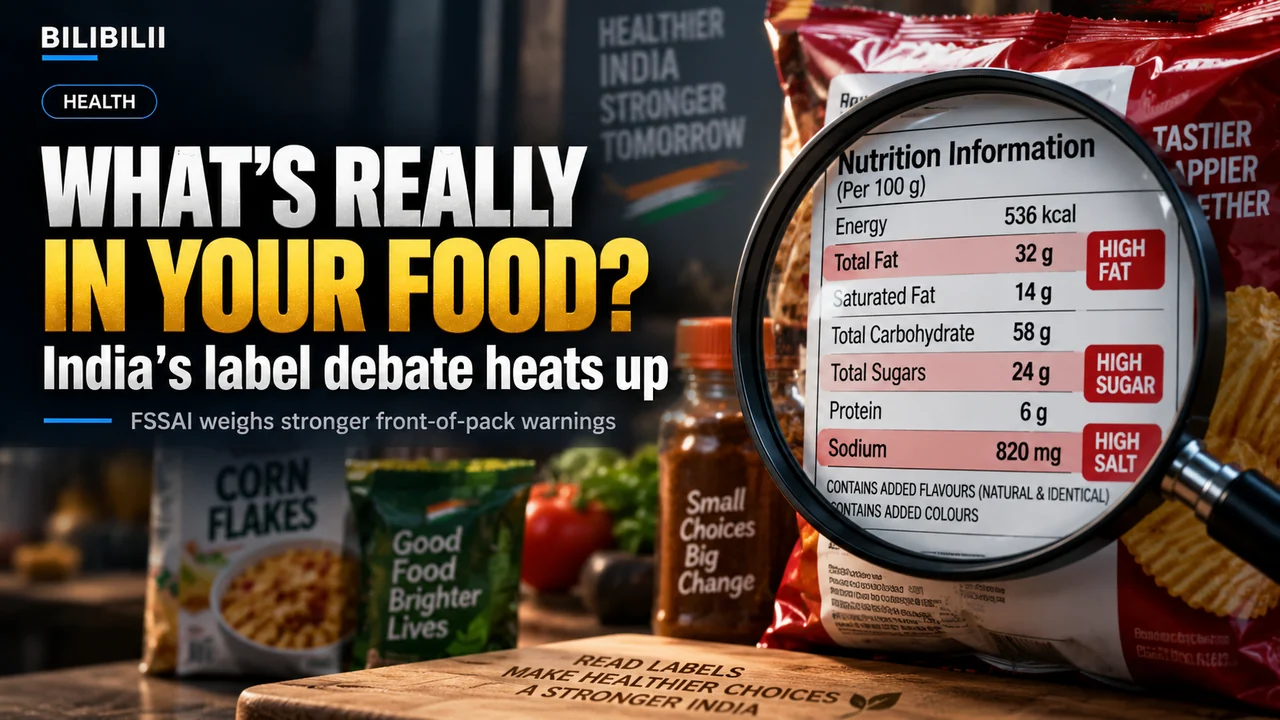
India’s packaged-food labels could be heading for a much more visible change. The government has told the Supreme Court that it is open to introducing tougher red warning labels in one go, instead of relying on a softer phased approach.
What changed
The debate centres on front-of-pack warnings for products high in added sugar, salt or saturated fat. A previous proposal would have required warning labels in phases, with the first phase applying only when a product crossed thresholds in at least two categories.
Health advocates argued that this could allow many highly processed products to escape a clear warning. After the Supreme Court questioned the logic of the phased approach, the government signalled it could consider a stricter system.
Why shoppers should care
If stronger labels are introduced, consumers may be able to identify high-sugar, high-salt or high-saturated-fat products much faster without studying a detailed nutrition panel. That could make the front of the package far more important than it is today.
Why the food industry is watching closely
A tougher labelling regime could force companies to rethink packaging, reformulate products or change marketing strategies. Industry groups have argued that labels should reflect realistic serving sizes rather than only per-100-gram comparisons.
Bottom line
The exact final rule still matters, but the direction is clear: India is under pressure to make packaged-food health warnings more direct and harder to miss.
Source: Reuters