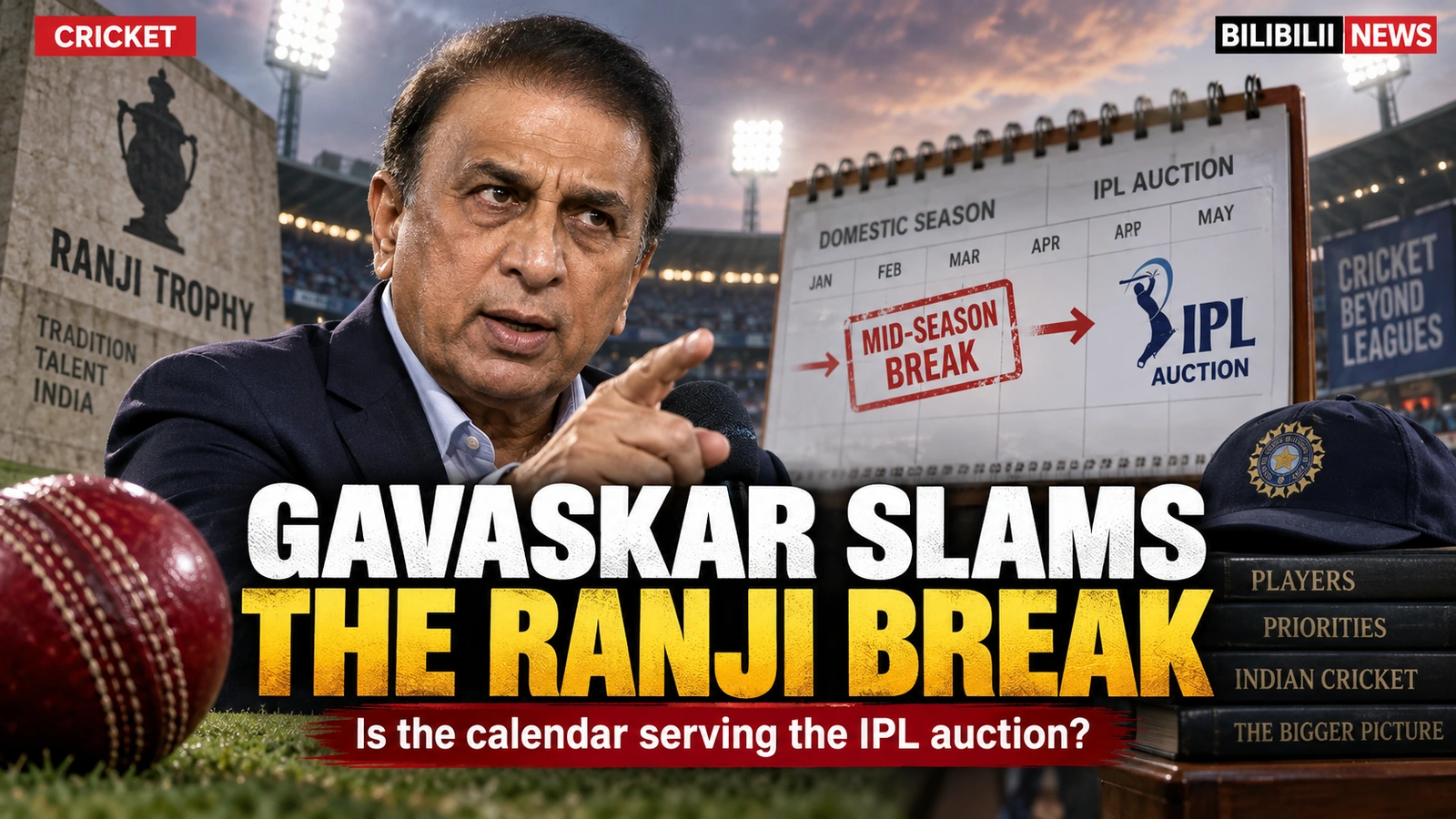
Sunil Gavaskar has taken aim at the structure of India’s new domestic cricket calendar, arguing that the Ranji Trophy is being interrupted to suit the IPL ecosystem.
The former India captain’s criticism centres on a more-than-two-month break in the 2026-27 Ranji Trophy season, during which India’s two major domestic white-ball competitions will be played.
How is the season structured?
The Ranji Trophy group phase is scheduled from October 11 to November 5. The competition then pauses while the Syed Mushtaq Ali Trophy and Vijay Hazare Trophy are held between November and early January.
The Ranji season resumes only after that long interruption.
Why does Gavaskar connect this to the IPL auction?
White-ball domestic tournaments give IPL franchises fresh data on players immediately before or around auction planning. Strong T20 and 50-over performances can directly influence which uncapped players attract bids.
Gavaskar believes structuring the calendar this way sends a message that first-class cricket is being moved aside to support IPL recruitment priorities.
Why does the Ranji Trophy need continuity?
Red-ball cricket rewards rhythm. Batters adapt to longer innings, bowlers manage workloads across multiple spells, and teams build momentum over several rounds.
A long mid-season pause changes those conditions. Players can return to the same competition after weeks of white-ball cricket with different techniques, workloads and team combinations.
There is another side to the scheduling problem
India’s domestic calendar is crowded. The BCCI has to fit the Ranji Trophy, Duleep Trophy, Syed Mushtaq Ali Trophy and Vijay Hazare Trophy around international cricket and the IPL.
Weather and venue availability also matter. The challenge is that solving one scheduling problem can create another.
Why Gavaskar’s criticism carries weight
Gavaskar has repeatedly argued that first-class cricket should remain the foundation of India’s Test system. His concern is not simply nostalgia for an older format; it is about whether players are being given the conditions needed to develop red-ball skills.
What is really at stake?
India’s IPL is enormously successful and financially powerful. The question is whether that success begins to shape the rest of the calendar so strongly that domestic first-class cricket becomes secondary.
That is the tension behind Gavaskar’s criticism.
Bottom line
The debate is not “IPL versus Ranji” in a simple sense. India needs both. The harder question is whether the national calendar still treats the Ranji Trophy as the country’s premier first-class competition — or increasingly as something that has to fit around the IPL machine.
Source: The Indian Express