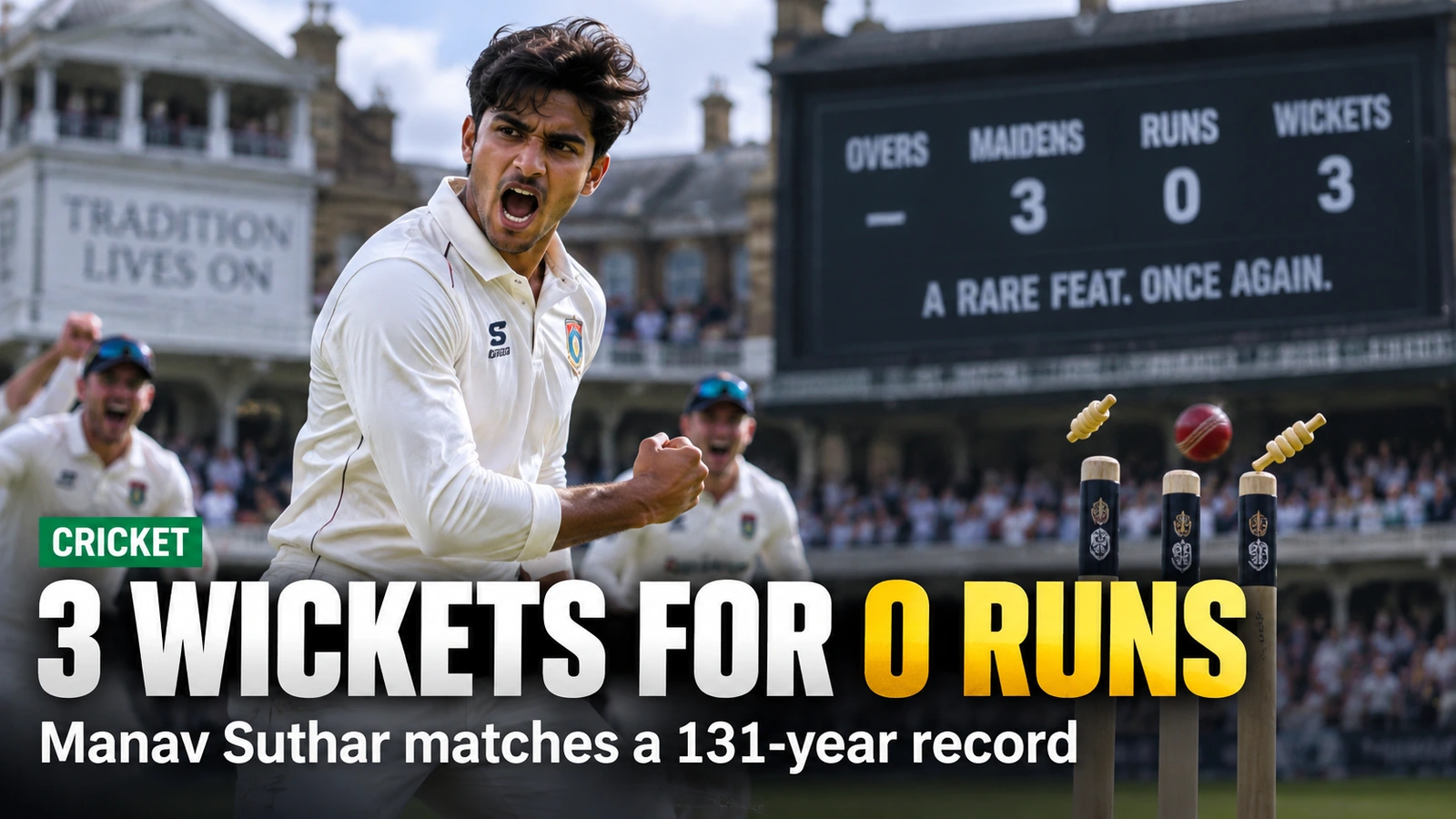
Manav Suthar has produced a bowling line that looks almost impossible: three wickets and zero runs conceded.
The Indian left-arm spinner achieved the feat during Warwickshire’s County Championship match against Glamorgan in Cardiff, equalling a First-Class record that had stood for 131 years.
How do you take three wickets without conceding a run?
Suthar’s contribution came across the two Glamorgan innings. He removed three batters while not allowing a single run from his bowling.
That kind of return requires more than taking wickets quickly. Every legal delivery has to avoid being scored from, making even one pushed single enough to end the zero-run line.
Glamorgan were overwhelmed
Warwickshire dominated the match completely.
Glamorgan were dismissed for only 69 in one innings and 65 in the other, while Warwickshire piled up 391. The result was an innings-and-257-run victory.
In a match filled with one-sided numbers, Suthar’s wicket column still stood out.
Why the 131-year comparison matters
The Indian Express reported that the feat matched a First-Class record dating back to 1895.
Cricket has changed almost beyond recognition since then — equipment, pitches, schedules, fitness, analysis and batting styles are all different. That makes any statistical connection across more than a century unusual.
Suthar’s rise is becoming harder to ignore
At 26, the left-arm spinner is at an age where strong domestic and overseas performances can meaningfully alter a player’s place in the national conversation.
County cricket also tests bowlers in unfamiliar conditions, where patience and control can matter as much as dramatic turn.
Zero runs does not mean zero pressure
Bowling figures can sometimes hide the value of pressure. In this case, they do the opposite.
If a batter knows a bowler is giving nothing away, the temptation to manufacture a scoring option grows. That pressure can create mistakes at the other end as well as wickets for the bowler himself.
Bottom line
Three wickets for no runs is the kind of scorecard line that makes people check whether it has been printed correctly. For Manav Suthar, it is real — and it has placed his name beside a record from 1895.
Source: The Indian Express