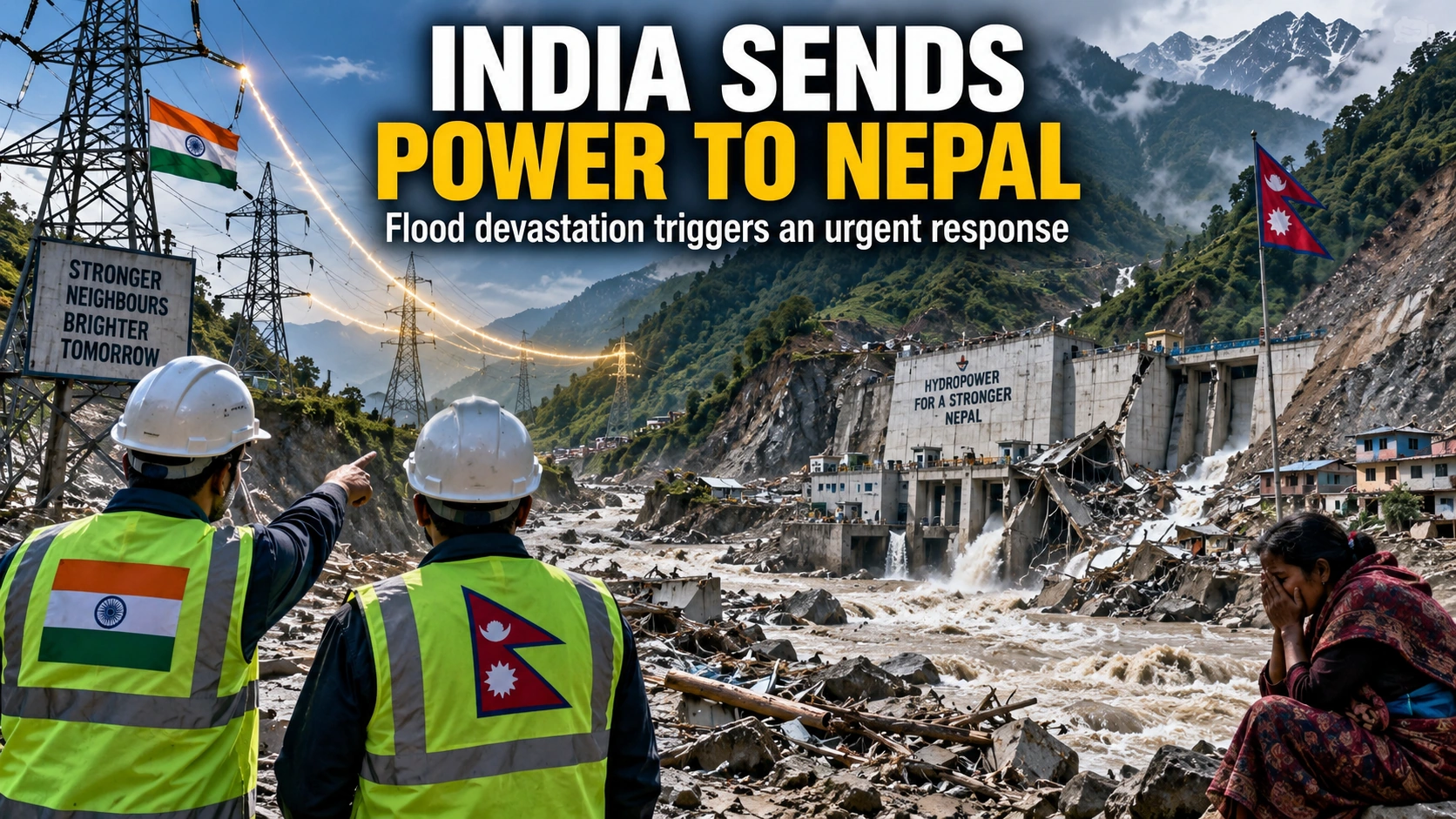
India has approved a major power export to Nepal after catastrophic flooding damaged hydropower infrastructure and pushed the neighbouring country into an urgent electricity shortfall.
Why the decision matters
Nepal depends heavily on hydropower, both for domestic supply and export revenue. The recent flood disaster changed that picture overnight. With multiple hydropower stations hit and workers reported missing, the country’s power system took a direct blow at the very moment households and services needed stability most.
What India has approved
According to Reuters, India has allowed the export of up to 654 megawatts of electricity to Nepal for 18 hours daily until the end of the year. That makes the move both humanitarian and strategic. It addresses an immediate crisis while reinforcing the importance of cross-border energy cooperation in South Asia.
Why this is bigger than an energy story
The disaster has also sharpened the climate conversation. Nepal has argued that the flood is a stark example of how vulnerable mountain economies can face disproportionate damage from extreme events. In that context, energy support is not just a bilateral gesture — it becomes part of a wider regional resilience story.
What to watch next
Attention will now shift to reconstruction, the pace of grid recovery and whether outside financial assistance arrives quickly enough. Nepal’s long-term energy rebound will depend on rebuilding damaged hydropower assets without leaving the country exposed to repeated shocks.
Bottom line
India’s electricity support gives Nepal breathing space, but it also highlights how fragile energy security can become when climate-linked disasters strike at the heart of infrastructure.
Source: Reuters