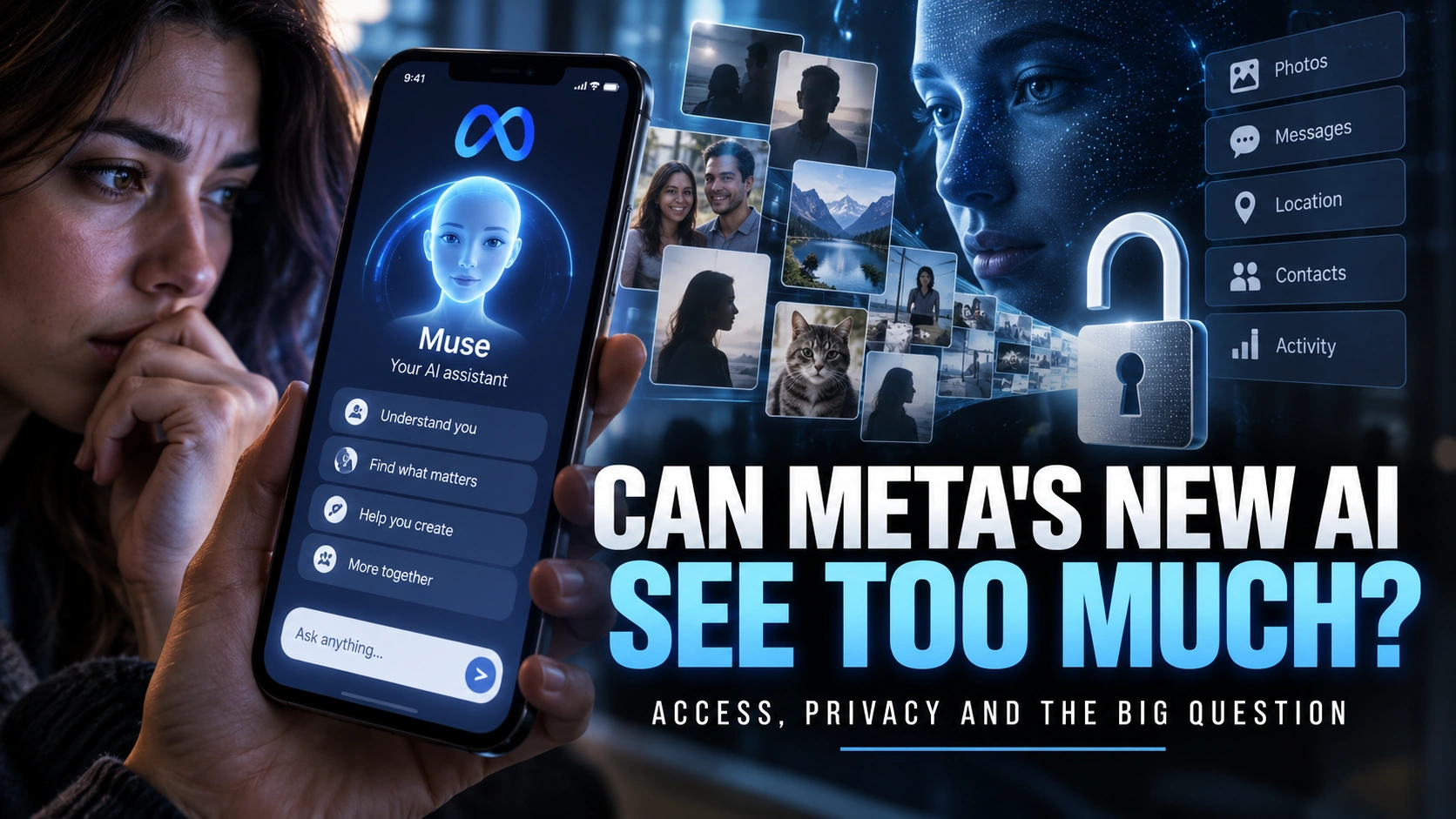
Whenever a tech giant launches a more capable AI assistant, the same trade-off reappears: the more helpful the system becomes, the more data it may need to understand you. That is exactly why Meta’s new AI push is stirring both excitement and discomfort.
Why this question matters
An assistant becomes more useful when it can connect context across messages, photos, location patterns, past activity and personal preferences. But that same integration can make people feel as if the system knows too much.
What privacy critics fear
The concern is not just raw data access. It is also inference — what AI can guess about a person from seemingly ordinary digital traces. A system that sees a little of everything can sometimes infer far more than users realise.
What Meta has to prove
For a mass-market AI product, trust is now as important as features. Meta needs to convince users that permission controls are real, retention policies are clear and private content is not being used in ways people did not expect.
Why the debate will keep growing
AI assistants are moving from novelty to operating layer. As they become embedded across everyday apps, privacy questions will shift from a niche concern to a mainstream consumer issue.
Bottom line
The central question is simple: can Meta build an AI assistant that feels deeply useful without also feeling deeply intrusive?
Source context: Technology reporting