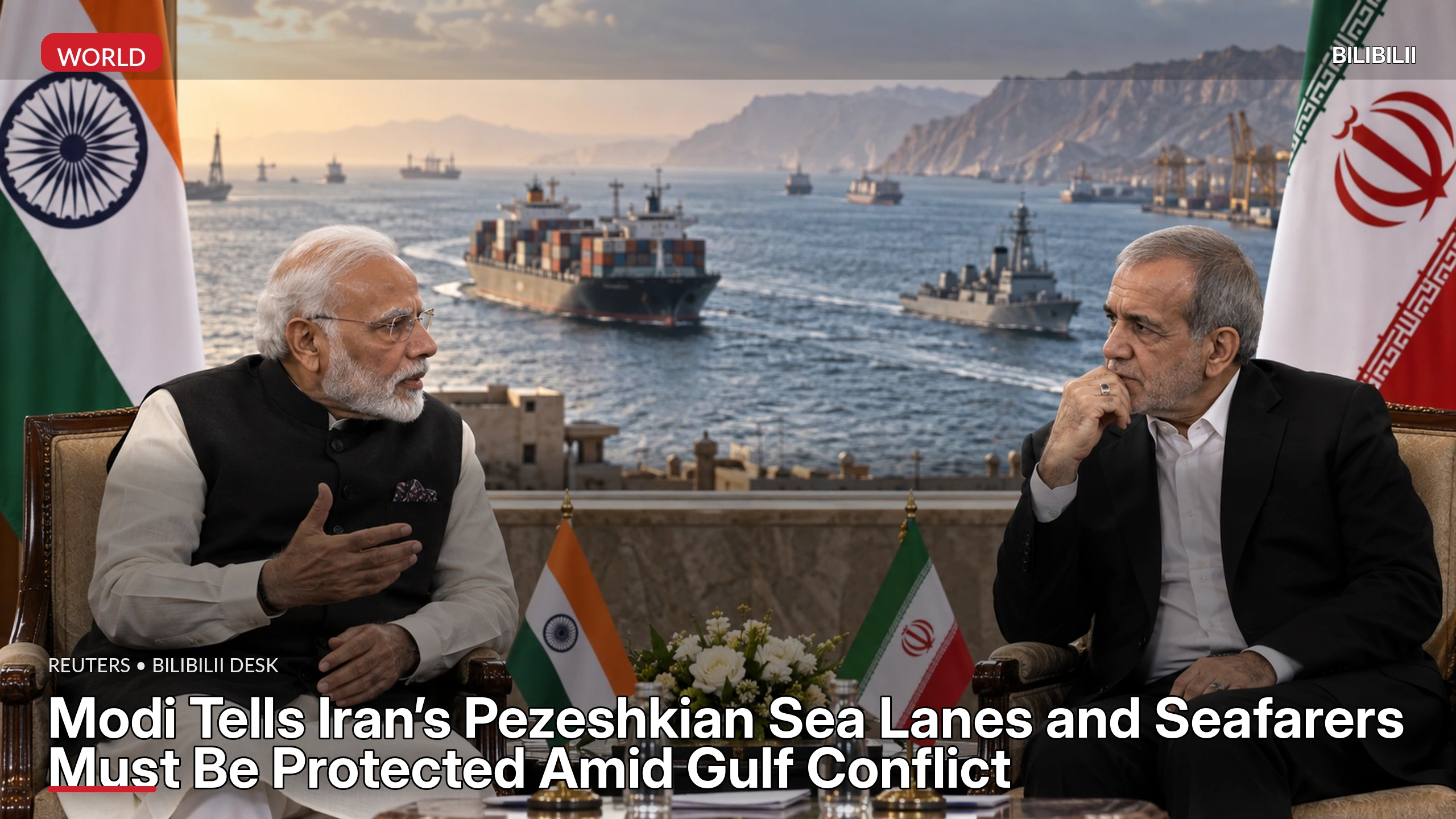
Prime Minister Narendra Modi told Iranian President Masoud Pezeshkian that freedom of navigation, maritime commerce and the safety of seafarers must be protected as conflict disrupts major Gulf shipping routes. The message reflects India’s direct exposure to any breakdown in energy and cargo movement through the region.
Why India is especially sensitive
India depends heavily on imported energy and has a large seafaring workforce. Disruption around the Strait of Hormuz and other strategic waterways can raise freight and insurance costs, delay cargoes and put Indian nationals at physical risk.
The diplomacy is delicate
New Delhi maintains relationships with Iran, Israel, Gulf Arab states and the United States. That makes India more likely to emphasise navigation, dialogue and civilian safety than to align completely with one side of the conflict.
The issue is no longer theoretical
Recent maritime attacks have already affected Indian nationals and contributed to higher oil prices. Every escalation therefore carries both human and macroeconomic consequences for India.
What to watch
At the BRICS summit, the question is whether member states can agree on language that addresses the conflict while keeping Iran and the UAE inside a consensus-based grouping. Any commitment on shipping security would be closely watched by energy markets.
Bottom line
For India, safe sea lanes are not an abstract foreign-policy principle: they are a requirement for energy security, trade and the safety of its citizens at sea.
Source: Reuters