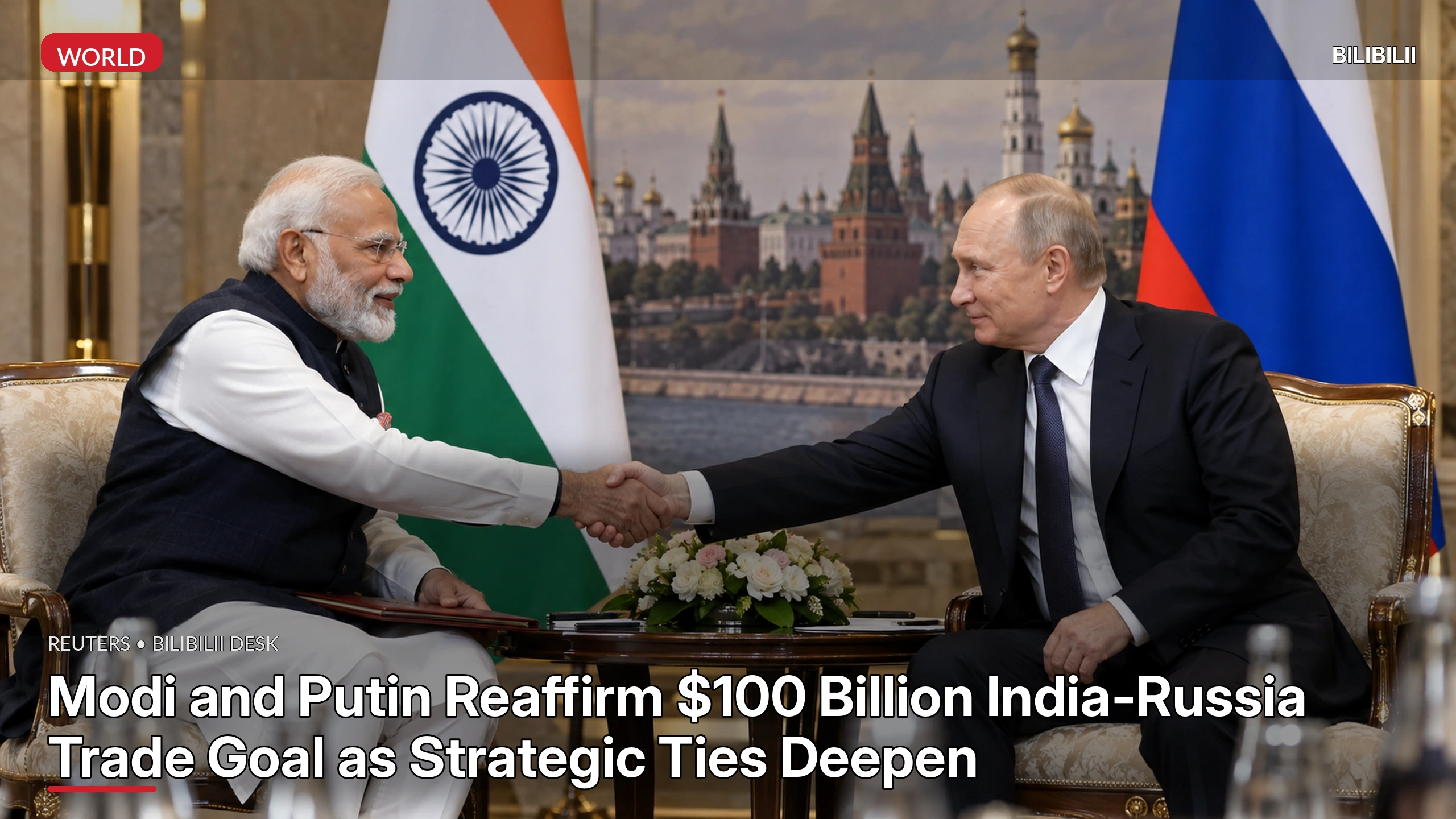
Prime Minister Narendra Modi and Russian President Vladimir Putin have reaffirmed their goal of raising bilateral trade to $100 billion by 2030. The talks in New Delhi came just before the BRICS summit and against a difficult backdrop of war, sanctions, energy disruption and pressure on India’s ties with multiple partners.
Trade is already large — but unbalanced
India-Russia trade has expanded sharply, driven heavily by Indian purchases of Russian energy. That creates a large headline total, but New Delhi has repeatedly sought a more balanced relationship with more Indian exports and broader investment.
Why energy and defence remain central
Russia remains an important energy supplier and a longstanding defence partner for India. Those ties continue even as India also deepens relations with the United States, Europe and Gulf countries, forcing a careful diplomatic balancing act.
BRICS adds a wider strategic layer
Putin used the visit to argue that BRICS should build practical platforms for payments, technology, infrastructure and investment outside Western-led systems. India supports a stronger Global South voice but has generally avoided framing BRICS as an explicitly anti-Western alliance.
What happens next
The $100 billion target will depend on whether trade expands beyond oil and whether payment, sanctions and shipping frictions can be managed. Manufacturing partnerships and market access will be more important than another headline pledge.
Bottom line
The relationship remains durable because it serves concrete interests, but reaching the next trade target will require diversification, not just more of the same energy flows.
Source: Reuters