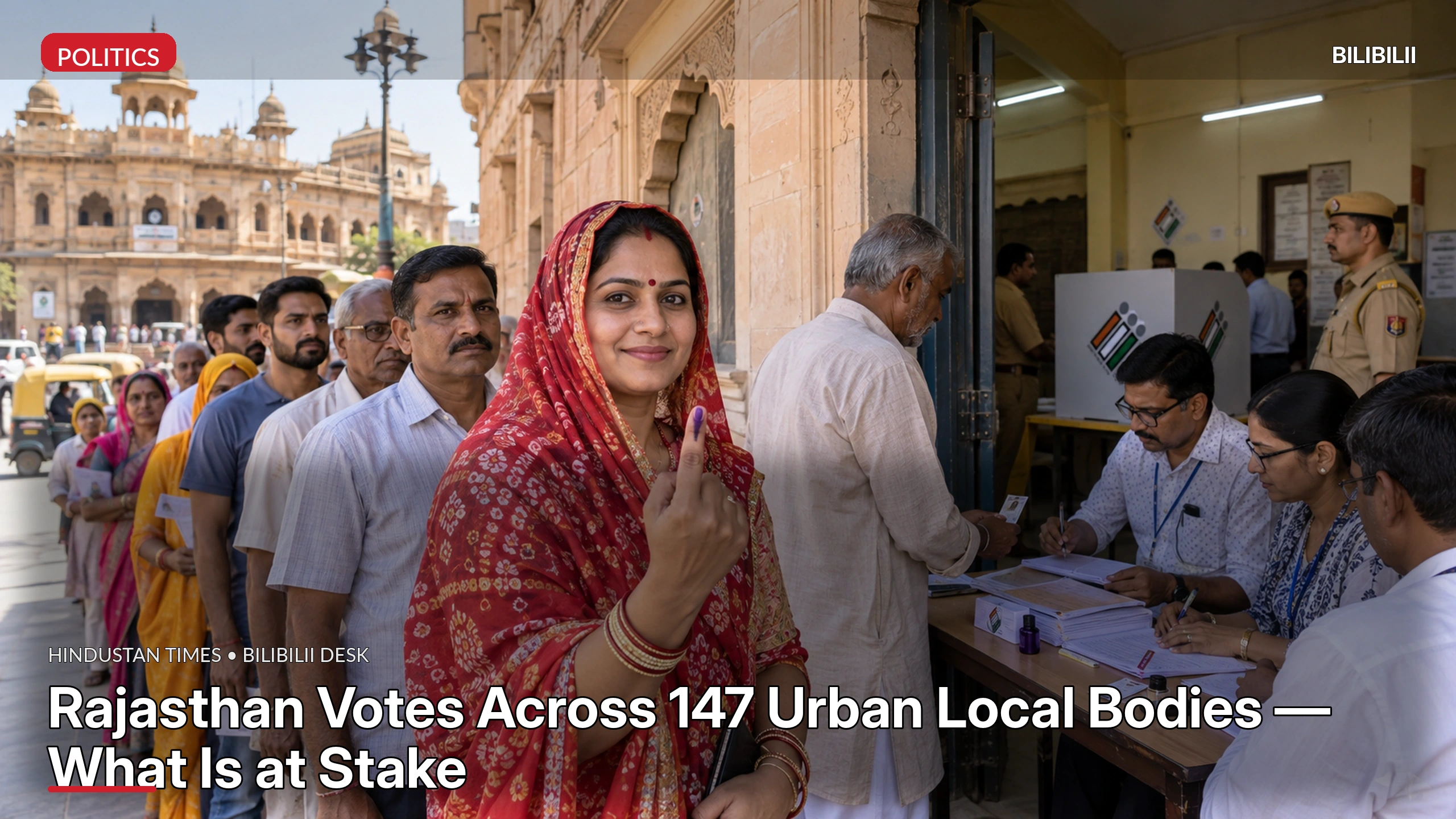
Rajasthan is voting in the second and final phase of urban local-body elections across 147 institutions. The contest covers six municipal corporations, 20 municipal councils and 121 municipalities, making it a broad test of political organisation at the city and town level rather than one single headline race.
Why local elections matter
Municipal bodies influence everyday services such as roads, sanitation, property management, drainage and neighbourhood development. They also create a large network of locally visible leaders who can shape state and national campaigns later.
The scale of the vote
Polling is being held across a mix of large cities and smaller municipalities, with substantial voter bases in places such as Jodhpur. That diversity means parties are competing on both statewide narratives and highly local concerns.
What parties will read into the result
A strong performance can be presented as evidence of organisational strength, while losses may expose candidate-selection problems or local anti-incumbency. Because civic elections involve many wards, the pattern across regions often matters more than one municipal headline.
What comes next
Once counting is complete, watch vote shares and control of major corporations as well as where parties gain or lose ground geographically. Those trends can influence campaign strategy well beyond municipal governance.
Bottom line
These are local elections, but 147 separate contests create a large political map of what urban Rajasthan is rewarding — and rejecting — right now.
Source: Hindustan Times