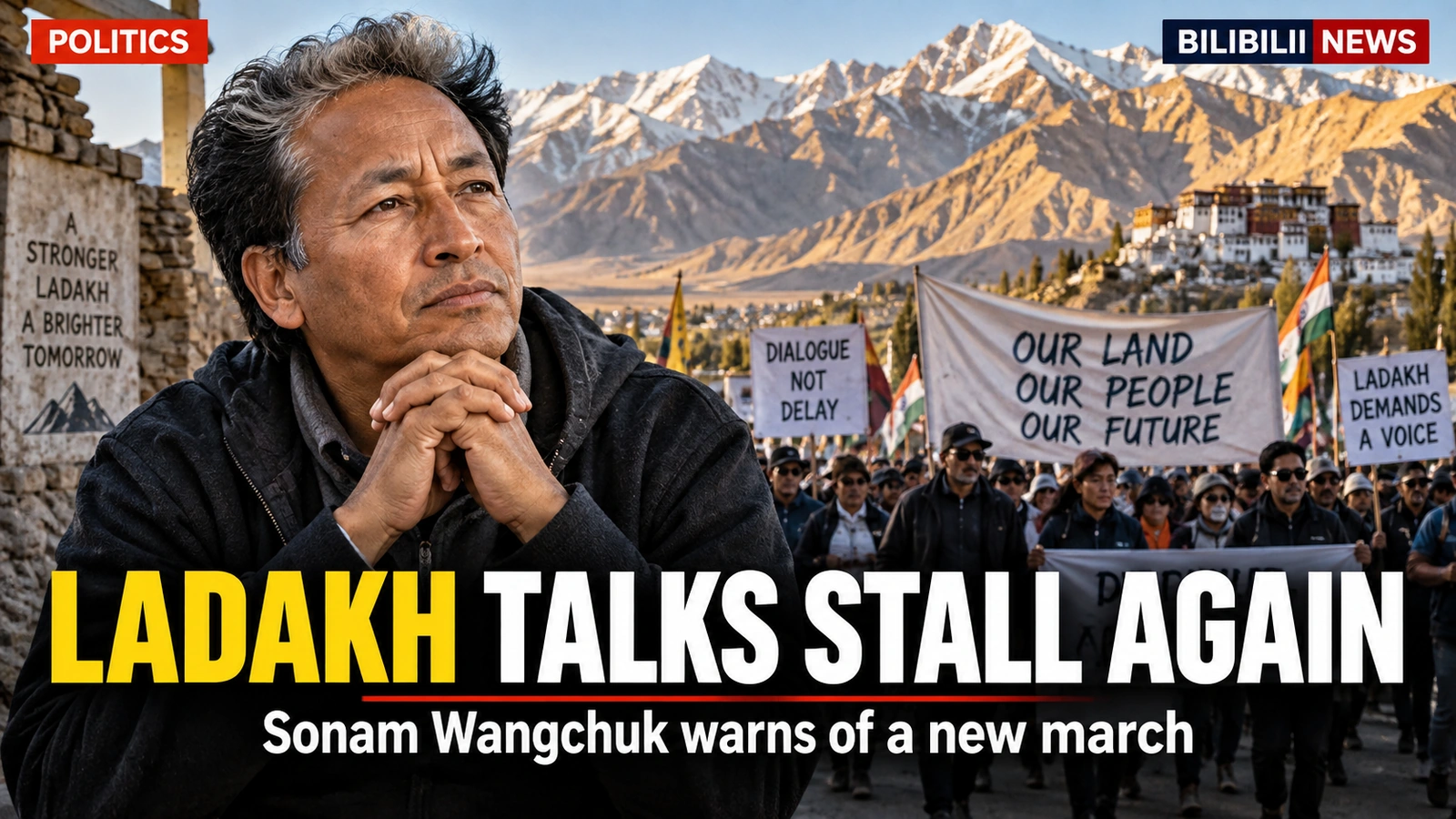
Sonam Wangchuk summed up the latest Ladakh talks with a line designed to be remembered: the chai was good, but nothing moved forward.
The climate activist and Ladakh groups say a fresh round of discussions with the Union government was cordial but produced no concrete proposal on their central political and constitutional demands.
What does Ladakh want?
The long-running demands include stronger constitutional safeguards, greater political representation and protection of land, culture, jobs and the fragile Himalayan environment.
Statehood and safeguards associated with the Sixth Schedule have been among the most visible demands raised by civil-society groups in Leh and Kargil.
Why is the issue still unresolved?
Ladakh became a Union Territory without a legislature after the 2019 reorganisation of the former state of Jammu and Kashmir.
Supporters of greater safeguards say that arrangement left local people with too little control over decisions involving land, development and administration.
What happened in the latest meeting?
Representatives from the Leh Apex Body and Kargil Democratic Alliance met government officials, but activists said the Centre did not present a concrete draft proposal that could move negotiations toward a settlement.
Wangchuk’s comment about the tea captured that frustration: the meeting itself was polite, but the groups say politeness did not translate into substantive movement.
Why are protests being discussed again?
Ladakh organisations have warned that a march could be held from September 19 to 24 if meaningful progress is not made.
The groups are also raising questions around pending cases from earlier protests, compensation for affected families and decisions they say should not be taken without stronger local participation.
Why the environmental argument matters
Ladakh is not only a political issue. It is one of India’s most environmentally sensitive regions, with water stress, glacier dependence and a rapidly changing tourism and infrastructure footprint.
Wangchuk and other campaigners argue that stronger local safeguards are necessary to prevent development decisions from overwhelming the region’s ecological limits.
What happens next?
The next few days will show whether the Centre produces a more specific proposal or whether civil-society groups return to public mobilisation.
Bottom line
The latest meeting did not close the dialogue. But it also did not settle the core disagreement. Ladakh’s leaders are now signalling that if the negotiating table does not move, the protest route may reopen.
Source: The Indian Express