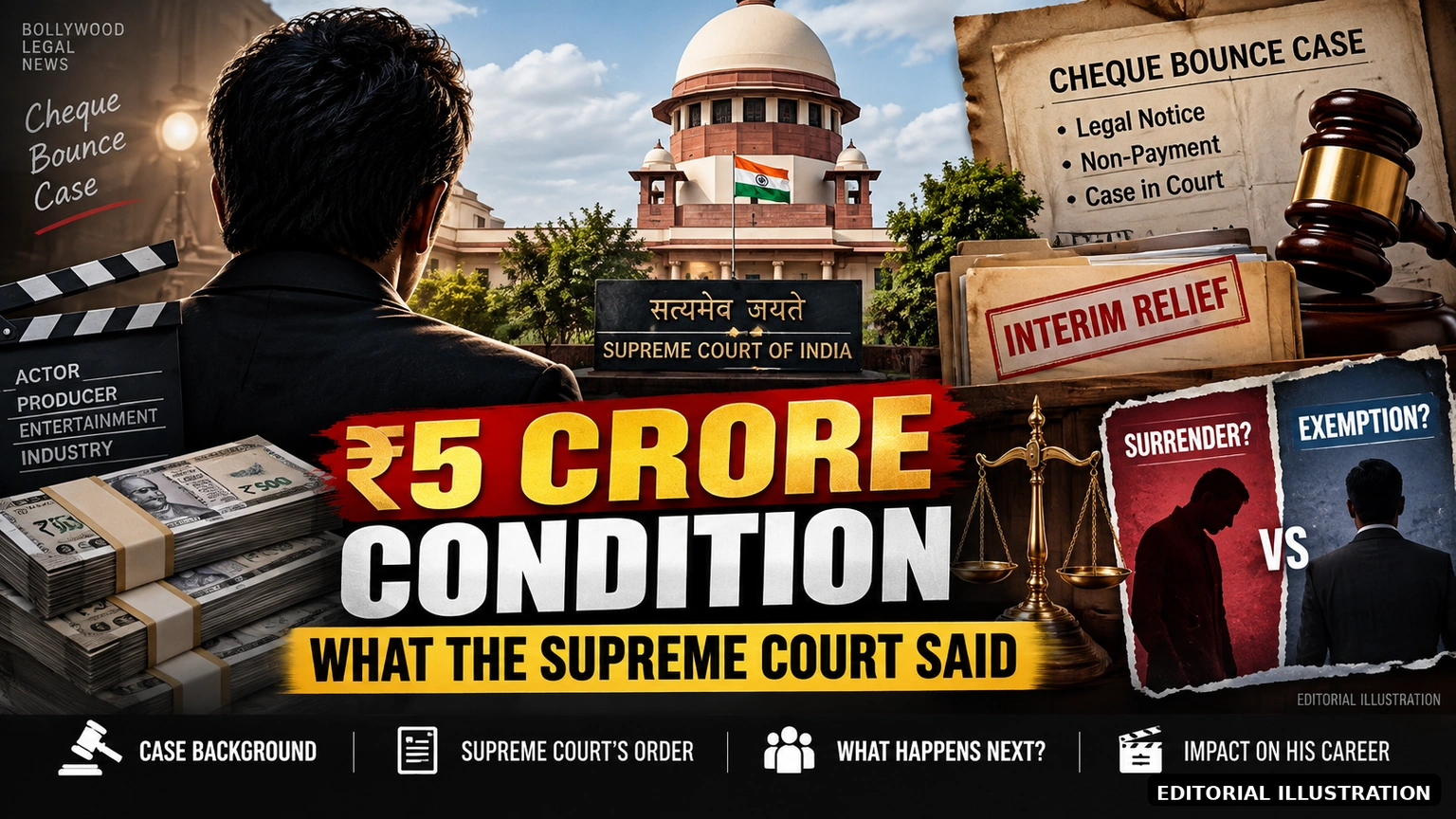
Actor Rajpal Yadav has received interim relief from the Supreme Court in a cheque-bounce matter, but the relief comes with a major financial condition: a ₹5 crore deposit.
What did the Supreme Court reportedly order?
According to reports published after the September 8 hearing, the Supreme Court exempted Yadav from surrendering provided he deposits ₹5 crore with the court Registry by Wednesday.
The important word is conditional. The order does not mean the underlying dispute has disappeared or that the case has been finally decided in his favour. It temporarily changes the immediate surrender requirement if the court's condition is met.
Why was surrender an issue?
Yadav had earlier been sentenced to three months' imprisonment in connection with the cheque-bounce dispute. Reports say he had been given time to settle the outstanding financial liability, which is why the timing of the Supreme Court hearing became important.
The latest order gives him another route to avoid immediate surrender, but only through compliance with the deposit direction.
What is a cheque-bounce case?
In India, dishonour of a cheque can lead to proceedings under the Negotiable Instruments Act when the legal requirements are met. These cases often involve both the original financial liability and criminal-law consequences tied to the dishonoured payment instrument.
Every case turns on its own facts, so a celebrity case should not be treated as a template for what will happen in an ordinary cheque dispute.
Why the ₹5 crore figure is dominating headlines
The number is large enough to make the order sound like a final penalty, but it is better understood as a condition attached to interim relief in the reported Supreme Court proceedings. The legal effect of the deposit, and how the broader dispute is ultimately resolved, depends on future court orders and compliance.
What happens next?
The immediate question is whether the required deposit is made within the court-directed timeline. After that, the case continues through the legal process rather than ending with the interim order.
Because legal proceedings can change quickly, readers should treat social-media claims such as “case closed” or “jail cancelled permanently” with caution unless supported by a later court order.
Source: Times of India report on the Supreme Court hearing, September 8-9, 2026. This article summarises reported court proceedings and is not legal advice.
Featured image is an AI-generated editorial illustration and does not depict the actual court hearing.