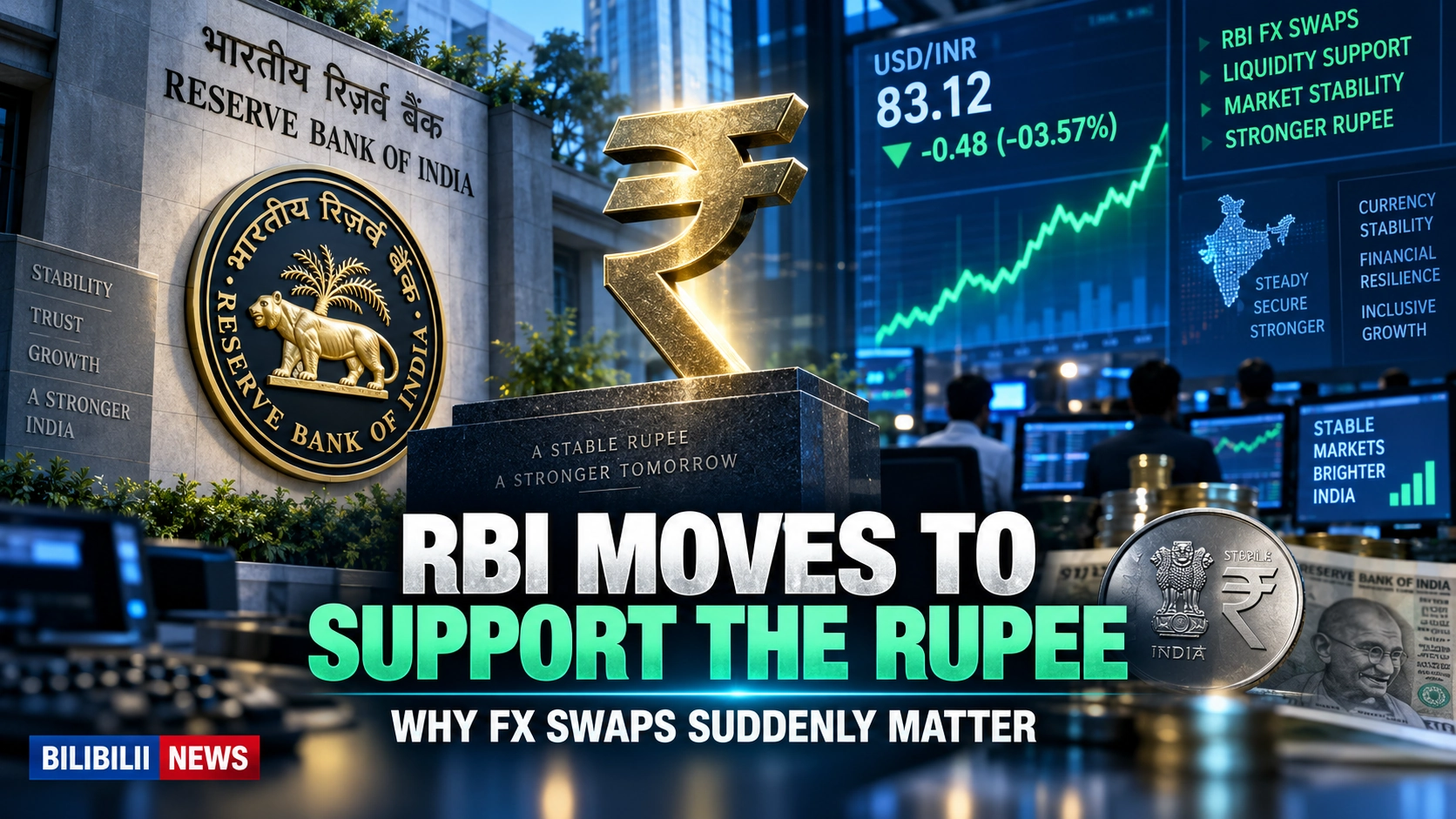
The RBI is using a technical currency-market tool that is suddenly getting attention because it can support the rupee without looking like a conventional intervention.
What the RBI did
Traders reported that the central bank carried out dollar-rupee sell-buy swaps for a second consecutive day. These operations help drain excess rupee liquidity while affecting forward-market pricing.
Why that matters for the rupee
Higher forward premiums increase the cost of betting against the rupee and can change hedging incentives for importers and exporters. In practical terms, that can reduce some pressure on the currency even if the RBI is not simply selling dollars in the spot market.
Why the move matters now
The rupee has been under pressure as crude oil prices rose sharply amid Middle East tensions. India imports a large share of its energy needs, so a stronger oil bill can increase demand for dollars.
What to watch next
The key question is whether oil prices cool and whether exporters become more willing to sell dollars at improved forward rates. The RBI can influence conditions, but global commodity moves remain a major driver.
Bottom line
FX swaps sound technical, but their impact is simple: the RBI is using another lever to manage liquidity and make one-way pressure on the rupee more expensive.
Source: Reuters