South Korea’s first summit with the five Central Asian states is not just another diplomatic gathering. It is part of a much larger race for the resources and supply chains that modern industry depends on.
Who is involved
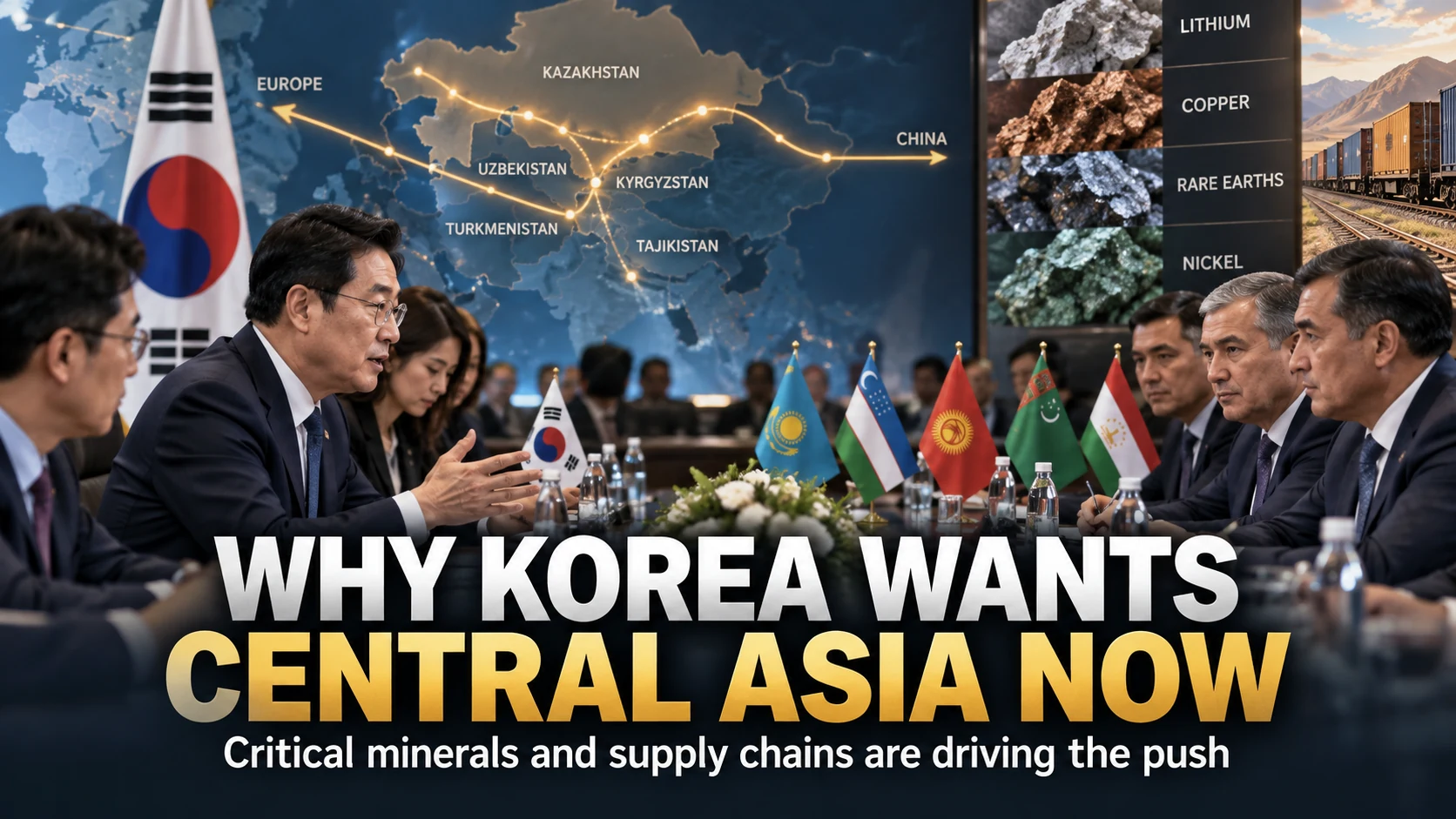
Leaders from Kazakhstan, Kyrgyzstan, Tajikistan, Turkmenistan and Uzbekistan are due to engage with South Korean President Lee Jae Myung, alongside a series of bilateral meetings.
Why Central Asia matters
The region is rich in energy and critical minerals and sits between major markets in Europe and Asia. That makes it strategically valuable to countries trying to reduce dependence on a small number of suppliers.
Why South Korea is interested
Korea is a manufacturing powerhouse in semiconductors, batteries, autos and electronics. Those industries rely on stable access to materials and transport routes. Deeper Central Asian ties can support both.
The supply-chain angle
After years of pandemic disruption, export controls and geopolitical shocks, “efficiency” is no longer the only goal. Governments and companies increasingly pay for resilience — multiple suppliers, alternative routes and politically stable partnerships.
Why this summit is different
This is the first leader-level multilateral summit between South Korea and all five Central Asian countries, giving the relationship a higher strategic profile than ordinary bilateral diplomacy.
Bottom line
South Korea is looking at Central Asia as more than a distant region. It sees a potential partner in the race to secure the minerals, energy and supply-chain flexibility that will shape the next industrial decade.
Source: Reuters