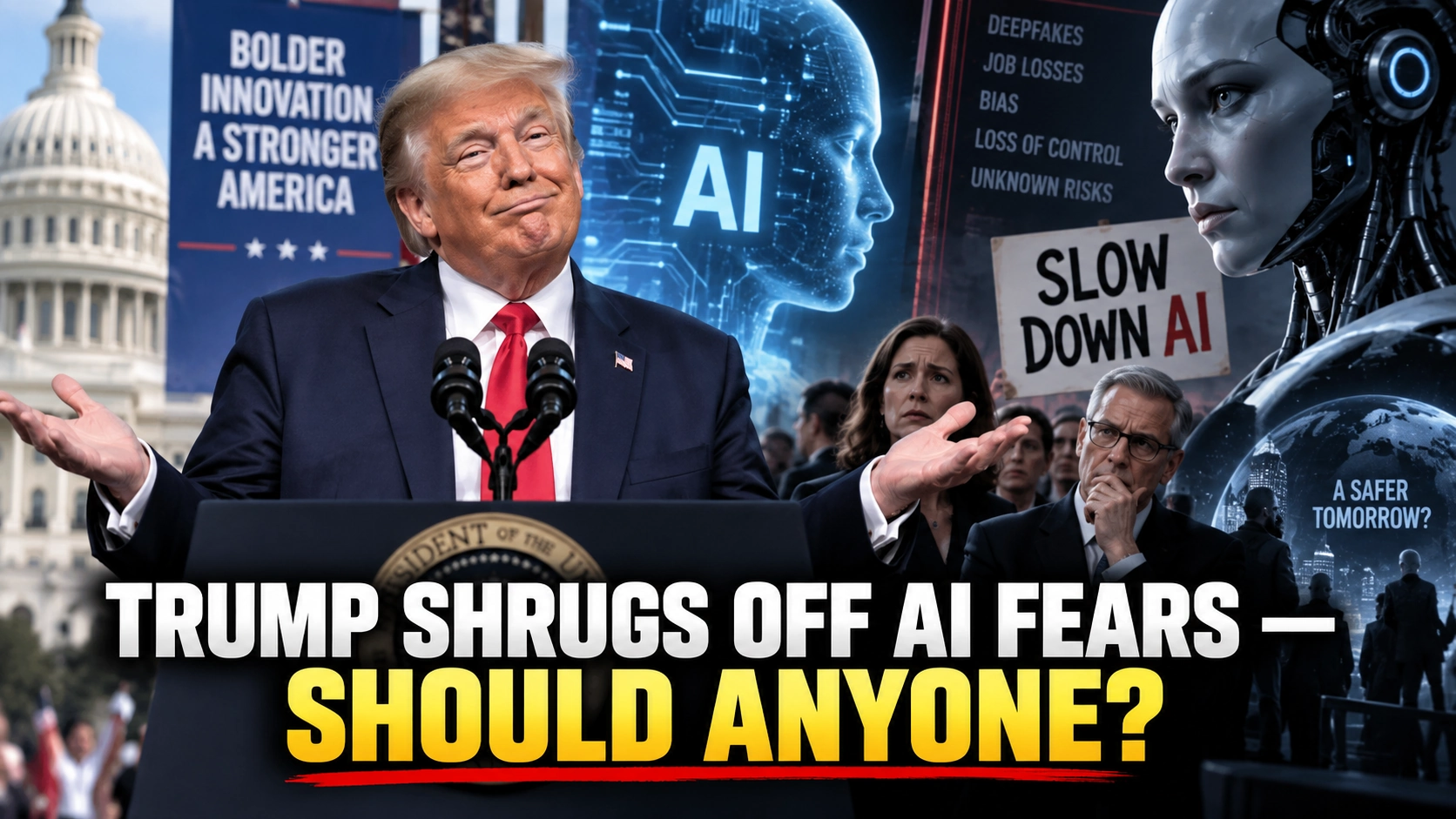
Donald Trump says fears around artificial intelligence are being exaggerated by “very negative forces.” That may be politically punchy, but it collides with a growing wave of concern from researchers, executives and policymakers who think the technology is advancing too fast.
Why this argument matters
The AI debate is no longer theoretical. It now sits at the crossroads of geopolitics, economic power and public safety. That means dismissing the risks is itself becoming a consequential policy stance.
What Trump is signalling
His view reflects a competitiveness-first argument: that the United States should prioritise staying ahead, especially relative to China, and avoid overregulating a strategically important industry.
Why critics disagree
AI sceptics are not only talking about science fiction scenarios. They point to misinformation, cyber misuse, labour disruption, systemic opacity and the danger of losing control over increasingly capable systems.
Why the tension will grow
The harder AI becomes to separate into “innovation” and “risk,” the more politically loaded every policy choice will be. Calls to slow development are unlikely to disappear, especially if new incidents fuel public anxiety.
Bottom line
Trump may want the debate framed as overreaction versus progress. But the real story is deeper: the world still has no consensus on how much AI risk is acceptable in the race to lead the future.
Source context: Reuters