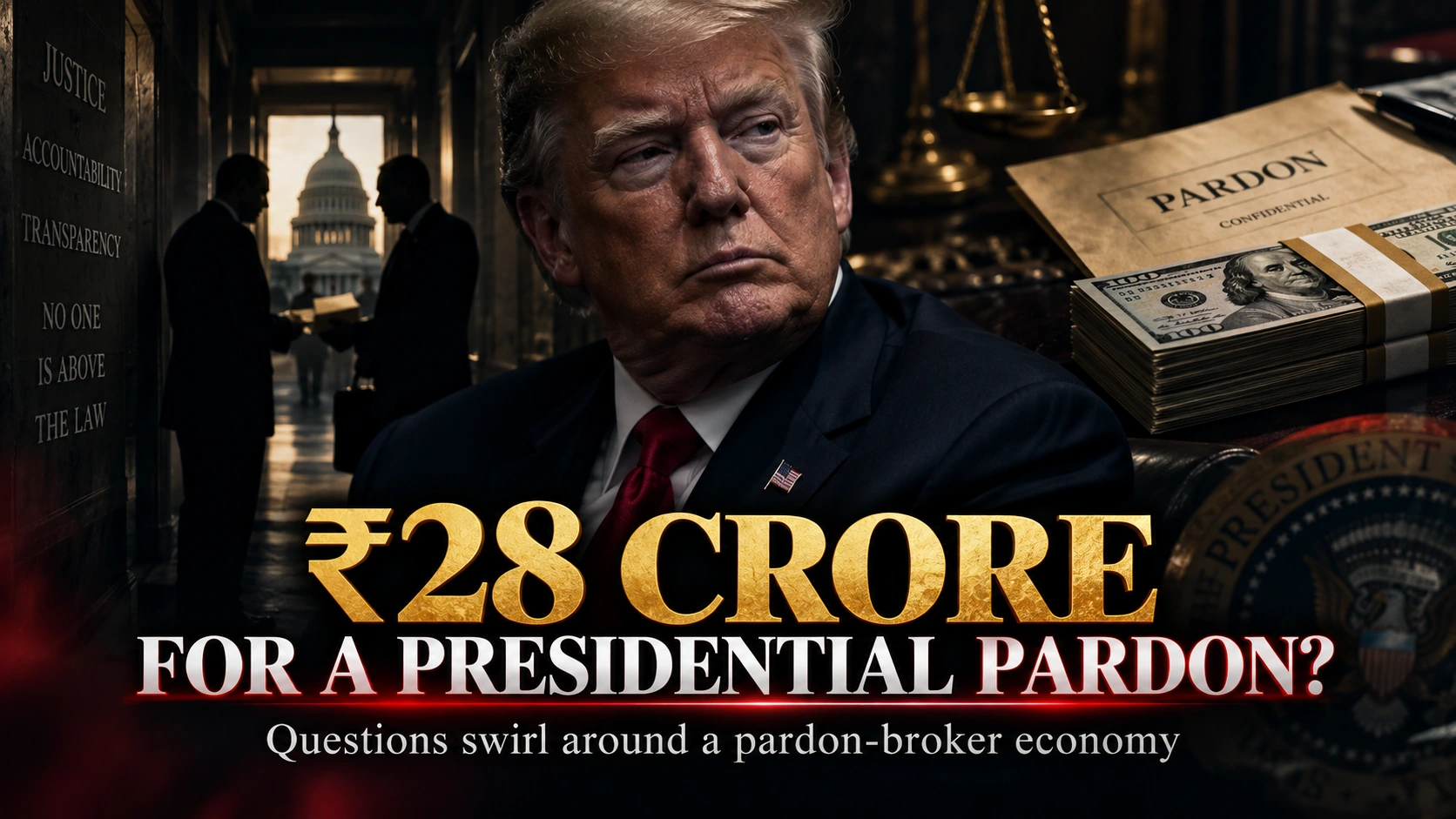
A reported “pardon economy” around the Trump White House has become a major controversy after an investigation described brokers seeking fees of up to about ₹28 crore from people pursuing presidential clemency.
What the investigation alleges
The report describes lobbyists and intermediaries offering to help clients navigate the pardon process, in some cases for enormous sums. The core attraction they sell is access: the belief that they can put a request in front of people close enough to the president to matter.
Why this is controversial
Presidential clemency is a constitutional power, but a private market built around perceived access raises difficult ethical questions. If money appears to improve someone’s chance of being heard, critics worry that a power intended for mercy and justice can begin to look like a luxury service.
Does paying guarantee a pardon?
No. The reported arrangements do not guarantee success, and the president retains ultimate discretion. That uncertainty is part of what makes the business so striking: clients may pay huge fees simply for advice, lobbying and an attempt to get attention.
Why the story matters politically
Pardons often attract scrutiny because they sit outside the normal court process. When expensive intermediaries enter the picture, the debate expands from the merits of individual pardons to questions about influence, transparency and whether ordinary applicants face a different system from wealthy ones.
What to watch next
The investigation could increase pressure for disclosure around pardon lobbying and for clearer rules governing paid intermediaries. Whether that produces formal reform is uncertain because the president’s constitutional authority remains broad.
Bottom line
The eye-catching ₹28-crore figure is only the beginning of the story. The deeper issue is whether access to one of the most powerful forms of executive mercy can become a business in its own right.
Source: The Indian Express