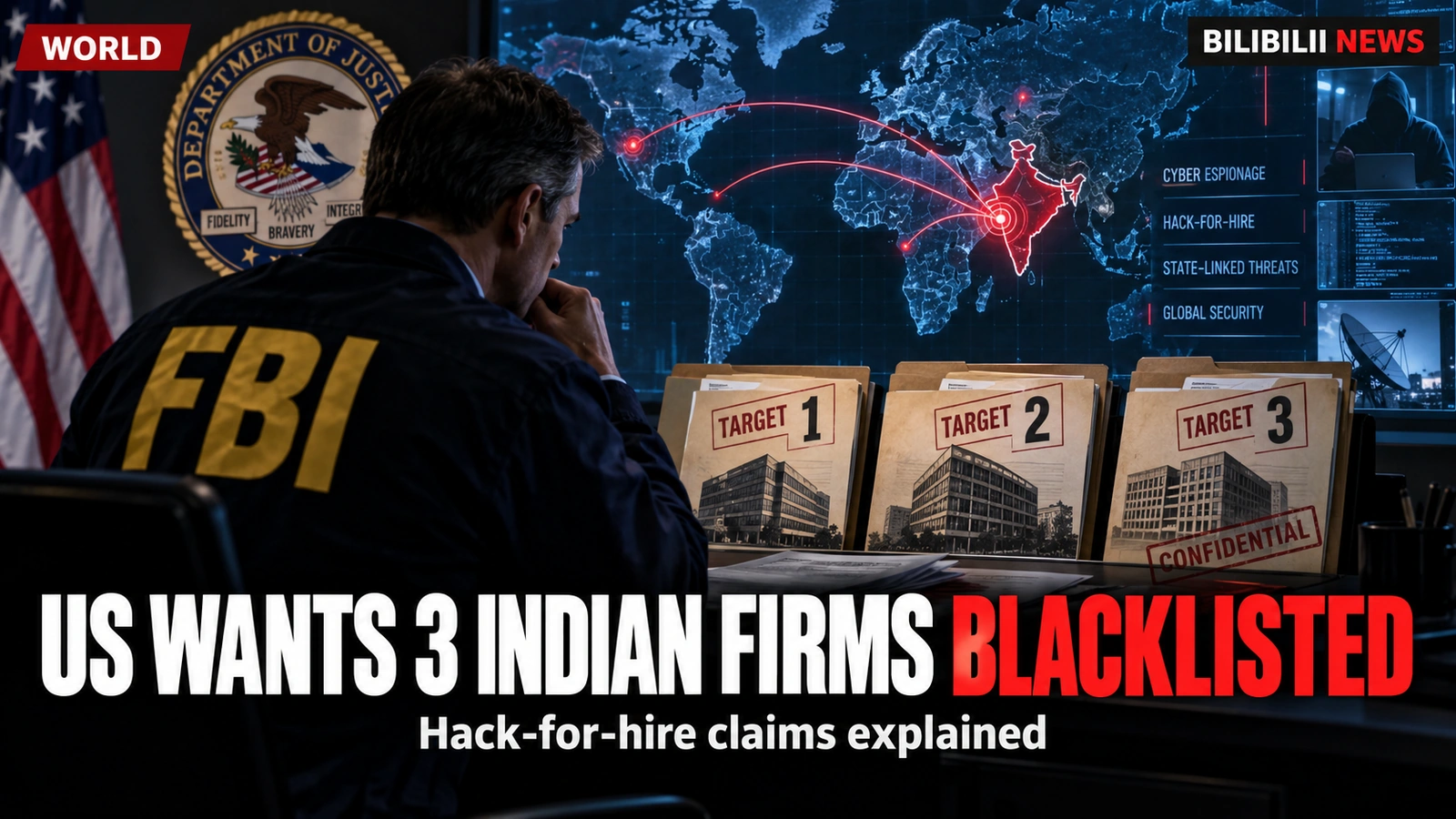
Three Indian companies could face severe restrictions on access to American technology if a group of US lawmakers gets its way.
Senators Ron Wyden and Sheldon Whitehouse and Representative Pat Harrigan have asked the US Commerce Department to add BellTroX, CyberRoot and Sunkissed Organic Farms Pvt. Ltd. — formerly Appin Technology Pvt. Ltd. — to the government’s Entity List.
What are the firms accused of?
The lawmakers allege that the companies have been linked to years of “hack-for-hire” activity targeting individuals, companies and legal representatives.
Hack-for-hire generally refers to commercial cyber operations in which attackers are allegedly paid to obtain emails, documents, credentials or other information from a target.
The allegations have been reported over many years by media organisations and technology companies. The firms or people associated with them have disputed wrongdoing in various contexts.
What would blacklisting actually do?
Placement on the US Commerce Department’s Entity List can sharply restrict a company’s access to American-origin technology.
That can include software, cloud infrastructure, cybersecurity tools and other products subject to US export controls. Suppliers may need government permission before doing business with a listed entity, and licences can be difficult to obtain.
Why are lawmakers pushing the issue now?
The lawmakers argue that cybermercenary businesses can threaten journalists, officials, lawyers, executives and ordinary citizens while continuing to rely on technology supplied by American companies.
Their goal is to use export controls to make those operations harder and more expensive.
Why this is sensitive for India
India and the United States have been deepening technology and security cooperation. Allegations involving Indian-based cyber firms therefore create a difficult contrast: governments are building closer strategic ties while private actors face accusations of targeting people abroad.
Is the blacklist final?
No. The lawmakers have requested action; the Commerce Department would have to decide whether to add the companies to the Entity List.
What makes cybermercenary cases difficult?
Commercial hacking networks can be fragmented. Researchers may identify infrastructure, malware or operators, but the chain connecting a client, intermediary and technical attacker can be complicated and contested.
That is one reason such cases often involve years of reporting, court fights and technical investigation.
Bottom line
The immediate story is not that the three firms have already been banned. It is that senior US lawmakers now want one of Washington’s strongest technology restrictions applied to them — a step that could significantly affect their ability to use American digital infrastructure if approved.
Source: Reuters