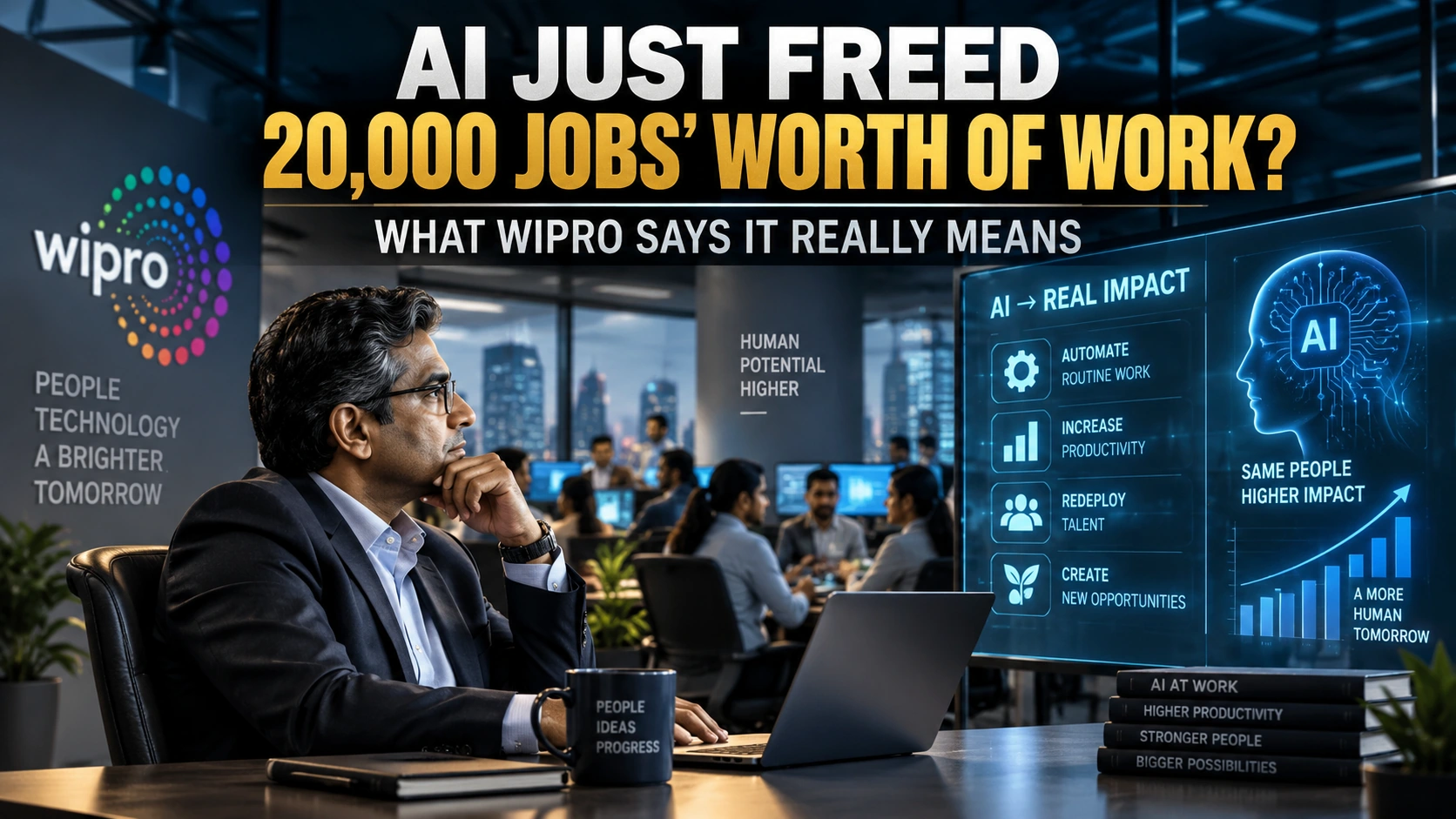
Wipro’s claim that artificial intelligence has freed capacity equal to the work of 20,000 employees sounds explosive at first glance. But the company’s core message is more nuanced: AI is being positioned as a force multiplier, not simply a headcount cutter.
What Wipro is actually saying
The company’s framing is about productivity. Repetitive and lower-value work can now be automated or accelerated through AI tools, which creates room for human employees to move toward higher-value assignments. In other words, the same workforce can potentially deliver more output.
Why the phrase triggered attention
Any comparison between AI output and thousands of workers immediately raises one question: are jobs at risk? That is why the phrase has drawn so much attention. In an industry already coping with margin pressure, slower discretionary tech spending and rapid AI adoption, investors and employees naturally hear “20,000 workers” and think of layoffs.
The bigger point
Wipro’s broader case is that AI is changing the structure of delivery. Tasks such as coding assistance, internal support, documentation, workflow automation and knowledge retrieval can now be handled faster. That creates capacity which can then be redirected into new projects, consulting and AI-led client work.
What the market will watch
The real test is execution. If AI-led productivity improves margins without sharply hurting employee morale or service quality, Wipro’s argument gets stronger. But if redeployment does not keep pace with automation, the workforce question will only intensify.
Bottom line
Wipro’s AI message is not just about doing the same work cheaper. It is about whether Indian IT can reinvent itself fast enough to stay competitive in an AI-first era.
Source context: Reuters