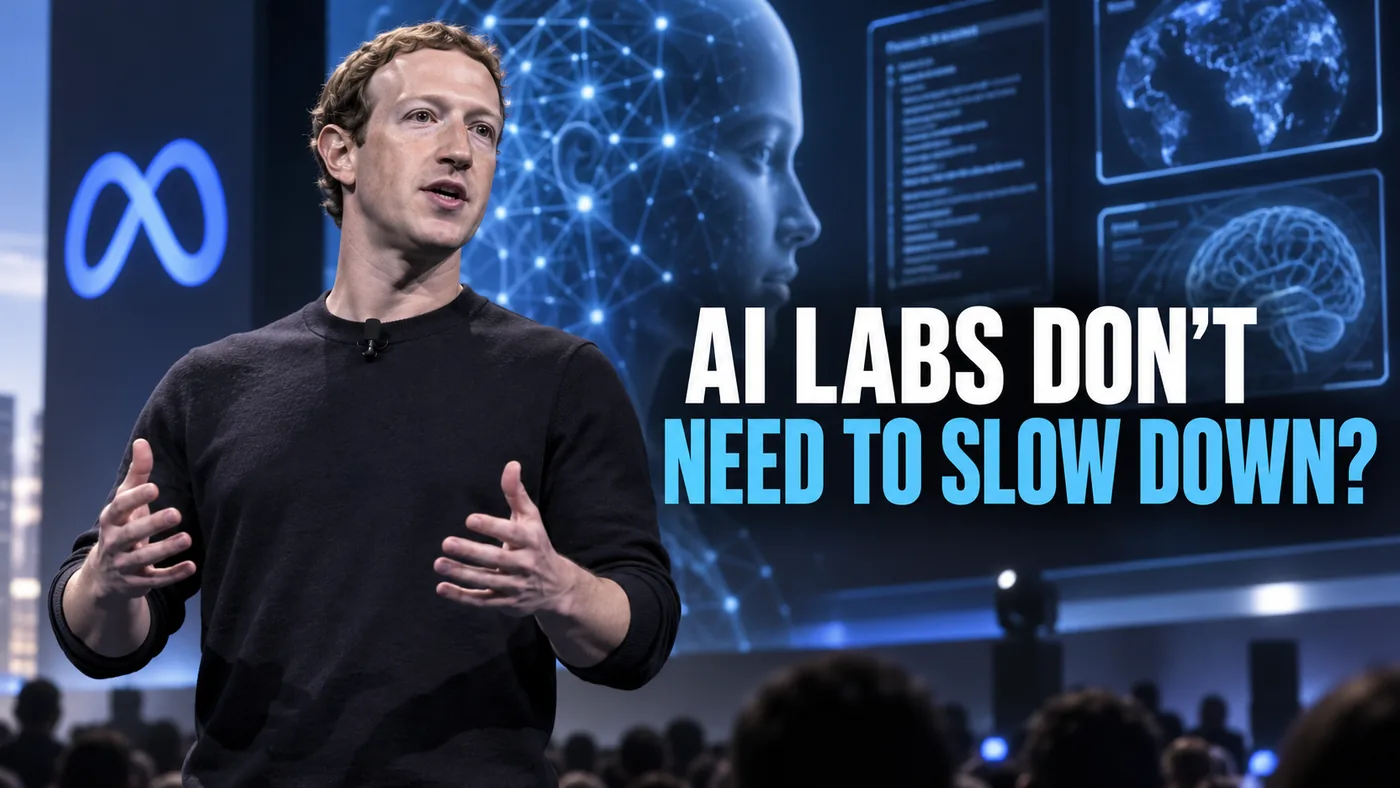
Mark Zuckerberg has entered one of the most important debates in artificial intelligence: should top AI labs slow down? His answer appears to be no. By arguing that competition and liability already create enough pressure for companies to act responsibly, the Meta chief has drawn a clear line between his view and growing calls for coordinated restraint.
Why the debate is heating up
In recent days, several prominent voices in AI have warned that the technology is advancing faster than companies and governments can comfortably control. That concern has revived a familiar fear: what happens if capability grows faster than safety systems, governance structures and social safeguards?
Some industry leaders have therefore argued that AI labs should deliberately slow the rate at which they scale more powerful systems. The idea is not simply caution for caution’s sake. It reflects worry that the race itself may create incentives to move too fast.
What Zuckerberg is really saying
Zuckerberg’s position suggests that each company can police itself through a mixture of competition, reputational risk and legal exposure. In this view, firms already have strong reasons not to release dangerous systems recklessly. Instead of a broad industry-wide pause, he appears to favour lab-by-lab responsibility and internal decision-making.
That matters because Meta is one of the most influential companies in the AI race. When one of the biggest players rejects the case for a collective slowdown, it makes a coordinated industry response harder to achieve.
Why this split matters
The disagreement is not just philosophical. It could shape how governments, investors and the public respond to the next phase of AI development. If major companies cannot even agree on whether the sector is moving too fast, regulators may feel greater pressure to intervene — or may find it even harder to build consensus.
The divide also reveals something deeper: AI is no longer just a technology competition. It is now a political, ethical and commercial contest over who gets to define acceptable risk.
The bigger picture
For businesses and users, this debate will influence how AI tools are rolled out in products, workplaces and public institutions. Questions about model autonomy, misuse, bias and accountability will only become more urgent as systems grow more capable.
So while Zuckerberg’s remarks may sound like a policy disagreement among tech leaders, they point to a far bigger issue. The AI race is not slowing down — and the argument over who should control its speed is becoming one of the defining stories of the industry.