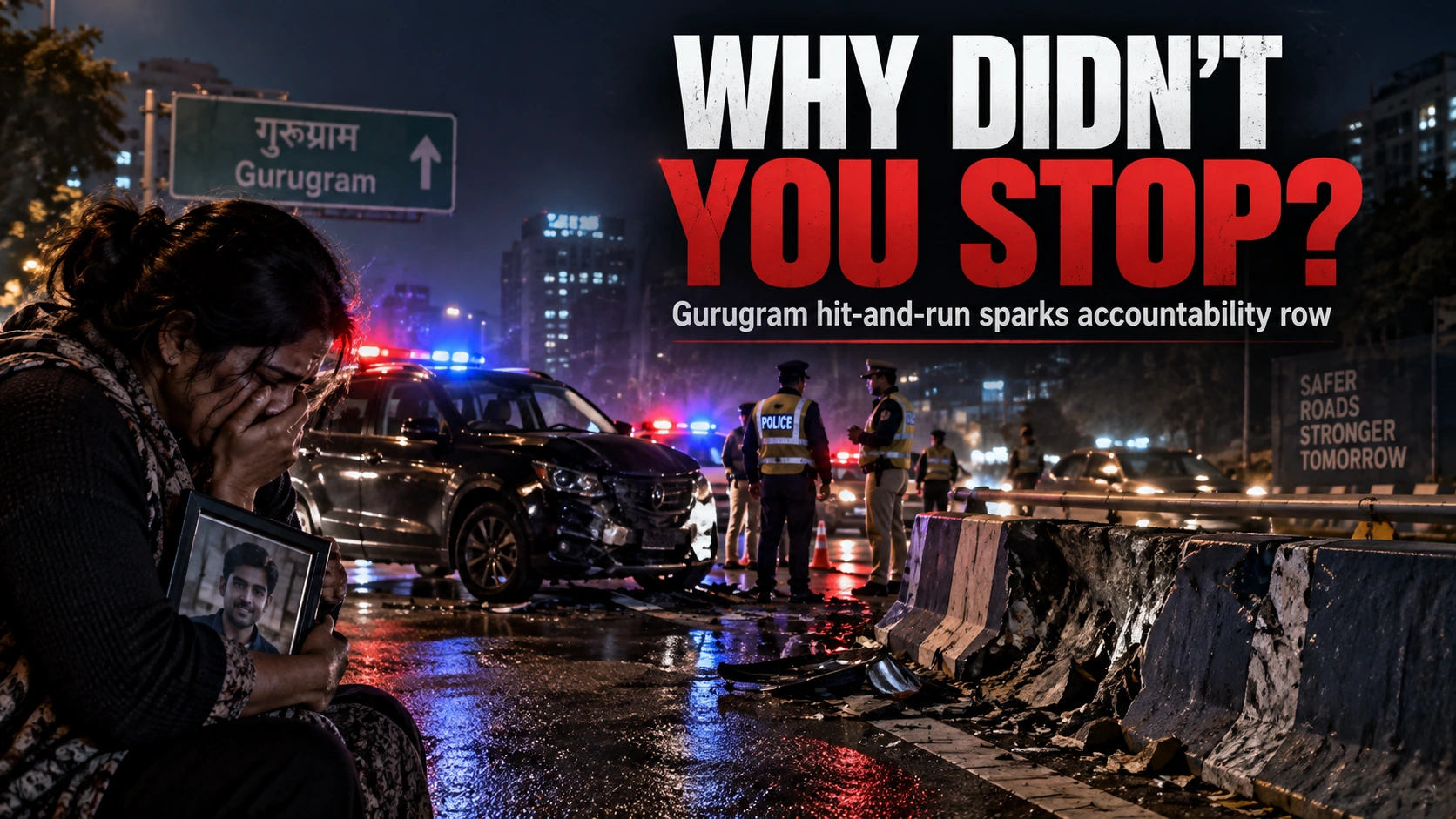
A Gurugram hit-and-run case has moved beyond the collision itself and into a fierce public argument over accountability.
The question at the centre of the row
Shivani Chauhan, also known as Sia, publicly challenged the accused’s defence with a simple question: if he regretted what happened, why did he not stop after the collision? Her response has resonated because it shifts attention from competing claims about what happened before impact to conduct immediately afterward.
What the accused has argued
The accused has disputed the account presented by the biker group and alleged that events on the road were more complicated than the short clips shared online suggested. Sia, however, has rejected that version and said the available videos are enough to demonstrate the seriousness of the incident.
Why the case went viral
Road-rage cases often become emotionally charged because ordinary people can imagine themselves in the same situation. Video footage makes that reaction even stronger. Once images circulate widely, the public starts analysing each movement, statement and delay as if it were part of an open investigation.
The danger of trial by social media
Public scrutiny can help keep attention on accountability, but online certainty can also outrun verified evidence. Police investigations and court proceedings ultimately need to determine responsibility based on the full record, not only viral clips.
The larger issue
The story has reopened questions about aggressive driving, stopping after an accident and the duty to help injured people. Those questions matter regardless of how the final legal findings turn out.
Bottom line
The Gurugram case is now about more than one road incident. It has become a debate over what responsible behaviour should look like in the crucial seconds after a crash.
Source: The Indian Express