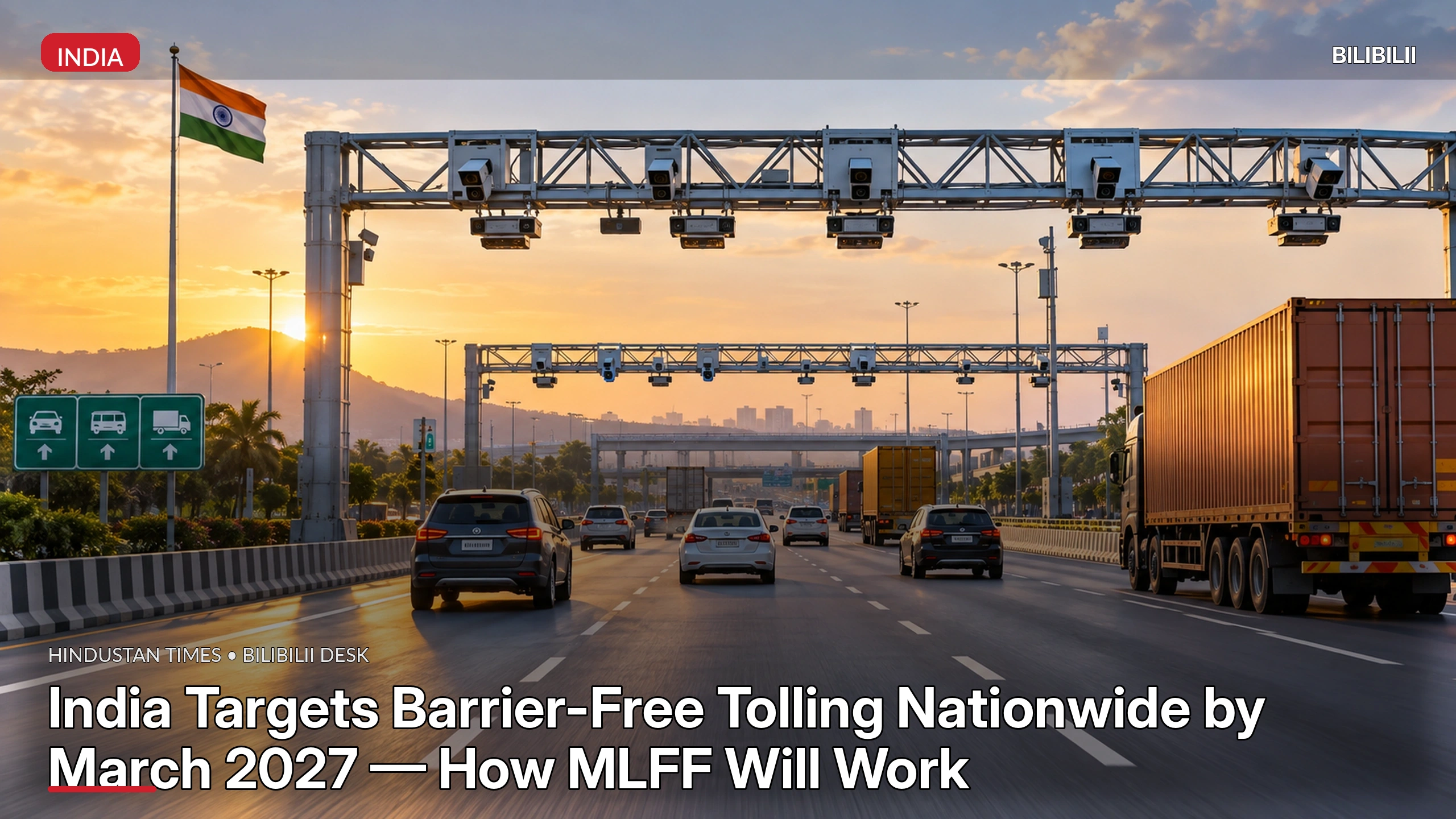
India is aiming to move toward nationwide barrier-free digital tolling by February-March 2027, according to Road Transport and Highways Minister Nitin Gadkari. The system is based on Multi-Lane Free Flow technology, which identifies vehicles through overhead infrastructure so drivers can keep moving at normal road speeds.
How MLFF differs from today’s toll plazas
Conventional FASTag has reduced cash handling but still requires vehicles to pass through a physical toll lane and often slow or queue. MLFF uses gantries and electronic identification to charge vehicles without a boom barrier.
The government’s economic case
Gadkari said eliminating stops should reduce fuel consumption as well as the cost of running toll plazas. He estimated operating costs could fall sharply once the barrier-free model is widely deployed.
India has already started testing the idea
The country’s first barrier-free tolling implementation was inaugurated at the Mundka-Bakkarwala plaza on Delhi’s Urban Extension Road-II. Scaling from individual sites to a national network will require reliable vehicle identification, payment recovery and dispute handling.
What to watch
The hardest part will not be the gantry itself; it will be enforcement when a tag fails, a vehicle changes ownership or a payment is disputed. Privacy and data-retention rules will also matter once every pass is digitally recorded.
Bottom line
If the rollout works as planned, tolling may become almost invisible to compliant drivers — but the back-end technology and enforcement system will become much more important.
Source: Hindustan Times