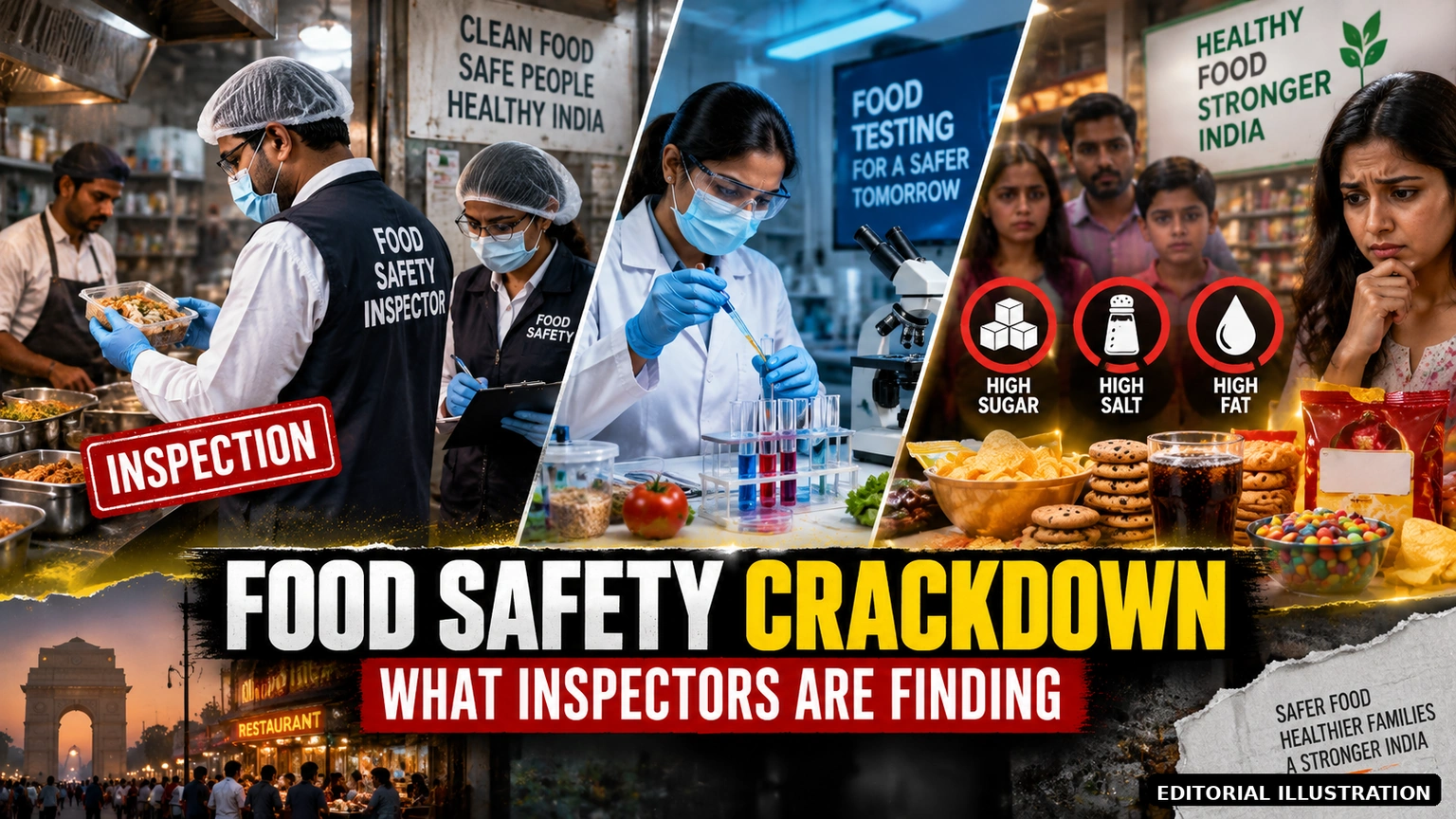
Food safety is moving from a background regulatory issue to a front-page consumer story. Across India, regulators are carrying out more inspections, shutting non-compliant operations and debating stronger warning labels for packaged food.
The statistic getting attention
A Reuters review of government data found that roughly one in five food samples tested annually since 2020 were classified as unsafe or substandard. That wording is important: unsafe and substandard are not identical categories, and the figure should not be read as meaning one in five meals sold in India is dangerous.
Still, the scale of non-compliance explains why enforcement has become more visible. Reuters reported that nearly 8,000 food licences were revoked over the previous three years.
Why raids and shutdowns are becoming more visible
Consumer complaints about hygiene and adulteration have kept pressure on regulators. Inspections are not limited to one type of business: enforcement has touched street-food operators as well as larger restaurants and organised chains.
The point of a food-safety inspection is broader than finding dramatic violations. Authorities can check storage temperatures, cleanliness, ingredient sourcing, licensing, expiry dates, food handling and whether premises follow mandatory standards.
The next battle is on the front of the packet
Another major debate is happening away from restaurant kitchens. India has been considering front-of-pack warning labels for products high in sugar, salt or fat. The idea is simple: make the nutritional risk easier to understand before a consumer buys the product.
The difficult part is deciding the thresholds, design and legal standard. Food companies worry about labels that may oversimplify products, while public-health groups argue that weak labels would fail to change behaviour. The issue has also reached the courts, giving the policy debate much higher visibility.
What consumers should actually do
A dramatic raid video should not be treated as proof that every outlet in a chain or every street vendor is unsafe. Consumers can instead look for basic warning signs: poor refrigeration, exposed food, visibly dirty preparation areas, reused oil, damaged packaging or products sold past expiry.
For packaged food, reading the ingredient list and nutrition panel remains more reliable than judging a product by front-of-pack marketing claims such as “healthy,” “natural” or “light.”
Why this story matters now
India's food economy is enormous, and even a small failure rate affects millions of people. The current enforcement push is significant because it combines three things at once: tougher inspections, licence action and a national argument over how much warning consumers should see before purchase.
Source: Reuters reporting based on government data and regulatory developments, September 8, 2026.
Featured image is an AI-generated editorial illustration used for representational purposes. It does not depict a specific restaurant or inspection.