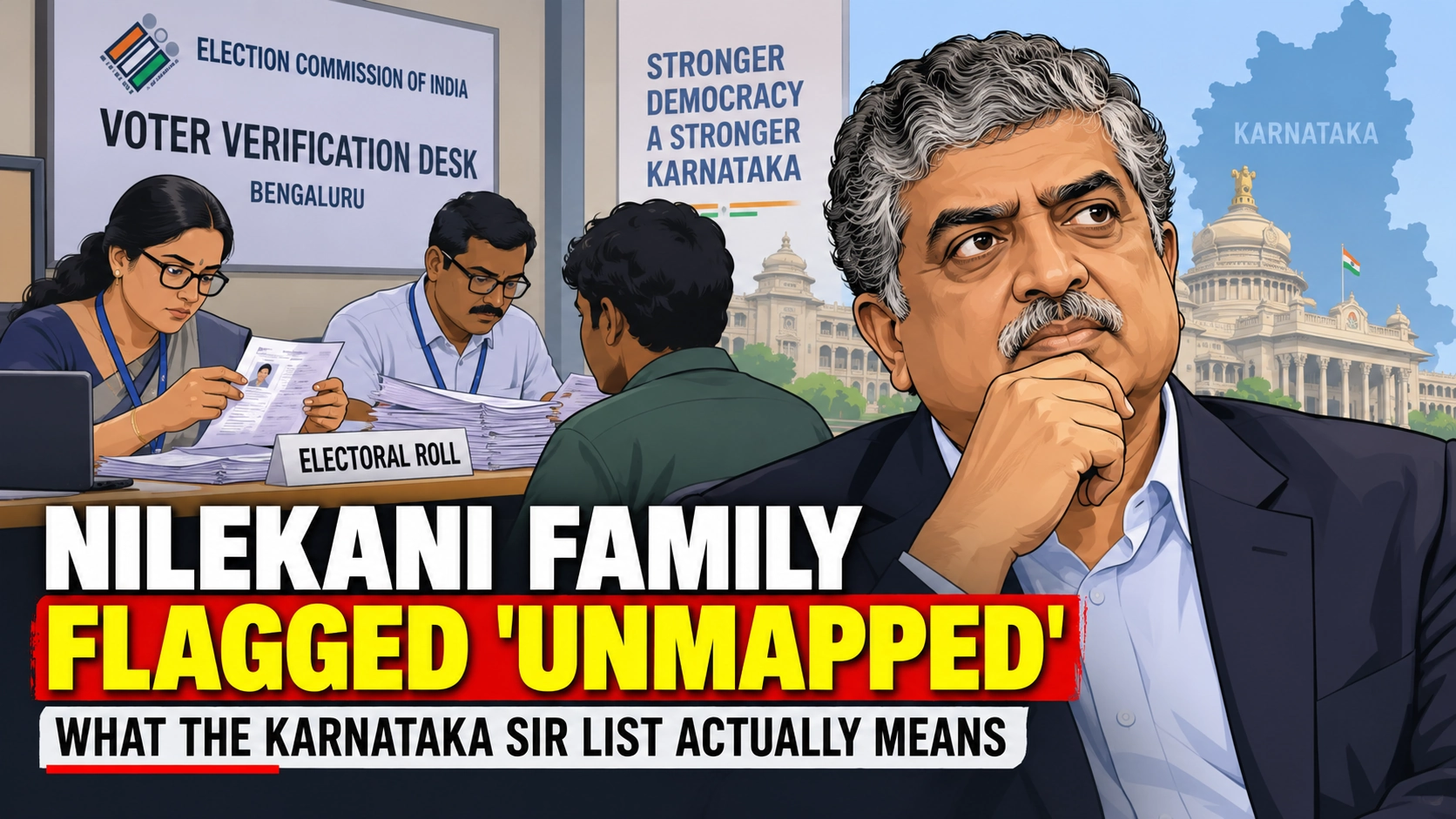
Infosys co-founder Nandan Nilekani and members of his family have appeared in Karnataka’s Special Intensive Revision (SIR) discrepancy list, drawing attention because of his public profile and long association with India’s digital identity ecosystem.
What the discrepancy means
Officials have described the classification as “Unmapped with last SIR”. According to reports on the Karnataka revision, this generally refers to voters whose current records could not be matched cleanly with an older reference roll used during the verification exercise.
Does this mean wrongdoing?
No. Being flagged for verification is not, by itself, an accusation of fraud or ineligibility. It means election officials may seek documents or clarification before the record is confirmed or corrected.
Why Nilekani’s name drew attention
Nilekani is one of India’s best-known technology entrepreneurs and was the founding chairman of UIDAI. His appearance in a voter-roll discrepancy exercise therefore became a symbol of a broader question: how can even highly documented public figures end up in administrative verification lists?
What officials are expected to do
Local election officials are expected to verify the underlying records and resolve discrepancies where documentation is sufficient. Reports also noted that some high-profile names were still being checked before any formal notice was served.
Bottom line
The story is less about Nilekani personally and more about the scale and complexity of electoral-roll cleaning. A discrepancy flag is a request for verification—not a conclusion.
Source: The Indian Express