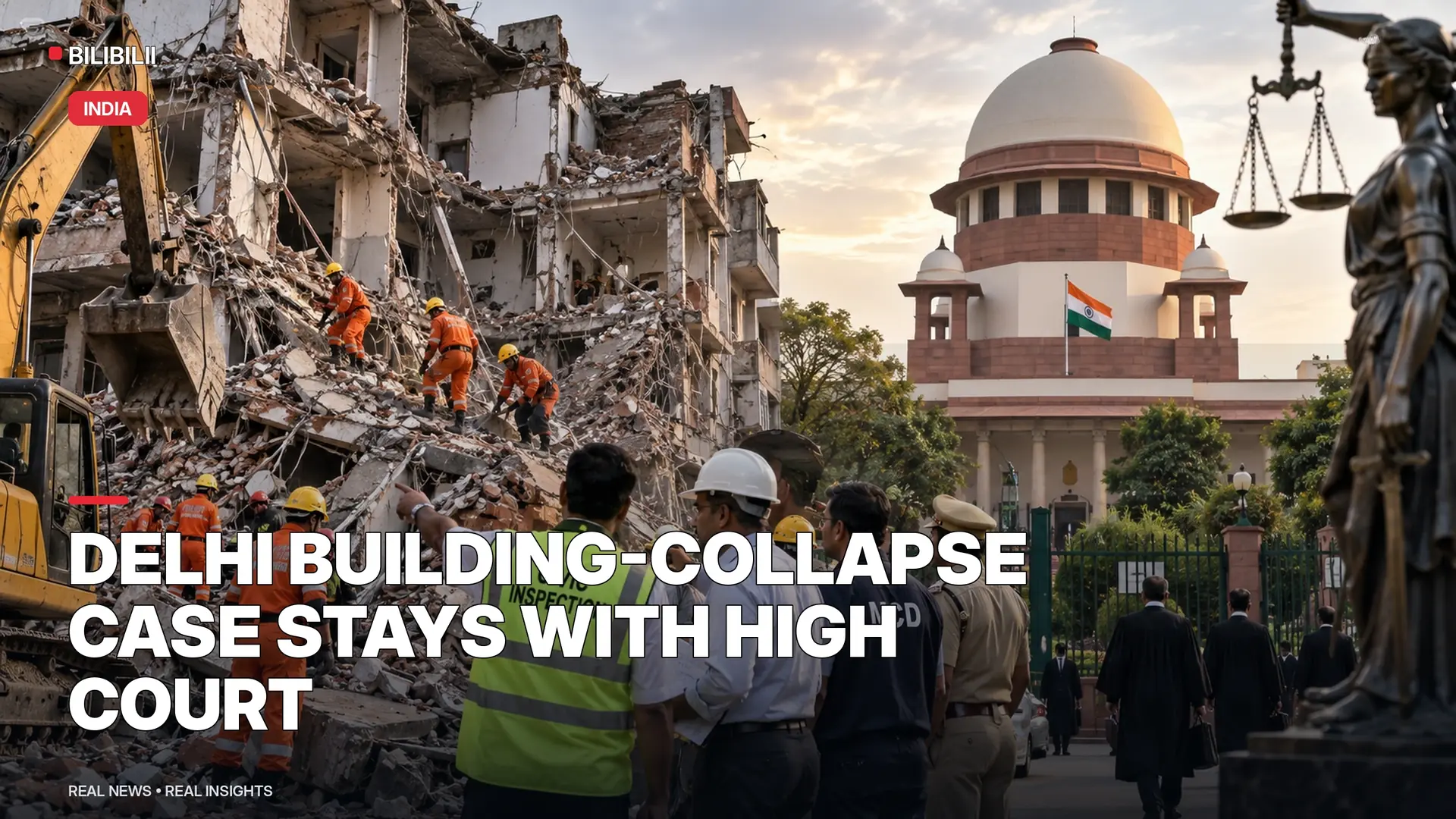
The Supreme Court has decided not to interfere with ongoing Delhi High Court proceedings arising from a building collapse in the capital. Accepting the broad direction suggested by the amicus curiae, the court said civic bodies appeared to be moving in the right direction and allowed the High Court process to continue.
Why the High Court remains central
Building-safety disputes often require detailed follow-up on municipal enforcement, inspections, unauthorised construction and local compliance records. A High Court can keep those agencies before it and demand progress reports over time.
What the Supreme Court’s choice signals
By declining to take over or redirect the matter, the top court avoided creating parallel proceedings. That can make accountability clearer because the same forum continues to supervise the agencies already responding to the incident.
The larger safety issue
A collapse can expose failures that predate the immediate event: weak structural checks, unauthorised alterations, delayed enforcement or unclear responsibility across civic bodies. Court monitoring typically becomes most meaningful when it produces measurable administrative changes.
What to watch
Attention now returns to what Delhi’s agencies actually do — including inspections, enforcement and preventive steps in other vulnerable buildings. The High Court’s future orders will show whether early action becomes a lasting safety system.
Bottom line
The Supreme Court’s message was procedural but important: keep one court in charge, and judge progress by what civic authorities deliver on the ground.
Source: The Indian Express