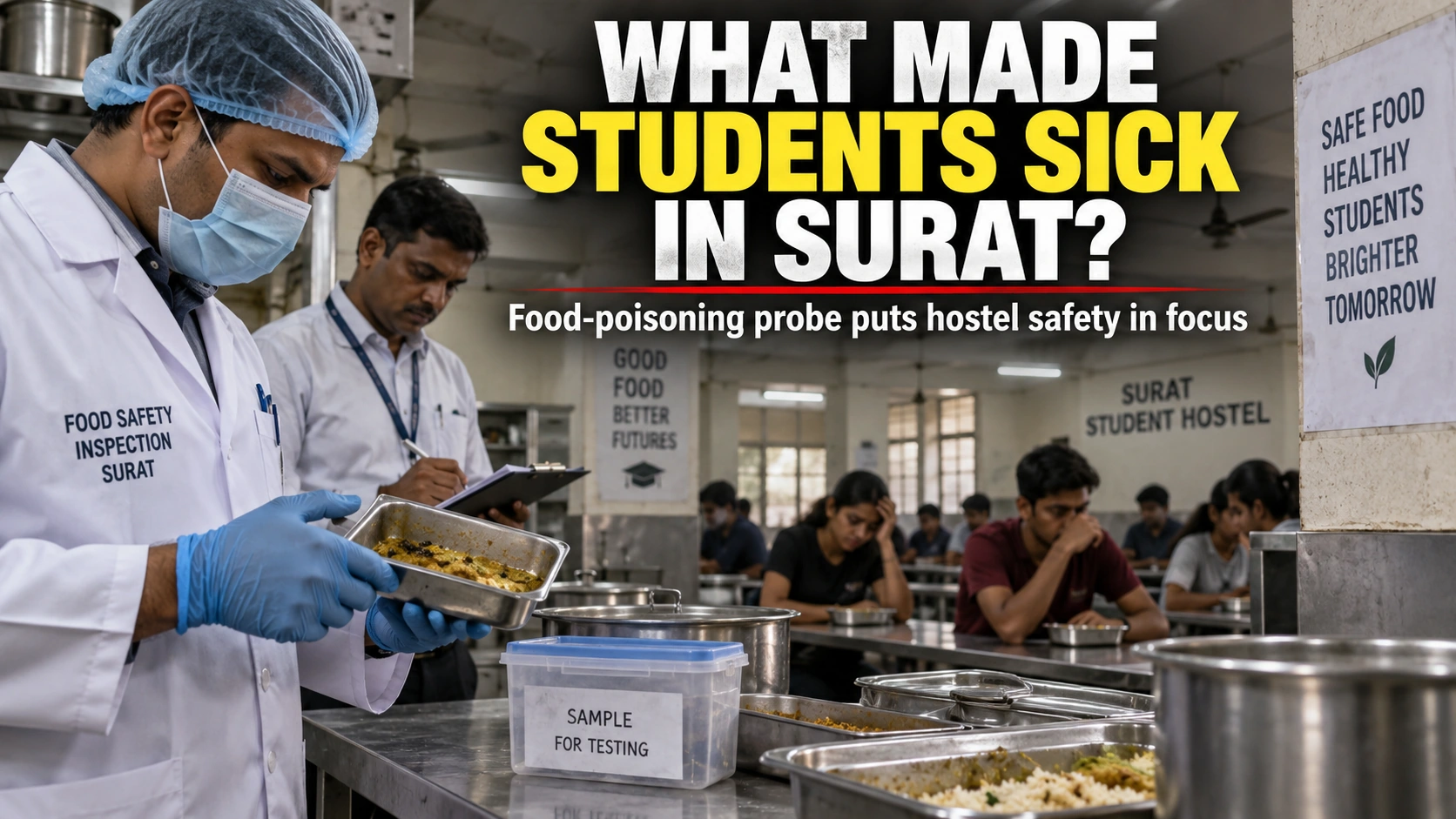
A suspected food-poisoning incident involving 85 students in Surat has triggered something much larger than a local school investigation: Gujarat has ordered inspections of student hostels across the entire state.
What happened in Surat
Students at the hostel of PP Savani International School complained of stomach pain and vomiting after dinner. Of the 85 students who reported symptoms, 73 received outpatient treatment and 12 were admitted to hospital. Eight remained under treatment at the time of the health department’s update and were reported stable.
What officials found
Surat Municipal Corporation teams inspected the hostel’s kitchen, food preparation areas and raw materials. Six food samples were collected and the institution was issued a negligence notice while officials examined food quality, cleanliness and hygiene.
Why the response became statewide
Health Minister Praful Pansheriya ordered government, semi-government, grant-in-aid and private student hostels across Gujarat to be inspected within the week. Officials were told to check whether the state’s prescribed standard operating procedures are actually being followed.
The unanswered question
Authorities were still determining whether the Surat illnesses were caused by food poisoning, a waterborne infection or another source. That uncertainty is exactly why kitchens, water, storage and sanitation all need to be examined.
Why parents will care
Residential hostels place food and health responsibility entirely in the hands of the institution. Families cannot inspect the kitchen every day, so safety depends on systems, audits and fast reporting when something goes wrong.
Bottom line
The Surat incident may ultimately have one specific cause, but Gujarat’s reaction reflects a broader concern: hostel food safety cannot depend on inspections only after students become sick.
Source: The Indian Express